
7 Essential Public Speaking Tips 2026 for Tech Professionals

Stepping onto the stage or joining a video call to present your ideas can be nerve-wracking, especially in the tech world where clarity is crucial. Even the most knowledgeable professionals sometimes struggle to capture attention, keep the audience engaged, and make their message stick. Nerves, filler words, or losing your train of thought can all undermine your confidence and impact.
The right public speaking techniques can transform how you communicate, making your presentations clearer, more persuasive, and more memorable. Whether you need strategies to control nerves, tools to sharpen your delivery, or methods to engage your listeners, there are practical steps you can take.
Get ready to discover straightforward, actionable ways to improve every aspect of your public speaking. These insights will help you connect with your audience and present with confidence, whether you are pitching an idea or explaining complex concepts.
Table of Contents
- Mastering Clear and Confident Delivery
- Using AI Tools for Real-Time Feedback
- Controlling Pace to Engage Your Audience
- Reducing Filler Words for Professionalism
- Improving Eye Contact and Body Language
- Structuring Pitches for Maximum Impact
- Tracking Progress and Building Confidence
Quick Summary
| Key Message | Explanation |
|---|---|
| 1. Manage Nervous Energy | Transform anxiety into excitement by preparing thoroughly and embracing practice. This aids in delivering messages effectively. |
| 2. Leverage AI for Feedback | Use AI tools to receive instant, objective feedback on your speaking performance for continuous improvement. |
| 3. Control Your Speaking Pace | Adjust your speaking tempo to engage the audience better and enhance comprehension and retention of information. |
| 4. Minimise Filler Words | Reduce verbal fillers through awareness and preparation, which will enhance your professionalism and confidence during presentations. |
| 5. Practice Non-Verbal Communication | Refine your body language and eye contact to strengthen the connection with your audience and transmit confidence. |
1. Mastering Clear and Confident Delivery
Public speaking is a critical skill for tech professionals seeking to communicate complex ideas with precision and impact. Confident delivery techniques can transform your ability to engage audiences and communicate effectively.
Confidence in public speaking isn’t about eliminating nervousness—it’s about managing and channelling that energy productively. Most professionals experience anxiety when presenting, but top performers understand that this nervous energy can be reframed as excitement and passion.
Key strategies for mastering confident delivery include:
- Body language: Stand tall with shoulders back
- Vocal control: Maintain a steady speaking pace
- Eye contact: Connect with different audience members
- Preparation: Know your material thoroughly
Successful tech communicators recognise that delivery is as crucial as content. Your message might be brilliant, but if it’s not communicated clearly, its impact diminishes significantly.
Confidence comes from preparation, practice, and understanding that your audience wants you to succeed.
Practical techniques to build confidence involve systematic practice and self-assessment. Recording yourself presenting and reviewing your performance can help identify areas for improvement. Many professionals find that rehearsing in front of a mirror or trusted colleagues helps refine their delivery.
Pro tip: Practice deep breathing techniques before presentations to regulate your nervous system and project calm assurance.
2. Using AI Tools for Real-Time Feedback
The landscape of public speaking is rapidly evolving with artificial intelligence tools for communication, offering unprecedented opportunities for professional development.
AI technology has transformed how tech professionals prepare and deliver presentations by providing instant, objective feedback. These intelligent systems analyse multiple aspects of your speaking performance in real time, capturing nuances that human coaches might miss.
Key advantages of AI-powered speaking tools include:
- Instant performance metrics: Precise analysis of speech patterns
- Objective feedback: Unbiased evaluation of communication skills
- Personalised recommendations: Tailored suggestions for improvement
- Continuous learning: Track progress across multiple practice sessions
Modern AI tools can detect subtle communication challenges like filler word usage, speaking pace, tone variation, and body language effectiveness. By providing granular insights, these technologies help professionals refine their presentation skills with unprecedented precision.
AI doesn’t replace human expertise—it enhances your ability to communicate more effectively.
Tech professionals can leverage these tools by recording practice sessions and receiving comprehensive analysis. The most advanced platforms offer real-time coaching, suggesting immediate adjustments during mock presentations.
Pro tip: Select an AI speaking tool that provides video recording capabilities to observe your non-verbal communication alongside verbal feedback.
3. Controlling Pace to Engage Your Audience
Mastering speech pace is a critical skill for tech professionals seeking to captivate and communicate effectively. Strategic speech pacing can transform audience engagement from passive listening to active participation.
Pace is not about speaking quickly or slowly—it is about creating a rhythm that guides your audience’s comprehension and maintains their interest. Most presenters struggle with finding the optimal tempo that balances information delivery with audience understanding.
Key principles for controlling speaking pace include:
- Awareness of baseline speed: Aim for 150-160 words per minute
- Strategic pausing: Insert deliberate breaks to emphasise points
- Emotional variability: Modulate speed to reflect content intensity
- Audience reading signals: Watch for comprehension cues
Tech professionals often fall into the trap of delivering information at a constant, monotonous speed. This approach risks losing audience attention and reducing message retention. By introducing deliberate variations in pace, you create a more dynamic and engaging presentation experience.
Effective communication is not about speaking—it is about being heard and understood.
Practical techniques involve practising your presentation with a timer, recording yourself, and analysing your natural speaking rhythm. Many professionals find that recording and reviewing their presentations helps them identify areas where pace could be improved.
Pro tip: Practice your presentation using a metronome or pacing app to develop a more consistent and controlled speaking tempo.
4. Reducing Filler Words for Professionalism
Every tech professional aspires to communicate with precision and confidence. Eliminating filler words transforms your speaking from hesitant to authoritative.
Filler words like ‘um’, ‘ah’, ‘like’, and ‘you know’ are cognitive placeholders that signal uncertainty and undermine your professional image. They emerge during moments of mental processing, revealing underlying nervousness or lack of preparation.
Strategies for minimising filler word usage include:
- Awareness: Record and analyse your speaking patterns
- Pause technique: Embrace silence instead of verbal fillers
- Preparation: Script key presentation points
- Mindful speaking: Practice deliberate, concise communication
Tech professionals are often judged by communication clarity. Audiences subconsciously associate frequent filler words with reduced credibility and competence. By consciously reducing these verbal tics, you signal confidence and expertise.
Silence is more powerful than a thousand meaningless words.
Practical approaches involve deliberate practice and self-monitoring. Many successful speakers recommend recording presentations to identify and track filler word frequency, creating targeted improvement strategies.
Pro tip: Practice presentations in front of colleagues who can provide honest feedback about your verbal habits and help you recognise unconscious filler word patterns.
5. Improving Eye Contact and Body Language
Non-verbal communication can make or break your professional presentation. Effective body language techniques transform how audiences perceive your credibility and message.
Body language is a sophisticated communication tool that extends far beyond words. Tech professionals often underestimate the power of non-verbal signals in conveying confidence, expertise, and authenticity.
Key strategies for mastering body language include:
- Deliberate eye contact: Connect with different audience members
- Open posture: Use expansive, relaxed body positioning
- Purposeful gestures: Synchronise hand movements with key points
- Facial expression: Match emotional tone to content
The subtle art of body language involves creating a harmonious connection between your verbal message and physical presence. Audiences unconsciously read these signals, forming impressions within seconds of your appearance.
Confidence is not spoken—it is embodied.
Practical approaches involve recording yourself presenting and analysing your non-verbal communication. Many professionals find video feedback instrumental in identifying unconscious habits that might undermine their message.
Pro tip: Practice your presentation in front of a mirror, focusing on maintaining a balanced, open stance and making intentional, meaningful eye contact.
6. Structuring Pitches for Maximum Impact
The perfect pitch can transform your professional opportunities in mere seconds. Strategic pitch construction requires precision and deliberate planning.
A compelling pitch is not about providing exhaustive details but creating an immediate, memorable connection. Tech professionals must craft narratives that are concise, clear, and strategically designed to capture attention and spark interest.
Essential pitch structure elements include:
- Opening hook: Grab attention instantly
- Problem statement: Highlight specific challenge
- Solution overview: Demonstrate your unique approach
- Value proposition: Explain tangible benefits
- Call to action: Invite further engagement
Successful pitches follow a narrative arc that guides listeners through a logical yet emotionally resonant journey. The goal is not just information transfer but creating a memorable intellectual and emotional experience.
Your pitch is your professional story compressed into moments of pure potential.
Practical techniques involve developing multiple pitch variations tailored to different audiences and contexts. Recording and reviewing your pitch helps refine delivery and identify areas for improvement.
Pro tip: Practice your pitch in front of diverse audiences to develop adaptability and confidence in your delivery.
7. Tracking Progress and Building Confidence
Confidence in public speaking is not an innate talent but a skill systematically developed through consistent progress tracking.
Most tech professionals struggle with performance anxiety because they lack structured methods for measuring and improving their communication skills. Without clear benchmarks, growth feels nebulous and intimidating.
Strategic progress tracking involves:
- Performance recording: Video analyse speaking sessions
- Feedback collection: Gather insights from peers and mentors
- Skill mapping: Identify specific areas for improvement
- Quantitative metrics: Track measurable speaking parameters
Technology now enables unprecedented levels of self-assessment. Modern tools can analyse vocal tone, speech rhythm, body language, and linguistic patterns with remarkable precision.
Confidence emerges from understanding your current capabilities and witnessing your own improvement.
Successful professionals treat public speaking as a learnable skill—something to be practised, analysed, and refined through deliberate effort. By creating a structured approach to skill development, you transform anxiety into actionable growth.
Pro tip: Create a personal speaking journal documenting each presentation’s strengths, challenges, and specific improvements you want to make in your next performance.
Below is a comprehensive table summarising the critical concepts and practices for enhancing public speaking skills and effective communication discussed in the article.
| Aspect | Strategies | Benefits |
|---|---|---|
| Confident Delivery | Prepare thoroughly, practice deep breathing, and enhance understanding of audience needs | Builds assurance, transforms nervous energy into enthusiasm |
| AI Tools for Feedback | Utilise AI systems for real-time analysis, recording sessions for detailed insights | Objective evaluation, personalised improvement suggestions |
| Controlling Speech Pace | Regulate speed, use strategic pauses, and adapt based on audience cues | Enhances comprehension and engagement |
| Minimising Filler Words | Record presentations, embrace pauses, and rehearse concise expression | Projects confidence and enhances credibility |
| Non-verbal Communication | Maintain deliberate eye contact, adopt an open stance, synchronise gestures | Improves audience connection and conveys authority |
These summarised elements provide a structured guideline for developing impactful public speaking and presentation skills.
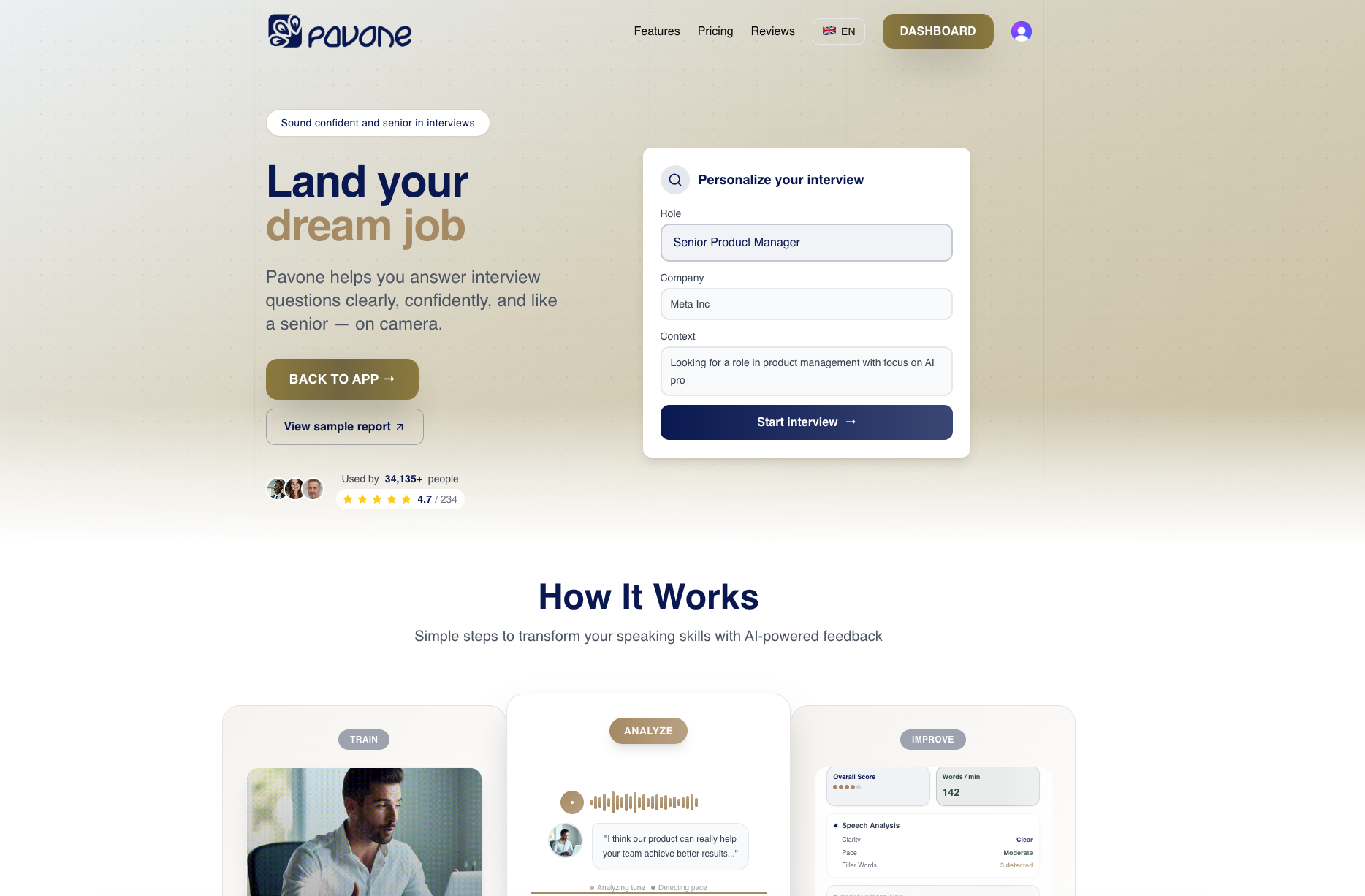
Unlock Your Public Speaking Potential with Pavone.ai
Mastering public speaking skills as highlighted in the “7 Essential Public Speaking Tips 2026 for Tech Professionals” article requires clear insight into your delivery, control over pace, reduction of filler words, and effective body language. These are common challenges tech professionals face when aiming to communicate confidently and professionally.
Pavone.ai offers an AI-driven platform designed to tackle these exact pain points. By analysing your speech in real time, Pavone.ai provides detailed feedback on clarity, vocal pace, filler word usage, and even non-verbal cues like eye contact and gestures. This personalised coaching ensures you can track your progress systematically and gain the confidence needed to transform every presentation into a memorable success.
Take control of your communication journey today and experience the power of professional feedback tailored to your needs without complicated setup or commitments.
Elevate your speaking skills now with Pavone.ai
Discover how AI can enhance your public speaking confidence
Start your free trial and see detailed performance insights
Frequently Asked Questions
How can I manage my nerves before public speaking?
To manage nerves before public speaking, practice deep breathing techniques to calm your body and mind. Spend a few minutes taking deep, slow breaths to regulate your nervous system and project calm assurance before your presentation.
What are effective techniques for improving my body language during presentations?
Improving body language involves making deliberate eye contact with your audience and using open, relaxed posture. Practice in front of a mirror to enhance your movements and ensure that they align with your key points.
How can I eliminate filler words from my public speaking?
To eliminate filler words, become aware of your speaking patterns by recording your presentations. Instead of using fillers like ‘um’ or ‘like’, practise pausing to think before you speak, which helps you communicate with greater clarity and authority.
What is the ideal speaking pace for engaging my audience?
The ideal speaking pace is around 150-160 words per minute, balancing clarity with engagement. Use a timer to practice your presentation and adjust your pace according to audience comprehension cues and emotional dynamics in your content.
How can I structure my pitch for maximum impact?
Structure your pitch with an engaging opening hook, a clear problem statement, and a strong call to action. Practise your pitch multiple times, tailoring it to different audiences to enhance adaptability and confidence in your delivery.
How should I track my progress in public speaking?
Track your progress by recording video sessions of your presentations and soliciting feedback from peers. Create a personal speaking journal to document strengths, challenges, and specific improvements for future performances.
Recommended
- Academy - Public Speaking & Communication Tips | Pavone
- How to Speak Confidently in Front of Others - Pavone
- Speak Confidently in Meetings - Pavone Academy
- How To Articulate Thoughts Clearly - Pavone Academy
- Outdoor Group Games For Adults Perfect for Team Building
- 12 Communication Skills Every Student Should Master
Ready to practice?
Start improving your speaking skills with AI-powered feedback and analysis.
Try Pavone Free