
7 Types of Public Speaking Every Job Seeker Should Know

Standing out during job interviews takes more than listing qualifications. Employers are searching for candidates who communicate with clarity, confidence, and impact. If your speaking style feels flat or you struggle to make your skills memorable, you are missing out on opportunities to impress decision makers.
The good news is that certain communication techniques can transform how you present yourself. By mastering key speaking styles, you will be able to inform, persuade, demonstrate, and connect in professional settings. Each approach brings practical advantages you can use right away to move closer to your career goals.
Discover which methods work best for interviews and learn strategies to make your voice heard. The following insights will reveal how you can capture attention, inspire confidence, and leave a lasting impression.
Table of Contents
- Informative Speaking: Explaining Clearly to Engage Employers
- Persuasive Speaking: Influencing Decisions in Interviews
- Demonstrative Speaking: Showing Skills Effectively
- Impromptu Speaking: Responding Confidently to Questions
- Motivational Speaking: Inspiring With Your Unique Story
- Ceremonial Speaking: Shining in Formal or Group Settings
- Panel Speaking: Collaborating Successfully With Others
Quick Summary
| Takeaway | Explanation |
|---|---|
| 1. Clarity Is Key | Break down complex ideas into clear, relatable language to engage your audience effectively. |
| 2. Craft Compelling Narratives | Use storytelling techniques to illustrate your capabilities and connect with employers emotionally. |
| 3. Prepare Thoroughly | Research your topic, anticipate questions, and practise your delivery to ensure success. |
| 4. Adapt Your Communication Style | Tailor your approach based on your audience’s preferences to enhance understanding and impact. |
| 5. Engage in Active Listening | Focus on understanding questions or contributions from others for more effective responses during discussions. |
1. Informative Speaking: Explaining Clearly to Engage Employers
Informative speaking is a critical communication skill that transforms complex information into engaging, digestible content for employers. At its core, this speaking style focuses on explaining complex ideas clearly without overwhelming your audience.
When presenting information during job interviews or professional settings, your goal is to demonstrate expertise while maintaining audience interest. Effective informative speaking requires careful research, logical organisation, and the ability to translate technical or specialised knowledge into accessible language that resonates with your listeners.
Successful informative speakers understand that clarity trumps complexity. They break down intricate concepts into straightforward explanations, using concrete examples and relatable analogies. This approach helps employers quickly grasp your professional capabilities and communication proficiency.
Key strategies for mastering informative speaking include preparing concise content, using clear language, maintaining a steady pace, and reading your audience’s engagement levels. Your delivery should balance professionalism with genuine enthusiasm about the information you’re sharing.
Practical application involves structured preparation: research your topic thoroughly, outline key points, anticipate potential questions, and practise your delivery. During presentations or interviews, focus on maintaining eye contact, speaking with confidence, and adapting your communication style to your specific audience.
Professional Tip: Practice explaining complex work concepts to someone outside your field to ensure your communication remains clear and accessible.
2. Persuasive Speaking: Influencing Decisions in Interviews
Persuasive speaking is a powerful communication strategy that goes beyond merely presenting information. In job interviews, it involves strategically crafting arguments that influence hiring decisions through compelling storytelling and strategic communication.
At its core, persuasive speaking relies on three fundamental elements: ethos (credibility), pathos (emotional connection), and logos (logical reasoning). Successful job seekers understand how to balance these elements to create a convincing narrative about their professional capabilities.
Credibility comes from demonstrating expertise through specific examples and achievements. Emotional connection involves showing genuine passion for the role and aligning your personal values with the organisation’s mission. Logical reasoning means presenting clear, structured arguments that demonstrate how your skills directly solve the employer’s challenges.
Practical application requires careful preparation. Before interviews, research the company thoroughly, anticipate potential questions, and develop concise stories that showcase your unique value proposition. Practice delivering these narratives with confidence, ensuring your body language and tone reinforce your message.
Key techniques include using concrete evidence to support your claims, showing enthusiasm without appearing overzealous, and adapting your communication style to match the interviewer’s preferences. Remember that persuasion is about creating a compelling, authentic narrative that makes employers see you as the ideal candidate.
Professional Tip: Record yourself practicing interview responses to refine your persuasive speaking technique and identify areas for improvement.
3. Demonstrative Speaking: Showing Skills Effectively
Demonstrative speaking is a powerful communication technique that allows professionals to showcase their skills through practical, visual explanations. It transforms abstract capabilities into tangible, easily understood demonstrations that capture an audience’s attention and comprehension.
At its core, demonstrative speaking involves step-by-step instruction that helps listeners understand complex processes or skills through active learning. Unlike traditional informative presentations, this approach emphasises hands-on explanation and interactive engagement.
In job interviews and professional settings, demonstrative speaking can set you apart by allowing you to prove your capabilities rather than simply describing them. Imagine explaining a technical process, walking through a project management approach, or illustrating a problem solving technique using clear, structured communication.
Successful demonstrative speaking requires meticulous preparation. Break down your skill or process into logical, sequential steps. Use visual aids strategically visual diagrams, props, or digital presentations can transform your explanation from good to exceptional. Practice your demonstration to ensure smooth transitions and anticipate potential questions.
Key strategies include maintaining clear eye contact, using precise language, speaking at a measured pace, and checking audience understanding. Your goal is to make complex information feel accessible and engaging. Demonstrate not just what you know, but how you apply your knowledge effectively.
Professional Tip: Rehearse your demonstrative speech in front of a mirror or record yourself to refine your explanation technique and identify areas for improvement.
4. Impromptu Speaking: Responding Confidently to Questions
Impromptu speaking represents a critical communication skill where professionals must articulate thoughtful responses in unplanned moments. It is the art of delivering coherent, intelligent answers without extensive preparation, a skill particularly vital during job interviews, meetings, and professional interactions.
The essence of impromptu speaking lies in managing spontaneous communication challenges with confidence and clarity. Unlike scripted presentations, this speaking style demands quick thinking, mental agility, and the ability to construct logical responses under pressure.
Professional success often hinges on your capacity to respond effectively in unexpected scenarios. Whether answering unexpected interview questions, providing immediate feedback in team meetings, or addressing stakeholder inquiries, impromptu speaking demonstrates your intellectual flexibility and communication prowess.
Key strategies include developing a mental framework for rapid response. Start by listening carefully, taking a brief moment to organise your thoughts, and structuring your answer using a clear opening statement, supporting evidence, and a concise conclusion. Practice active listening and train yourself to identify the core of each question quickly.
Developing impromptu speaking skills requires deliberate practice. Create scenarios that challenge you to respond spontaneously. Record yourself answering unexpected questions, analyse your responses, and gradually build confidence in your ability to communicate effectively without extensive preparation.
Professional Tip: Develop a personal repertoire of go-to phrases and transitional statements that help you buy thinking time while maintaining a professional demeanour.
5. Motivational Speaking: Inspiring with Your Unique Story
Motivational speaking is the art of transforming personal experiences into powerful narratives that inspire and energise listeners. It transcends simple storytelling by connecting individual journeys with universal human aspirations and challenges.
In professional contexts, motivational speaking becomes a critical skill for job seekers who want to distinguish themselves through authentic storytelling techniques. Your unique narrative serves as a compelling tool to demonstrate resilience, growth, and potential to prospective employers.
The most effective motivational stories are not about perfection, but about honest transformation. They reveal moments of struggle, learning, and personal development that showcase your character, adaptability, and emotional intelligence. By sharing genuine experiences, you create an emotional connection that resonates far beyond traditional resume bullet points.
Constructing a motivational story requires strategic reflection. Identify pivotal moments in your professional or personal journey that illustrate key strengths such as problem solving, leadership, or perseverance. Focus on the lessons learned and the personal growth achieved, rather than dwelling on challenges.
Practical application involves crafting a narrative arc that includes context, challenge, action, and resolution. Use vivid language, specific examples, and a tone that balances vulnerability with confidence. Your goal is to inspire listeners by demonstrating how personal challenges can be transformed into professional opportunities.
Professional Tip: Practice your motivational story with trusted colleagues or mentors who can provide feedback on emotional impact and narrative clarity.
6. Ceremonial Speaking: Shining in Formal or Group Settings
Ceremonial speaking represents a sophisticated form of communication that transforms ordinary moments into meaningful, memorable experiences. It is an art of connecting with audiences through carefully crafted words that honour, celebrate, and inspire during significant professional and personal occasions.
Understanding the nuanced role of ceremonial speaking in community contexts requires recognising its power to create emotional resonance. Whether delivering an award introduction, team recognition, or farewell speech, your goal is to capture the essence of the moment while engaging your audience authentically.
In professional environments, ceremonial speaking opportunities arise frequently retirement celebrations, project completions, leadership transitions, and professional milestones. These moments demand a delicate balance of professionalism, emotional intelligence, and storytelling skill. Your speech should elevate the occasion, recognise individual contributions, and reinforce organisational values.
Successful ceremonial speaking involves three key elements: thorough preparation, emotional understanding, and genuine appreciation. Research the context, understand the individuals involved, and craft a narrative that highlights achievements, character, and collective meaning. Use specific examples, heartfelt language, and a tone that reflects the event’s significance.
Practical strategies include developing a clear structure introduction, body, and conclusion that flows naturally. Practice your delivery to ensure sincerity, maintain appropriate eye contact, and modulate your voice to convey genuine emotion. Remember that your words have the power to create lasting memories and emotional connections.
Professional Tip: Record and review your ceremonial speeches to refine your emotional delivery and ensure your message resonates with authentic, professional warmth.
7. Panel Speaking: Collaborating Successfully with Others
Panel speaking represents a sophisticated form of collaborative communication where multiple professionals engage in structured dialogue to share insights, debate perspectives, and collectively explore complex topics. It demands a unique set of interpersonal and communication skills that go beyond traditional public speaking.
Successful panel participation requires understanding expert panel communication dynamics that balance individual expertise with collaborative interaction. Your role is not just to present information, but to contribute meaningfully to a collective conversation while respecting your fellow panellists.
Professional panels serve as platforms for knowledge exchange, where diverse perspectives converge to illuminate multifaceted issues. These settings test your ability to listen actively, respond thoughtfully, and integrate your insights with those of other experts without dominating the discussion or undermining your colleagues.
Practical preparation involves thorough research, understanding the panel’s objectives, and developing concise, impactful contributions. Anticipate potential questions, prepare brief, engaging responses, and practise transitional phrases that allow smooth interaction between panellists. Your goal is to demonstrate collaborative intelligence and professional adaptability.
Key strategies include maintaining respectful body language, actively listening to co-panellists, using inclusive language, and finding opportunities to build upon or constructively challenge presented ideas. Effective panel speakers know how to create dialogue rather than deliver monologues, showcasing intellectual agility and professional generosity.
Professional Tip: Record yourself participating in mock panel discussions to analyse your interaction style, identifying areas where you can enhance collaborative communication and professional presence.
Below is a comprehensive table summarising the communication styles detailed throughout the article and their applications in professional scenarios.
| Communication Style | Description | Key Strategies |
|---|---|---|
| Informative Speaking | Clearly explaining complex ideas to maintain audience engagement. | Research thoroughly, organise logically, and translate concepts with relatable analogies. |
| Persuasive Speaking | Crafting arguments that influence decisions through credibility, emotion, and logic. | Demonstrate expertise, connect emotionally, and support claims with evidence. |
| Demonstrative Speaking | Showcasing skills through step-by-step instructions to engage audiences. | Use visual aids, follow logical steps, and ensure clarity through practice. |
| Impromptu Speaking | Quickly articulating responses to unplanned questions. | Listen actively, structure responses logically, and adapt confidently under pressure. |
| Motivational Speaking | Inspiring others with narratives of personal growth and resilience. | Reflect on life lessons, focus on transformative experiences, and communicate authentically. |
| Ceremonial Speaking | Honouring and connecting through speeches during significant events. | Understand context, balance professionalism and emotion, and craft memorable messages. |
| Panel Speaking | Collaborative dialogue in group discussions. | Prepare impactful contributions, engage respectfully with co-panellists, and balance dialogue dynamics. |
Elevate Your Public Speaking Skills with Pavone.ai
Mastering the 7 Types of Public Speaking every job seeker should know demands more than knowing the theory. Whether it is Informative Speaking, Persuasive Speech, or confidently handling Impromptu Speaking, many professionals struggle with clarity, pacing, and emotional connection. These challenges can hold back your chance to impress employers and showcase your true potential.
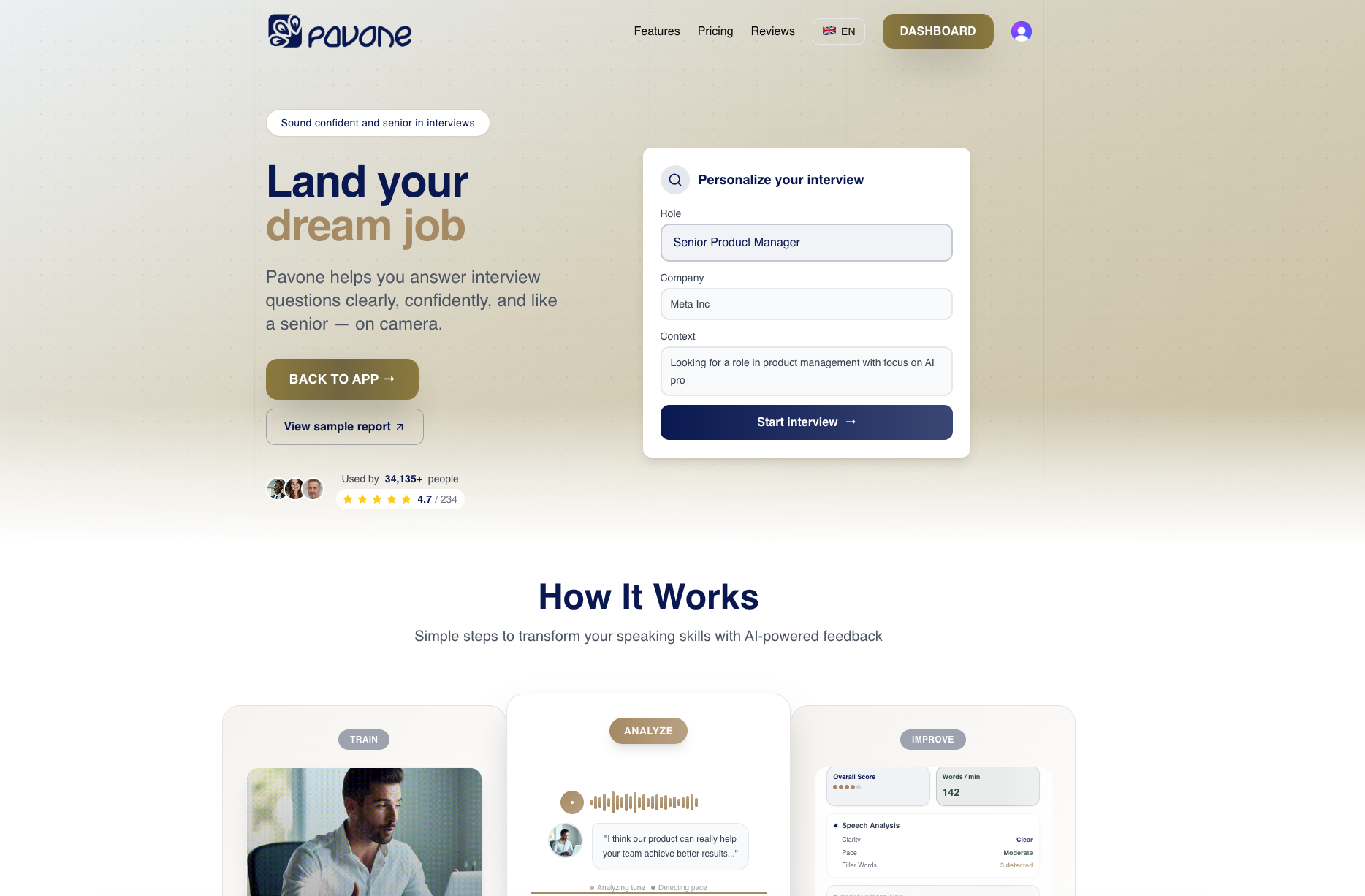
Unlock actionable insights with Pavone.ai, the AI-powered platform designed to improve all aspects of your communication. From analysing your tone and pace to evaluating eye contact and gestures, Pavone.ai offers personalised feedback that helps you speak confidently in interviews, panel discussions, or motivational talks. Start your journey towards becoming a more compelling, articulate communicator today. Visit Pavone.ai and experience a new level of public speaking excellence.
Frequently Asked Questions
What are the seven types of public speaking that job seekers should know?
Understanding the seven types of public speaking helps job seekers excel in various situations, including informative, persuasive, demonstrative, impromptu, motivational, ceremonial, and panel speaking. Consider revising your skills in each area to enhance your overall communication abilities, especially during interviews.
How can I improve my informative speaking skills for job interviews?
To enhance your informative speaking skills, focus on breaking down complex concepts into clear, engaging explanations. Practise explaining technical topics to someone unfamiliar with your field to ensure clarity and comprehension.
What techniques can I use for persuasive speaking in interviews?
When aiming to persuade during interviews, utilise credible examples, emotional connections, and logical reasoning to construct compelling narratives. Prepare engaging stories that highlight your achievements and how they relate to the employer’s needs, refining them through practice.
How do I practise impromptu speaking for unexpected questions?
Improve your impromptu speaking abilities by simulating unexpected questions during mock interviews or practice sessions. Create a repertoire of go-to phrases to help you organise your thoughts quickly and respond confidently.
What should I include in a motivational speech for a job application?
When crafting a motivational speech, share your personal journey and the lessons learned from your experiences. Structure your narrative to illustrate resilience and growth, aiming to connect emotionally with your audience by demonstrating how your challenges can contribute to your potential.
How can I prepare for panel speaking engagements?
To prepare for panel speaking, research the topic thoroughly and anticipate possible questions from panellists and the audience. Develop brief, impactful contributions and practise using transitional phrases to facilitate smooth interactions with fellow panellists.
Recommended
- Academy - Public Speaking & Communication Tips | Pavone
- How to Speak Confidently in Job Interviews - Pavone
- How to Speak Confidently in Front of Others - Pavone
- Speak Confidently in Meetings - Pavone Academy
- 7 Must-Have Skills for an Entrepreneurship Skills Checklist - Nomad Excel - Your Entrepreneurial Adventure Starts Here
- 12 Communication Skills Every Student Should Master
Ready to practice?
Start improving your speaking skills with AI-powered feedback and analysis.
Try Pavone Free