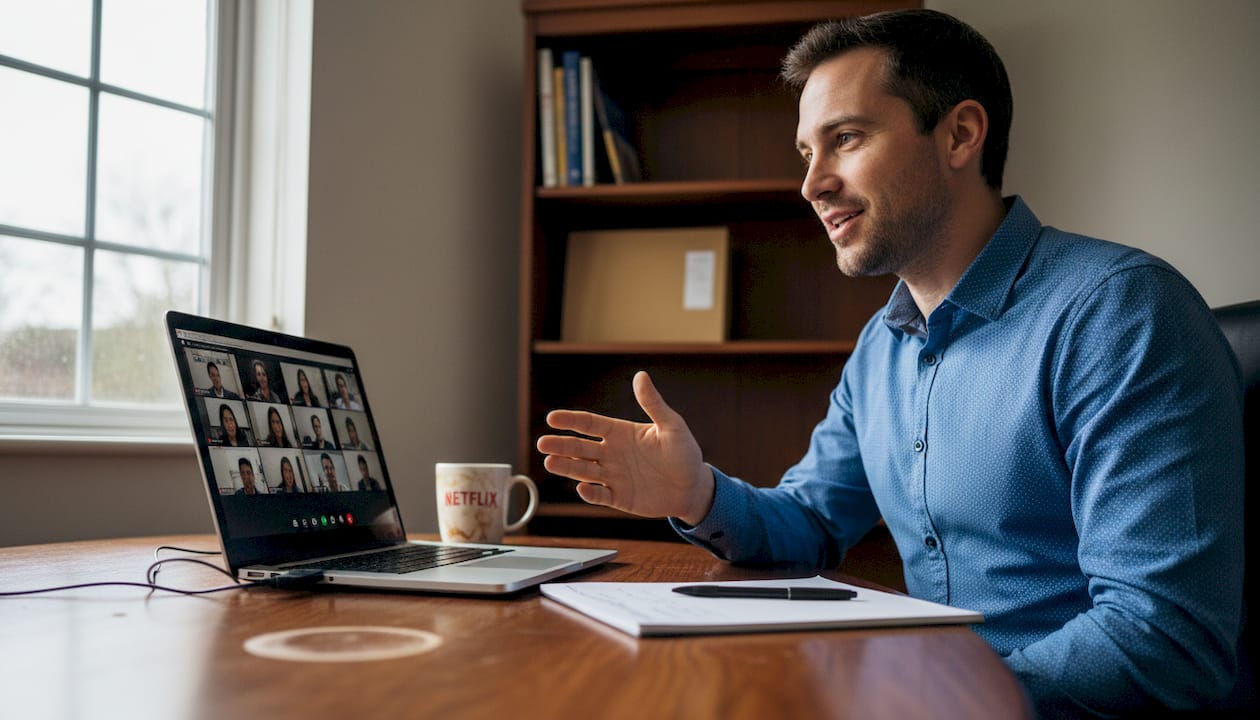
Effective Speaking: Transforming Interview Success

Navigating high-stakes interviews in the Technology sector often demands more than just technical expertise. Professionals who articulate their responses with clarity, confidence, and structure can transform interviews from routine evaluations into compelling professional narratives. This article explores the science behind effective speaking, offering proven strategies to enhance your communication skills and prepare you for impactful on-camera performances.
Table of Contents
- Defining Effective Speaking In Interviews
- Core Elements: Clarity, Structure, And Impact
- Types Of Speaking Challenges And How To Overcome Them
- Feedback And Practice: The Role Of Technology
- Common Pitfalls And How To Avoid Them
Key Takeaways
| Point | Details |
|---|---|
| Effective Interview Speaking | Involves clear, confident communication that aligns verbal and non-verbal cues to make a strong impression. |
| Core Components | Focus on clarity, structure, and impact to transform responses into engaging narratives. |
| Overcoming Challenges | Address internal and external communication barriers through mindful preparation and consistent practice. |
| Technology’s Role | Utilise advanced tools for personalised feedback and skill enhancement in interview preparation. |
Defining Effective Speaking in Interviews
Effective speaking in job interviews represents a sophisticated communication skill that transcends mere verbal exchange. At its core, this competency involves articulating thoughts clearly, confidently, and strategically while aligning verbal and non-verbal communication to create a compelling professional impression.
Research indicates that effective interview speaking comprises several critical components, including logical response structure, clarity of communication, and professional demeanour. Interview communication skills are fundamentally about translating your professional capabilities into a persuasive narrative that resonates with potential employers.
Key elements of effective interview speaking include:
- Preparing structured, concise responses
- Demonstrating professional confidence
- Maintaining appropriate verbal and non-verbal communication
- Handling challenging questions with composure
- Aligning communication with employer expectations
Professional communication in interviews demands more than just answering questions. It requires a nuanced approach that combines technical knowledge, emotional intelligence, and strategic communication. Advanced communication techniques suggest that candidates who can synthesise information quickly and articulate their thoughts persuasively are more likely to succeed.
Effective speaking transforms interview interactions from mere question-and-answer sessions into compelling professional narratives.
Pro tip: Practice your interview responses on camera to develop genuine confidence and identify communication patterns that might need refinement.
Core Elements: Clarity, Structure, and Impact
Effective communication in interviews hinges on three fundamental elements: clarity, structure, and impact. These interconnected components transform ordinary responses into compelling professional narratives that capture an interviewer’s attention and demonstrate a candidate’s communication prowess.

Effective speech elements require careful orchestration of verbal and non-verbal communication strategies. Clarity emerges from logical thought progression, precise language selection, and coherent idea articulation. Structural integrity involves methodically organising thoughts to create a narrative flow that guides the listener through complex information seamlessly.
Key components of impactful interview communication include:
- Using concise, precise language
- Maintaining consistent narrative flow
- Matching verbal content with confident body language
- Adapting communication style to interviewer’s expectations
- Demonstrating emotional intelligence through communication
Non-verbal communication plays a critical role in reinforcing spoken messages. Oral communication techniques suggest that tone, tempo, and physical gestures can significantly enhance or undermine verbal content. Professional communicators understand that impact is not just about what is said, but how it is delivered.
Communication is an art form where clarity, structure, and impact converge to create memorable professional interactions.
Pro tip: Record and review your interview practice sessions to identify subtle communication patterns that might enhance or detract from your professional presentation.
Types of Speaking Challenges and How to Overcome Them
Interviewees frequently encounter complex communication barriers that can significantly undermine their professional presentation. These speaking challenges range from internal psychological obstacles to external communication limitations that demand strategic intervention and targeted skill development.
Speaking challenges encompass multiple dimensions that professionals must navigate carefully. Anxiety, language proficiency, and communication complexity represent the primary domains where individuals struggle to articulate their professional narrative effectively.
Common speaking challenges in interview contexts include:
- Performance anxiety and nervousness
- Inability to structure complex thoughts coherently
- Limited vocabulary or imprecise language usage
- Difficulty reading interviewer’s communication cues
- Tendency to use excessive filler words
- Inconsistent non-verbal communication signals
Overcoming these challenges requires a multifaceted approach that combines psychological preparation, systematic practice, and deliberate skill enhancement. Targeted strategies such as mock interviews, video recording analysis, and mindfulness techniques can progressively build communication confidence and reduce interview-related stress.
Below is a summary of common interview speaking challenges, their root causes, and recommended solutions:
| Challenge | Root Cause | Solution |
|---|---|---|
| Performance anxiety | Fear of judgement | Mindfulness, visualisation |
| Incoherent thought structure | Lack of preparation | Response frameworks, practice |
| Imprecise language usage | Limited vocabulary | Vocabulary building, reading |
| Difficulty reading cues | Low emotional intelligence | Role-play, observation exercises |
| Excessive filler words | Habitual speech patterns | Focused practice, feedback |
Professional communication is a skill that can be systematically developed through intentional practice and self-awareness.
Pro tip: Develop a pre-interview mental preparation routine that includes deep breathing exercises and positive visualisation to manage communication anxiety effectively.
Feedback and Practice: The Role of Technology
Technology has revolutionised professional communication training, transforming how candidates prepare for high-stakes interviews. Digital platforms now offer unprecedented opportunities for self-assessment, targeted skill development, and objective performance analysis.
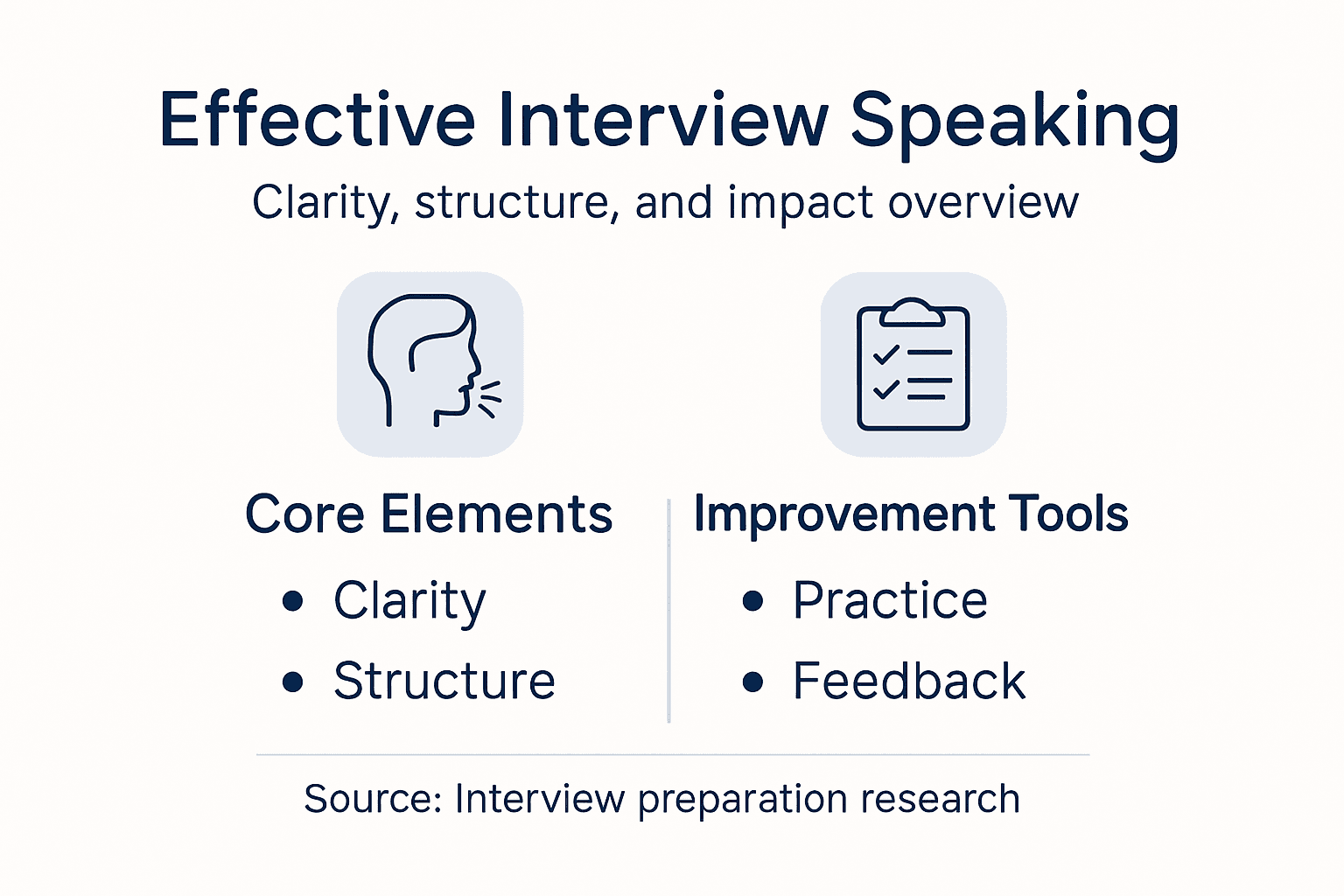
Educational technology tools provide sophisticated mechanisms for personalised speaking practice, enabling professionals to refine their communication skills with precision and consistency. These advanced systems analyse multiple dimensions of speech, including fluency, articulation, tone, and structural coherence.
Key technological advantages in communication skills development include:
- Real-time speech recognition and analysis
- Automated feedback on verbal and non-verbal communication
- Objective performance metrics and tracking
- Contextualised interview scenario simulations
- Personalised improvement recommendations
- Confidence-building through repeated practice
Modern communication technologies transcend traditional practice methods by offering immersive, data-driven learning experiences. Artificial intelligence and machine learning algorithms can now detect nuanced communication patterns, providing insights that human observers might miss.
Here’s a comparison of traditional versus technology-enhanced interview preparation methods:
| Preparation Method | Key Features | Typical Outcomes | Business Impact |
|---|---|---|---|
| Traditional Practice | Manual rehearsals, peers | Limited objective feedback | Slower skill improvement |
| Technology-Enhanced Practice | AI-driven analysis, recordings | Real-time metrics, tailored guidance | Accelerated skill development |
| Mock Interview Panels | Simulated settings, feedback | Diverse perspectives, scenario testing | Broader communication strength |
| Self-Review via Video | Personal recording, playback | Increased self-awareness, targeted focus | Improved confidence |
Technology transforms speaking practice from a subjective experience to a measurable, scientifically-informed skill development journey.
Pro tip: Leverage video recording technologies to conduct weekly self-review sessions, focusing on incremental improvements in your communication approach.
Common Pitfalls and How to Avoid Them
Interviewees often encounter subtle communication challenges that can dramatically undermine their professional presentation. Speaking effectiveness requires a nuanced understanding of potential pitfalls and strategic approaches to mitigate them proactively.
Common speaking challenges encompass multiple dimensions that can significantly impact interview performance. These include verbal communication limitations, non-verbal miscues, and structural inconsistencies that diminish a candidate’s perceived competence and confidence.
Key interview communication pitfalls include:
- Excessive use of filler words
- Lack of clear narrative structure
- Inconsistent body language
- Poor vocal modulation
- Insufficient preparation
- Over-explaining or rambling responses
Mitigating these challenges requires deliberate practice and self-awareness. Professionals must develop a keen understanding of their communication patterns, systematically identifying and addressing potential weaknesses through targeted skill enhancement techniques.
Mastering interview communication is about recognising potential pitfalls before they undermine your professional narrative.
Pro tip: Record yourself answering typical interview questions and critically analyse your communication patterns, paying close attention to verbal and non-verbal elements.
Enhance Your Interview Speaking Skills with Pavone.ai
The article “Effective Speaking: Transforming Interview Success” highlights common challenges such as performance anxiety, unclear response structure, and inconsistent non-verbal cues that can hold candidates back during interviews. If you are striving to develop clarity, structure, and impact in your communication while managing nerves and filler words, Pavone.ai offers a personalised interview coaching experience designed to address exactly these issues. This platform helps you practise answering interview questions on camera in a private, supportive environment where you receive immediate, actionable feedback on your clarity, pacing, confidence, and more.
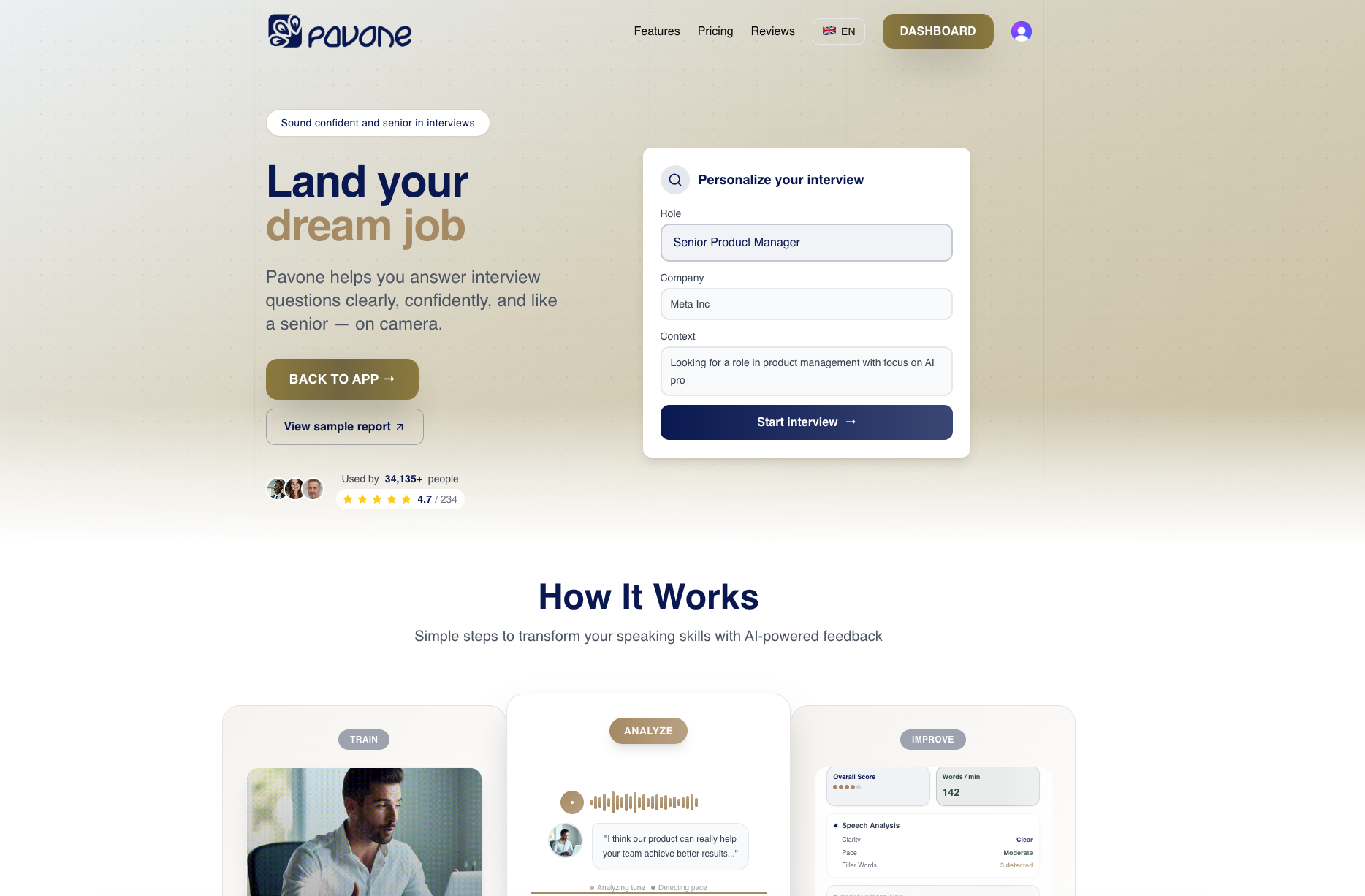
Take control of your interview preparation today by using Pavone.ai to refine your speaking effectiveness based on proven communication principles discussed in the article. With short, focused practice sessions that fit your schedule and detailed analysis to track your progress, you will build greater confidence and deliver answers that resonate with interviewers. Start transforming your interview communication now and turn challenges into strengths with Pavone.ai.
Frequently Asked Questions
What are the key components of effective speaking in interviews?
The key components include clarity of communication, structured responses, professional demeanour, and effective handling of challenging questions.
How can I build confidence in my interview speaking skills?
You can build confidence by practising your responses on camera, engaging in mock interviews, and developing a pre-interview mental preparation routine that includes mindfulness techniques.
What are common speaking challenges faced during interviews?
Common challenges include performance anxiety, difficulty structuring thoughts coherently, limited vocabulary, and inconsistent non-verbal communication signals.
How can technology aid in improving my interview speaking skills?
Technology can enhance your practice through digital platforms that offer speech recognition, automated feedback, and personalised performance metrics, helping you refine your communication skills effectively.
Recommended
- Why Practice Speaking Matters for Interview Success | Pavone Academy
- Interviewing for Mid and Senior Roles: Succeed with Confidence | Pavone Academy
- How Do I Prepare for Interview: Achieve Clear Confident Delivery | Pavone Academy
- Job Interview Preparations for Confident Video Responses | Pavone Academy
- How to Pass a TEFL Job Interview (7 Questions + Demo Lesson)
- 7 Hypnotherapy Best Practices 2026 for Superior Client Success
Ready to practice?
Start improving your speaking skills with AI-powered feedback and analysis.
Try Pavone Free