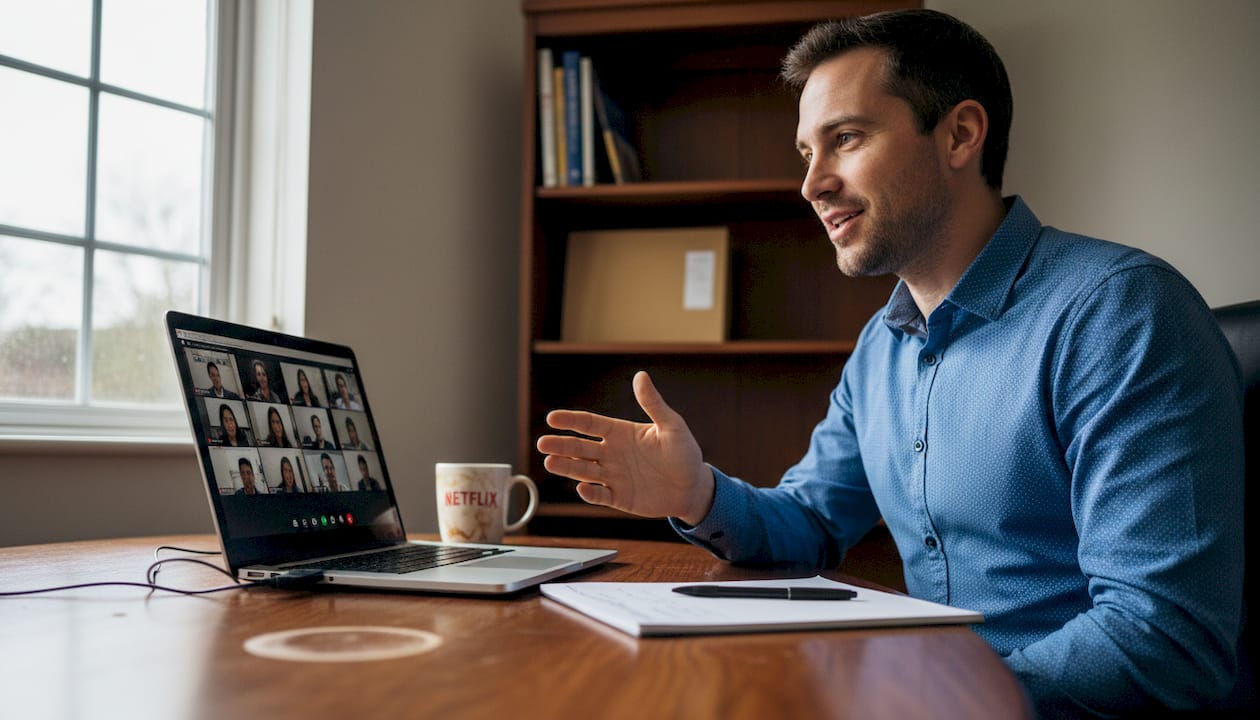
Online Interview Practise: Building Confidence and Clarity

Stepping into a digital interview room often feels unfamiliar, especially for professionals in competitive fields like Finance and Technology. While online interview practice offers new ways to build confidence and improve performance, many still believe remote sessions lack the professionalism of in-person meetings. Recognising the strengths and limits of different interview modes, as highlighted by the concept of interview mode pluralism, helps candidates make smarter choices and refine their communication strategies for success.
Table of Contents
- Defining Online Interview Practise And Key Misconceptions
- Types Of Online Interview Formats And Their Distinctions
- Critical Skills Assessed During Online Interview Practise
- Privacy, Platform Features, And Improvement Tracking
- Risks, Common Mistakes, And Practical Alternatives
Key Takeaways
| Point | Details |
|---|---|
| Understanding Online Interviews | Online interviews represent a distinct communication ecosystem that requires specific skills and preparation, beyond traditional face-to-face interactions. |
| Mastering Different Formats | Familiarity with various online interview formats, such as video conferencing and text-based interviews, is essential for effective communication and presentation. |
| Addressing Technical Challenges | Recognising and preparing for potential technological risks can significantly enhance performance during digital interviews. |
| Utilising Feedback Tools | Leveraging performance analytics and feedback features in digital platforms can provide valuable insights for continuous improvement in interview skills. |
Defining online interview practise and key misconceptions
Online interview practice has emerged as a sophisticated methodology for professional preparation, moving far beyond traditional face-to-face interactions. Unlike conventional interview approaches, digital platforms now offer nuanced opportunities for candidates to refine communication skills, analyse performance, and build confidence in a controlled environment.
Several critical misconceptions persist about online interview practice that can significantly impact a candidate’s approach:
- Remote interviewing is less professional than in-person interactions
- Technical platforms fundamentally alter interview dynamics
- Camera presence is unimportant in digital interviews
- Performance feedback is generic and unhelpful
- Online practice cannot replicate genuine interview pressures
Research highlights that interview mode pluralism requires understanding the unique strengths and limitations of digital interviewing platforms. During the COVID-19 pandemic, professionals worldwide discovered that online interviews demand specific communication strategies and technical adaptations.
Key challenges in online interview practice include managing technological variables, maintaining professional demeanour, and effectively communicating through a digital medium. Candidates must develop skills like maintaining eye contact with the camera, managing background environments, and projecting confidence despite physical distance.
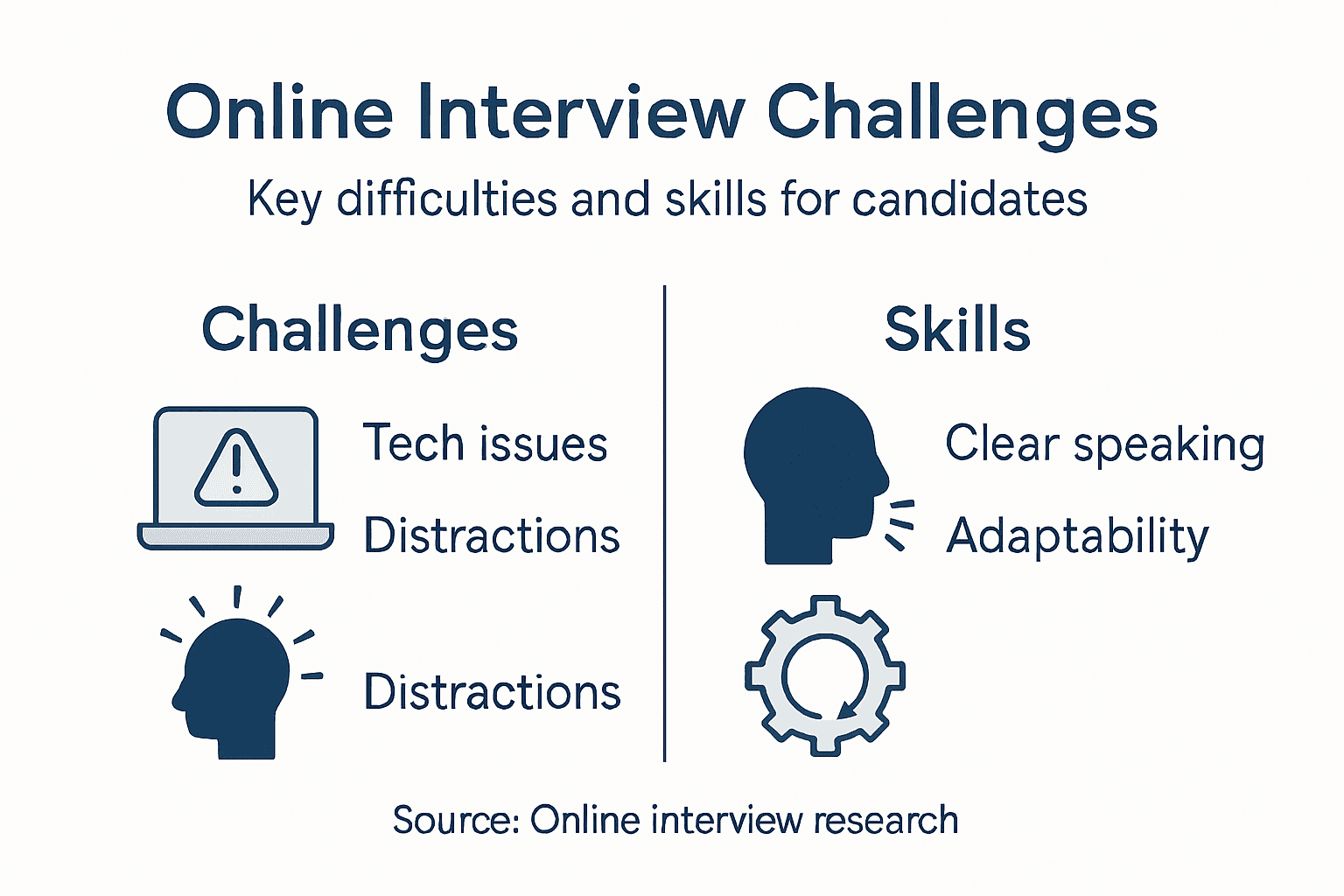
Professional digital communication requires deliberate practice and strategic approach. Successful candidates recognise that online interviews are not merely a technical substitute for in-person meetings, but an entirely distinct communication ecosystem with its own nuanced requirements.
Pro tip: Practice your online interview techniques in the same environment and technological setup you will use during the actual interview to minimise unexpected variables.
Types of online interview formats and their distinctions
Online interview formats have significantly diversified, offering professionals multiple approaches to demonstrate their skills and potential. Synchronous and asynchronous interview methods represent two primary categories that fundamentally transform how candidates interact with potential employers.
The main types of online interview formats include:
-
Video conferencing interviews
- One-to-one live interactions
- Group panel discussions
- Real-time screen sharing capabilities
-
Pre-recorded video interviews
- Structured questionnaire formats
- Timed response challenges
- Skill-specific assessment platforms
-
Text-based interviews
- Email exchanges
- Instant messaging platforms
- Collaborative document interactions
Research demonstrates that systematic interview format comparisons reveal distinct advantages for each approach. Video interviews, for instance, allow immediate non-verbal communication, while pre-recorded formats provide candidates additional preparation time and reduce immediate performance anxiety.
To clarify distinctions between online interview formats, consider the following comparison:
| Interview Format | Interaction Type | Typical Use Case | Preparation Focus |
|---|---|---|---|
| Video conferencing | Live, real-time dialogue | Panel or one-to-one interviews | Verbal and visual delivery |
| Pre-recorded video | Time-delayed responses | Automated candidate screening | Concise and timed answers |
| Text-based | Written, asynchronous | Documentation or remote panels | Written clarity and speed |
Each interview format demands unique communication strategies. Video conferences require maintaining camera eye contact, managing background environments, and projecting professional body language. Pre-recorded interviews challenge candidates to deliver concise, impactful responses within strict time constraints. Text-based interactions emphasise written communication precision and clarity.

Digital interview platforms are evolving rapidly, offering nuanced approaches that go beyond traditional recruitment methodologies. Successful candidates understand how to adapt their communication style across different technological interfaces, recognising that each format tests distinct professional competencies.
Pro tip: Practise your communication style across multiple online interview formats to develop versatile professional presentation skills.
Critical skills assessed during online interview practise
Online interviews represent a sophisticated assessment environment that evaluates candidates far beyond traditional face-to-face interactions. Comprehensive skill evaluation techniques have emerged to systematically assess professional competencies in digital contexts.
The critical skills assessed during online interviews encompass multiple dimensions:
-
Communication Skills
- Verbal articulation clarity
- Concise and structured response delivery
- Professional tone and language precision
-
Technological Adaptability
- Digital platform navigation
- Technical troubleshooting capabilities
- Smooth camera and audio interaction
-
Non-verbal Communication
- Appropriate eye contact with camera
- Professional background management
- Body language interpretation
-
Cognitive Capabilities
- Quick thinking and response generation
- Ability to handle unexpected technical challenges
- Maintaining composure under digital interview pressure
Research highlights that interview design critically evaluates communication effectiveness across various digital platforms. Successful candidates demonstrate not just technical knowledge, but the ability to communicate complex ideas efficiently and confidently through virtual mediums.
Professional performance in online interviews requires understanding the nuanced differences between physical and digital communication. Candidates must develop skills that translate their expertise effectively through technological interfaces, recognising that each digital interaction is a complex assessment of professional capabilities.
Pro tip: Record and review your practice interviews to identify subtle communication patterns and technological interaction strengths.
Privacy, platform features, and improvement tracking
Online interview platforms have revolutionised professional assessment by integrating sophisticated privacy protection mechanisms that safeguard both candidate and organisational information. These advanced systems go beyond traditional security measures, creating comprehensive digital environments that prioritise data confidentiality and user control.
Key privacy and platform features include:
-
Privacy Protection
- End-to-end encryption protocols
- Secure data storage systems
- Restricted access controls
- Anonymisation of personal information
-
User Control Mechanisms
- Consent management interfaces
- Camera and microphone toggles
- Session recording permissions
- Data deletion options
-
Performance Tracking Tools
- Detailed analytics dashboards
- Response quality metrics
- Communication skill assessments
- Comparative performance tracking
Research indicates that platform features ensure comprehensive interview quality through systematic monitoring and feedback mechanisms. These tools enable candidates to understand their communication strengths and areas requiring improvement, transforming interview preparation into a structured, data-driven process.
Here is an overview of privacy and tracking features found in modern online interview platforms:
| Feature Type | Typical Functions | Benefit for Candidates |
|---|---|---|
| Privacy controls | Encryption, consent settings | Enhanced personal data security |
| User interface options | Camera/audio toggling, session management | Increased control and confidence |
| Performance analytics | Skill metrics, feedback dashboards | Targeted skill improvement |
The sophisticated nature of modern interview platforms represents a significant departure from traditional assessment methods. By providing granular insights, real-time feedback, and robust privacy protections, these digital environments empower professionals to develop their interview skills with unprecedented precision and confidence.
Pro tip: Review your platform’s privacy settings thoroughly and understand exactly what data is being collected and how it will be used.
Risks, common mistakes, and practical alternatives
Online interviews present complex challenges that require strategic preparation and nuanced understanding. Common risks in digital interviewing encompass technological limitations, communication barriers, and potential privacy vulnerabilities that can significantly impact professional presentation.
Primary risks and potential pitfalls include:
-
Technical Risks
- Internet connectivity failures
- Audio/video synchronisation problems
- Device compatibility issues
- Unexpected software malfunctions
-
Communication Challenges
- Reduced non-verbal communication signals
- Limited interpersonal rapport building
- Misinterpretation of digital cues
- Background noise interference
-
Performance-Related Mistakes
- Inadequate technological preparation
- Poor lighting and camera positioning
- Insufficient background management
- Unprofessional digital environment setup
Research indicates that digital interview methods require comprehensive contingency planning to mitigate potential challenges. Practical alternatives such as hybrid interview formats, phone consultations, and asynchronous communication methods can provide flexible solutions that accommodate diverse technological capabilities.
Successful candidates recognise that digital interviews demand a proactive approach. Understanding potential risks allows professionals to develop robust strategies that transform technological uncertainties into opportunities for demonstrating adaptability and technical proficiency.
Pro tip: Conduct a comprehensive technical rehearsal before your actual interview, testing all equipment and potential communication platforms.
Master Your Online Interview Confidence and Clarity with Pavone.ai
The article highlights key challenges candidates face during online interview practise such as managing technological variables, communicating clearly on camera, and building confidence in a digital environment. If you find yourself struggling with maintaining eye contact, structuring your answers concisely, or reducing distracting filler words, these are common pain points that Pavone.ai specifically addresses. The platform acts as your personal interview coach by analysing your interview delivery with instant, actionable feedback on clarity, pacing, and confidence — exactly what the article describes as critical skills to succeed in online interviews.
Pavone.ai provides a private and easy-to-use space where you can practise real interview questions anytime without pressure. This fits naturally with the article’s advice to rehearse in consistent environments to minimise technical surprises and improve your comfort with different online formats. By tracking your improvement over time, Pavone.ai helps you build the strong communication skills essential for thriving in virtual interviews.
Take control of your interview preparation now with Pavone.ai and experience targeted growth in clarity and confidence that transforms your digital interview presence.
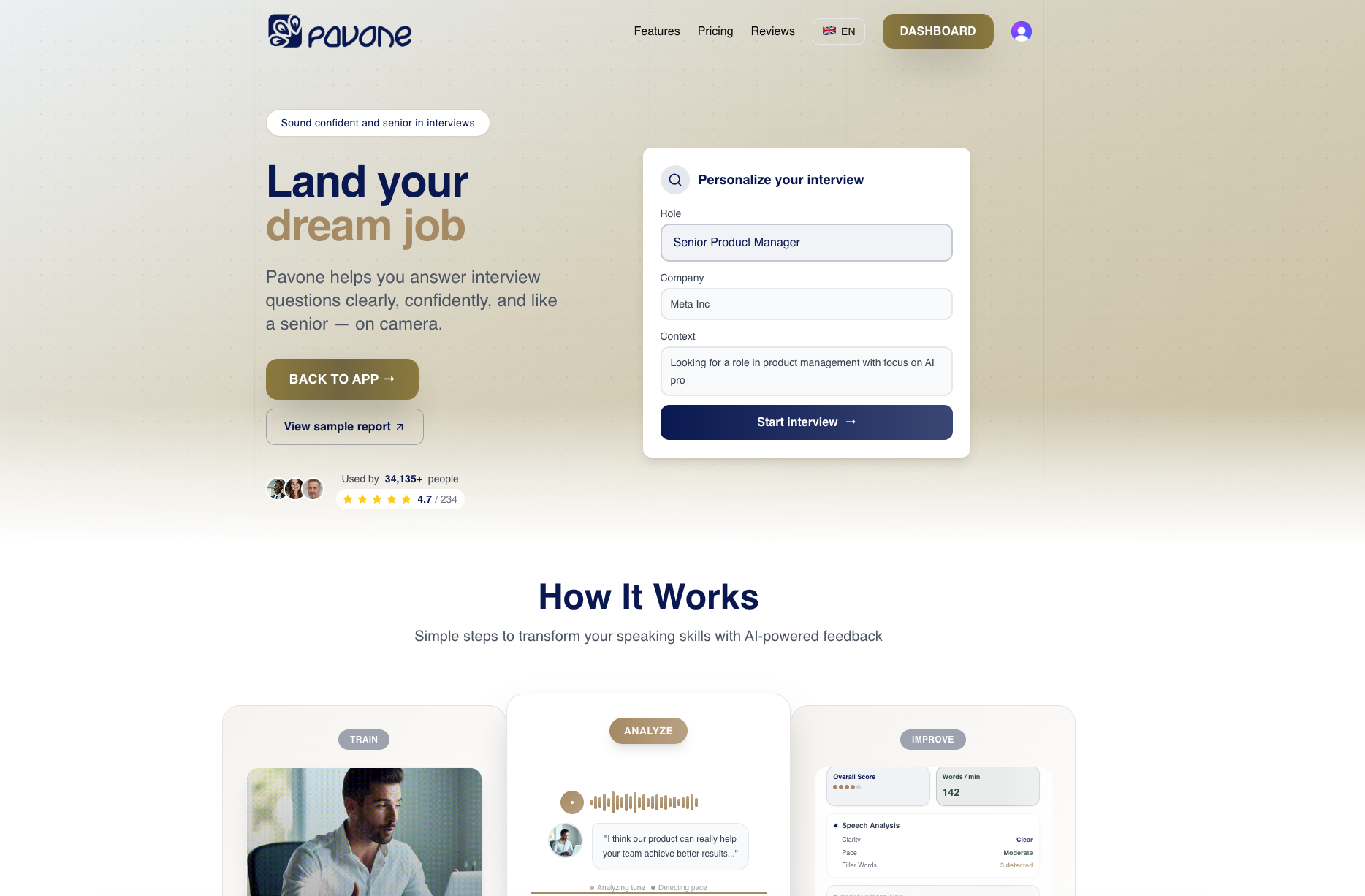
Ready to reduce anxiety and perform at your best in every online interview? Start your journey with Pavone today and refine your answers with expert feedback that turns hesitation into surety. Visit Pavone.ai to begin your personalised interview practise and improve faster with each session.
Frequently Asked Questions
What is online interview practice?
Online interview practice refers to the preparation process for job interviews conducted via digital platforms, enabling candidates to refine their communication skills, analyse performance, and build confidence in a controlled environment.
What are the main types of online interview formats?
The primary types of online interview formats include video conferencing interviews, pre-recorded video interviews, and text-based interviews, each offering unique interaction styles and preparation focuses.
What critical skills are assessed during online interviews?
Online interviews assess communication skills, technological adaptability, non-verbal communication, and cognitive capabilities, which together evaluate a candidate’s ability to perform in a digital context.
How can candidates manage technical issues during online interviews?
Candidates can manage technical issues by conducting a comprehensive technical rehearsal before their interview, ensuring their devices and internet connection are functioning well, and familiarising themselves with the digital platform’s features.
Recommended
- Why Practice Speaking Matters for Interview Success | Pavone Academy
- Speech Clarity Explained: Mastering Interview Presence | Pavone Academy
- How Do I Prepare for Interview: Achieve Clear Confident Delivery | Pavone Academy
- Job Interview Preparation: Achieving Confident Delivery | Pavone Academy
- How to Build Hypnotherapy Confidence for Practitioners
- How to Pass a TEFL Job Interview (7 Questions + Demo Lesson)
Ready to practice?
Start improving your speaking skills with AI-powered feedback and analysis.
Try Pavone Free