
Master Business Interview Questions and Answers for Senior Roles
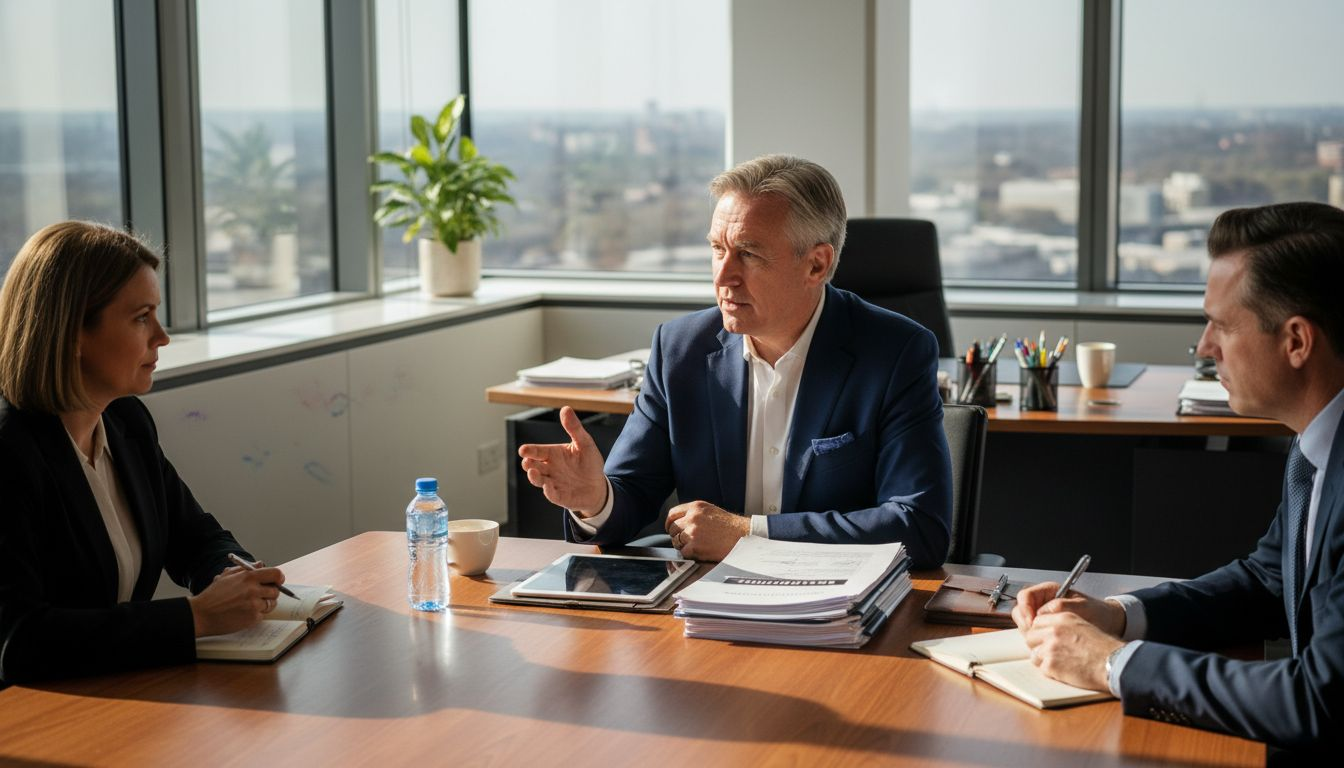
Stepping into a senior interview for a global tech role often means facing intricate questions that demand more than surface-level answers. Employers in Canadian, British, or American firms look for candidates who not only communicate clearly but also demonstrate compelling leadership and analytical skills. This guide offers practical strategies to help you master key competencies, craft powerful on-camera responses, and showcase your unique expertise with genuine confidence.
Table of Contents
- Step 1: Assess Key Business Interview Questions For Your Role
- Step 2: Structure Personalised Answers For Maximum Impact
- Step 3: Record And Analyse On-Camera Responses Strategically
- Step 4: Refine Clarity, Pacing And Senior-Level Delivery Style
- Step 5: Verify Improvement Using Actionable Feedback Tools
Quick Summary
| Key Insight | Explanation |
|---|---|
| 1. Focus on core competencies | Understanding key skills like communication and leadership is essential for interview success. |
| 2. Use the STAR method effectively | Craft responses using the Situation, Task, Action, Result method to structure your answers. |
| 3. Prepare for on-camera interviews | Record and analyse responses to improve clarity and communication style before the actual interview. |
| 4. Refine delivery for senior roles | Develop confident and concise communication that showcases strategic thinking and leadership insights. |
| 5. Leverage actionable feedback | Use structured feedback methods to enhance communication techniques and professional growth effectively. |
Step 1: Assess key business interview questions for your role
In senior business interviews, understanding the specific competencies required for your role is crucial. Interview questions are strategically developed to evaluate your professional capabilities across multiple dimensions.
To effectively prepare, you’ll want to break down the core competencies typically assessed in business interviews:
- Communication skills: Demonstrating clear, articulate dialogue
- Leadership potential: Showcasing strategic thinking and team management
- Problem-solving abilities: Highlighting analytical approaches to complex challenges
- Conflict resolution: Explaining sophisticated interpersonal strategies
Successful candidates typically use the STAR model (Situation, Task, Action, Result) to structure their responses. This approach allows hiring managers to understand not just what you’ve done, but how you think and operate in professional scenarios.
Professional interviewers seek candidates who can demonstrate adaptability, strategic thinking, and genuine leadership potential through their responses.
Preparing specific examples that showcase your professional journey involves careful reflection and strategic storytelling. Select narratives that highlight your unique strengths and align closely with the role’s requirements.

Pro tip: Practice articulating your professional achievements using concise, impactful language that reveals your depth of experience and strategic mindset.
Step 2: Structure personalised answers for maximum impact
Crafting impactful interview responses requires more than reciting achievements. Structured interviews demand job-related answers that reveal your strategic thinking and professional depth.
To create compelling narratives that resonate with senior-level expectations, focus on these key structural elements:
- Context setting: Briefly establish the professional scenario
- Strategic framework: Explain your decision-making process
- Measurable outcomes: Highlight specific, quantifiable results
- Leadership insights: Demonstrate broader organisational impact
Your goal is to transform standard responses into sophisticated narratives that showcase your professional expertise. Each answer should follow the STAR method - Situation, Task, Action, Result - but with an elevated approach that goes beyond basic storytelling.
Here’s a comparison of the STAR method versus advanced strategic storytelling for senior interviews:
| Approach | Structure | Depth of Insight | Impact on Interviewer |
|---|---|---|---|
| STAR method | Linear, four-step | Basic situational analysis | Clarifies key achievements |
| Strategic storytelling | Integrated narrative | Reveals leadership philosophy | Engages at senior level |
Senior candidates must balance detailed explanations with concise communication, revealing depth without overwhelming the interviewer.
Effective personalised answers require careful preparation. Select examples that not only demonstrate your capabilities but also align closely with the specific role’s strategic requirements.
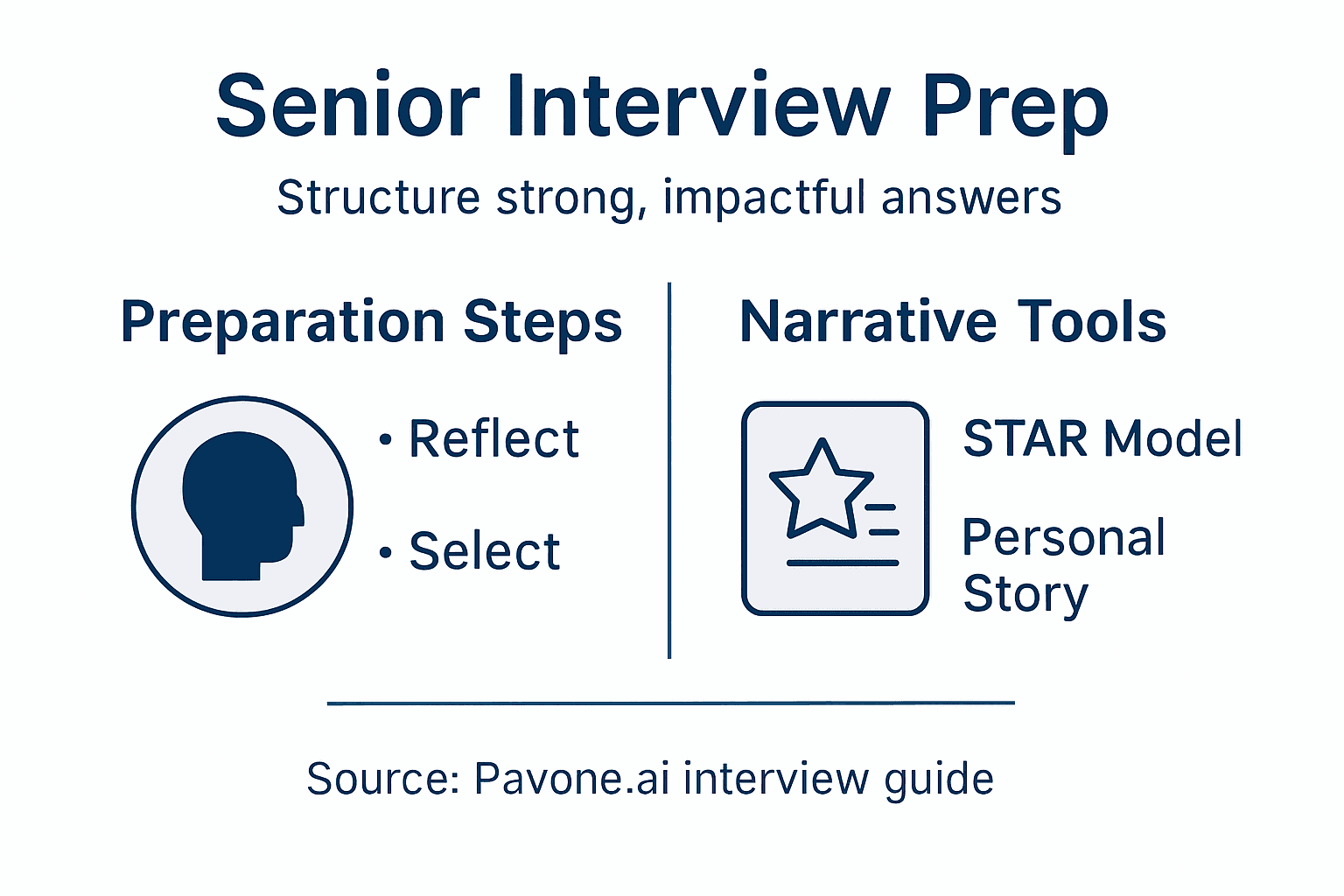
Pro tip: Practise articulating your professional experiences as interconnected strategic narratives that reveal your leadership philosophy and problem-solving approach.
Step 3: Record and analyse on-camera responses strategically
Mastering on-camera interview techniques requires a deliberate approach to capturing professional video responses. Your goal is to create polished, authentic recordings that showcase your strategic communication skills.
To effectively record and analyse your interview performance, implement these critical strategies:
- Technical preparation: Ensure optimal lighting, camera positioning, and sound quality
- Multiple takes: Record several versions to capture your most compelling response
- Self-review: Critically analyse body language, tone, and content clarity
- Iterative improvement: Use each recording as a learning opportunity
Successful on-camera performances require a blend of technical proficiency and genuine professional storytelling. Pay close attention to subtle communication elements that elevate your presentation beyond simple question-answering.
Professional video interviews demand a strategic balance between spontaneity and polished delivery.
Developing comfort in front of the camera takes practice. Focus on creating a natural, confident demeanour that allows your professional expertise to shine through authentically.
Pro tip: Record your practice responses in a setting that mimics the actual interview environment to build genuine confidence and muscle memory.
Step 4: Refine clarity, pacing and senior-level delivery style
Elevating your professional communication requires mastering the art of articulating leadership contributions. Senior-level communication demands a nuanced approach that balances confidence, clarity, and strategic storytelling.
To develop a polished senior-level delivery style, focus on these critical communication refinements:
- Linguistic precision: Choose words that convey depth and strategic thinking
- Vocal modulation: Control pace, tone, and emphasis strategically
- Narrative structure: Craft responses that tell a compelling professional story
- Confident brevity: Communicate complex ideas concisely and powerfully
Your delivery should demonstrate strategic self-awareness without appearing boastful. Professional communication at senior levels requires a delicate balance of personal insight and team recognition.
Exceptional senior leaders communicate their impact through clear, confident, and collaborative language.
Developing this refined communication style takes deliberate practice. Focus on creating a delivery that feels authentic while maintaining a professional, strategic tone that resonates with senior leadership expectations.
Pro tip: Record and review your responses, paying close attention to how you frame team achievements while subtly highlighting your strategic leadership.
Step 5: Verify improvement using actionable feedback tools
Advancing your professional communication requires systematic assessment through precise performance feedback strategies. Effective verification goes beyond simple commentary, demanding structured analysis that transforms insights into tangible growth opportunities.
To develop a robust improvement verification process, implement these strategic feedback techniques:
- Quantitative metrics: Track measurable communication parameters
- Behavioural specificity: Request concrete examples of performance
- Goal-aligned evaluation: Connect feedback directly to professional objectives
- Continuous learning mindset: Treat each assessment as a development opportunity
Successful professionals understand that meaningful feedback requires active engagement. The most powerful insights emerge when you approach evaluation as a collaborative dialogue rather than a passive assessment.
Professional growth demands a proactive approach to understanding and implementing strategic performance improvements.
Transforming feedback into actual skill enhancement requires discipline and systematic reflection. Focus on extracting precise, actionable insights that can be immediately translated into practical communication strategies.
Here is a summary of actionable feedback techniques for professional development:
| Feedback Technique | Method of Implementation | Value for Improvement |
|---|---|---|
| Quantitative metrics | Use scorecards or surveys | Tracks progress objectively |
| Behavioural specificity | Request detailed examples | Identifies clear growth areas |
| Goal-aligned evaluation | Link feedback to objectives | Ensures relevance to the role |
| Continuous learning mindset | Reflect and document steps | Encourages ongoing skill growth |
Pro tip: Develop a personal feedback journal where you document specific recommendations, track your progress, and reflect on your communication evolution.
Elevate Your Senior Business Interview Performance with Pavone.ai
Mastering senior business interview questions demands more than knowing what to say. It requires strategic storytelling, refined communication, and confident delivery all captured on camera. If you find it challenging to structure personalised answers or convey your leadership impact with clarity and poise, you are not alone. Many professionals struggle with pacing, tone, and transforming feedback into actionable improvements.
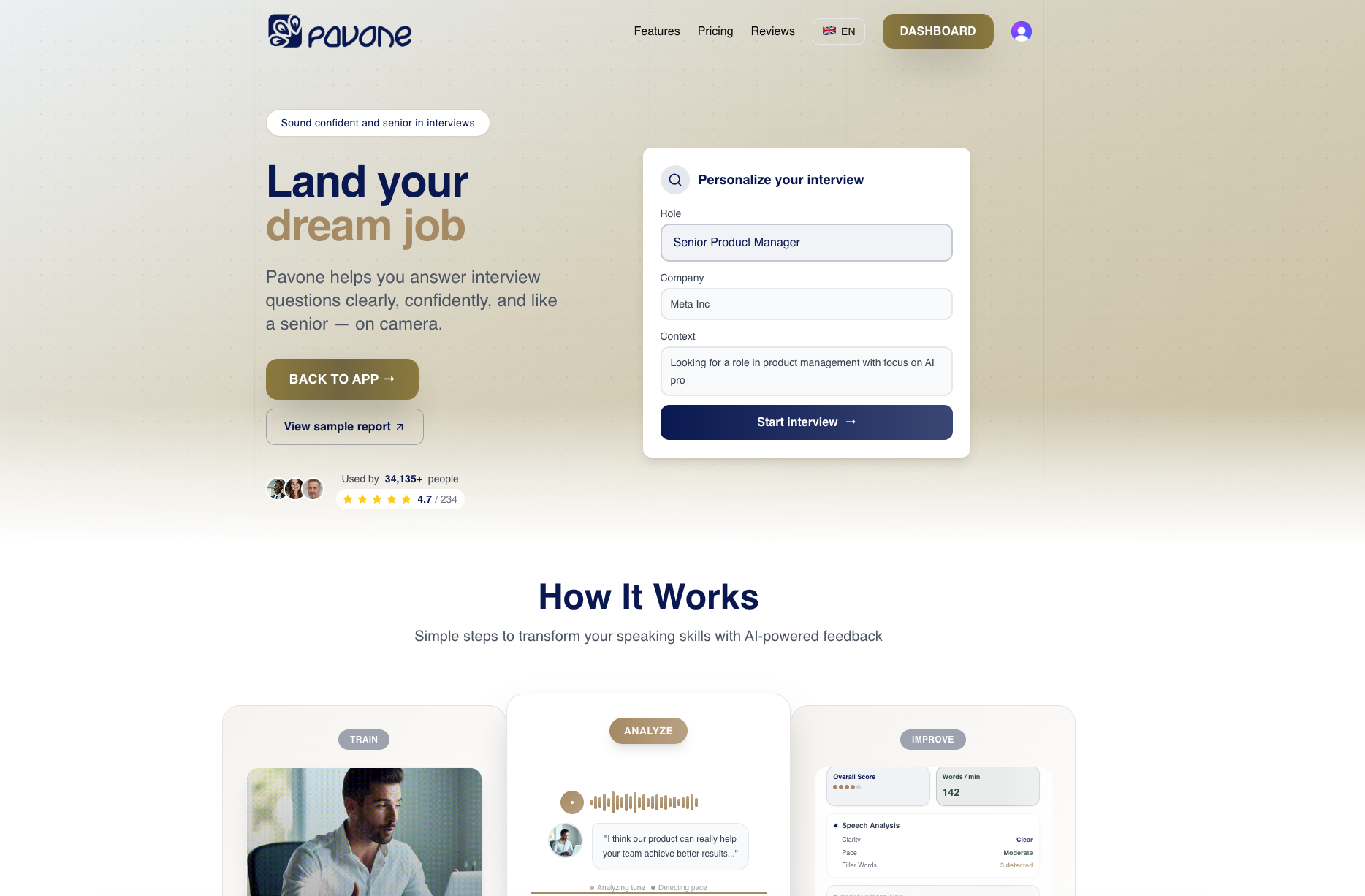
Pavone.ai is designed to tackle these exact hurdles by offering a private, easy-to-use platform where you can practise real interview-style answers. It gives you immediate, detailed feedback on your clarity, confidence, pacing, and overall delivery — helping you sound concise and senior. Instead of generic advice, Pavone focuses on how your answers are communicated so you can showcase your strategic thinking and leadership presence with every response. Start refining your on-camera interview skills today and build the confidence needed to excel in senior-level interviews at Pavone.ai. Learn more about structuring senior answers here and experience personalized coaching tailored to your professional goals.
Frequently Asked Questions
How can I prepare for business interview questions for senior roles?
To prepare effectively, assess the core competencies required for your role, such as communication skills and leadership potential. Practise using the STAR model (Situation, Task, Action, Result) to structure your responses, and develop specific examples that showcase your qualifications.
What is the STAR model and how can I use it in interviews?
The STAR model is a framework for structuring your interview responses by outlining a Situation, Task, Action, and Result. Use this model to highlight your problem-solving abilities and the impact of your decisions, ensuring that you present clear, detailed examples that demonstrate your relevant experience.
What techniques should I use to communicate effectively during a video interview?
During a video interview, ensure optimal lighting and camera positioning, and control your vocal tone and pacing. Record practice sessions to analyse your body language and communication style, focusing on presenting confident and authentic narratives about your professional journey.
How can I refine my interview delivery style for senior-level roles?
To refine your delivery style, focus on linguistic precision and confident brevity. Practise articulating your professional achievements in a clear and succinct manner, ensuring that you convey your insights and strategic thinking without overwhelming your audience.
What kind of feedback should I seek to improve my interview skills?
Seek specific feedback that addresses your communication style, clarity of responses, and overall presentation. Request actionable insights from peers or mentors, and use these observations to identify areas for focused skill enhancement, tracking your progress over time.
Recommended
- Interviewing for Mid and Senior Roles: Succeed with Confidence | Pavone Academy
- Corporate Interview Questions: Succeeding with Clarity | Pavone Academy
- How to Speak Confidently in Job Interviews - Pavone
- Body Language in Interviews: Boosting Tech Careers | Pavone Academy
- What Is Business English? Skills for Global Careers
- Students Focused on Careers: Aligning Education with Jobs
Ready to practice?
Start improving your speaking skills with AI-powered feedback and analysis.
Try Pavone Free