
Speech Clarity Explained: Mastering Interview Presence

Facing a video interview as a non-native English-speaking professional in Europe can bring unexpected nerves when clarity matters most. Employers quickly judge communication skills, making speech clarity vital for credibility and confidence. Knowing how to organise ideas, choose precise language, and minimise filler words transforms every answer into a strong professional statement. This guide shows practical strategies to build clarity and shape confident responses for mid-to-senior career roles.
Table of Contents
- Defining Speech Clarity In Interviews
- Types Of Clarity Issues Faced By Candidates
- Key Elements That Impact Clear Speaking
- Common Barriers For Non-Native Professionals
- Effective Techniques To Improve Clarity
- Mistakes To Avoid In Interview Communication
Key Takeaways
| Point | Details |
|---|---|
| Importance of Speech Clarity | Clear communication enhances professional interactions and influences positive interviewer perceptions. |
| Common Clarity Challenges | Candidates face issues such as nervous speech patterns, excessive filler words, and rambling responses that hinder effective communication. |
| Effective Techniques | Practising controlled pacing, strategic pausing, and recording responses can significantly improve speech clarity. |
| Cultural and Linguistic Barriers | Non-native speakers should focus on pronunciation, grammar, and cultural nuances to communicate more effectively in interviews. |
Defining Speech Clarity in Interviews
Speech clarity represents the cornerstone of successful interview communication, where precise articulation transforms professional interactions. At its core, clarity involves communicating thoughts efficiently and effectively, ensuring that every word resonates with purpose and meaning.
In professional settings, speech clarity encompasses more than just accurate pronunciation. Structured communication techniques enable candidates to convey complex ideas with remarkable simplicity. This skill involves several critical components:
- Organised thought progression
- Precise language selection
- Appropriate pacing
- Clear pronunciation
- Minimal use of filler words
Interviewers assess communication skills rapidly, often forming impressions within the first few minutes of interaction. Credible communication hinges on the candidate’s ability to present information coherently, demonstrating both knowledge and confidence.
The fundamental elements of speech clarity extend beyond mere verbal expression. They include:
- Logical thought organisation
- Strategic content delivery
- Emotional intelligence in communication
- Technical language proficiency
Understanding these nuanced aspects transforms interview interactions from simple question-and-answer exchanges into meaningful professional dialogues.

Pro tip: Practice recording yourself answering typical interview questions to identify and refine your speech clarity, paying close attention to your pacing, articulation, and overall message structure.
Types of Clarity Issues Faced by Candidates
Navigating the complexities of interview communication reveals numerous speech clarity challenges that can significantly impact a candidate’s performance. Common communication problems emerge as critical obstacles preventing professionals from effectively presenting their skills and experiences.
The most prevalent clarity issues candidates encounter include:
- Rambling responses: Providing overly detailed or unfocused answers that obscure the core message
- Insufficient detail: Giving answers that are too brief, lacking substantive information
- Nervous speech patterns: Exhibiting hesitation, stammering, or rapid speech that undermines confidence
- Excessive filler words: Using unnecessary words like “um,” “like,” and “you know” that disrupt communication flow
- Misaligned communication: Failing to directly address the interviewer’s specific questions
Professional communication requires strategic articulation. Technical language proficiency plays a crucial role in demonstrating expertise, but candidates must balance technical knowledge with clear, accessible communication. This involves:
- Structuring thoughts logically
- Maintaining appropriate speaking pace
- Selecting precise vocabulary
- Managing emotional composure
Nervousness often compounds these communication challenges. Many candidates struggle to maintain clarity under interview pressure, leading to fragmented responses that fail to showcase their true capabilities.
The following table summarises how different clarity obstacles can affect candidate performance and interviewer perception:
| Clarity Obstacle | Candidate Impact | Interviewer Perception |
|---|---|---|
| Rambling answers | Loses focus on main point | May question candidate’s suitability |
| Nervous delivery | Reduces confidence in self | May sense lack of preparation |
| Technical jargon misuse | Misrepresents expertise | Perceived as unclear or evasive |
| Excess filler words | Undermines professionalism | Suggests weak communication skills |
| Indirect responses | Missed opportunities to impress | Seen as avoiding questions |
Clarity is not about speaking perfectly, but about communicating effectively and authentically.
Pro tip: Record and analyse your interview practice sessions, paying specific attention to your speech patterns, identifying and systematically eliminating clarity-reducing habits.
Key Elements That Impact Clear Speaking
Mastering clear speaking requires a comprehensive understanding of the fundamental communication elements that transform ordinary interview interactions into compelling professional dialogues. Effective communication skills involve a delicate balance of technical proficiency and interpersonal awareness.
The core elements that significantly impact speaking clarity include:
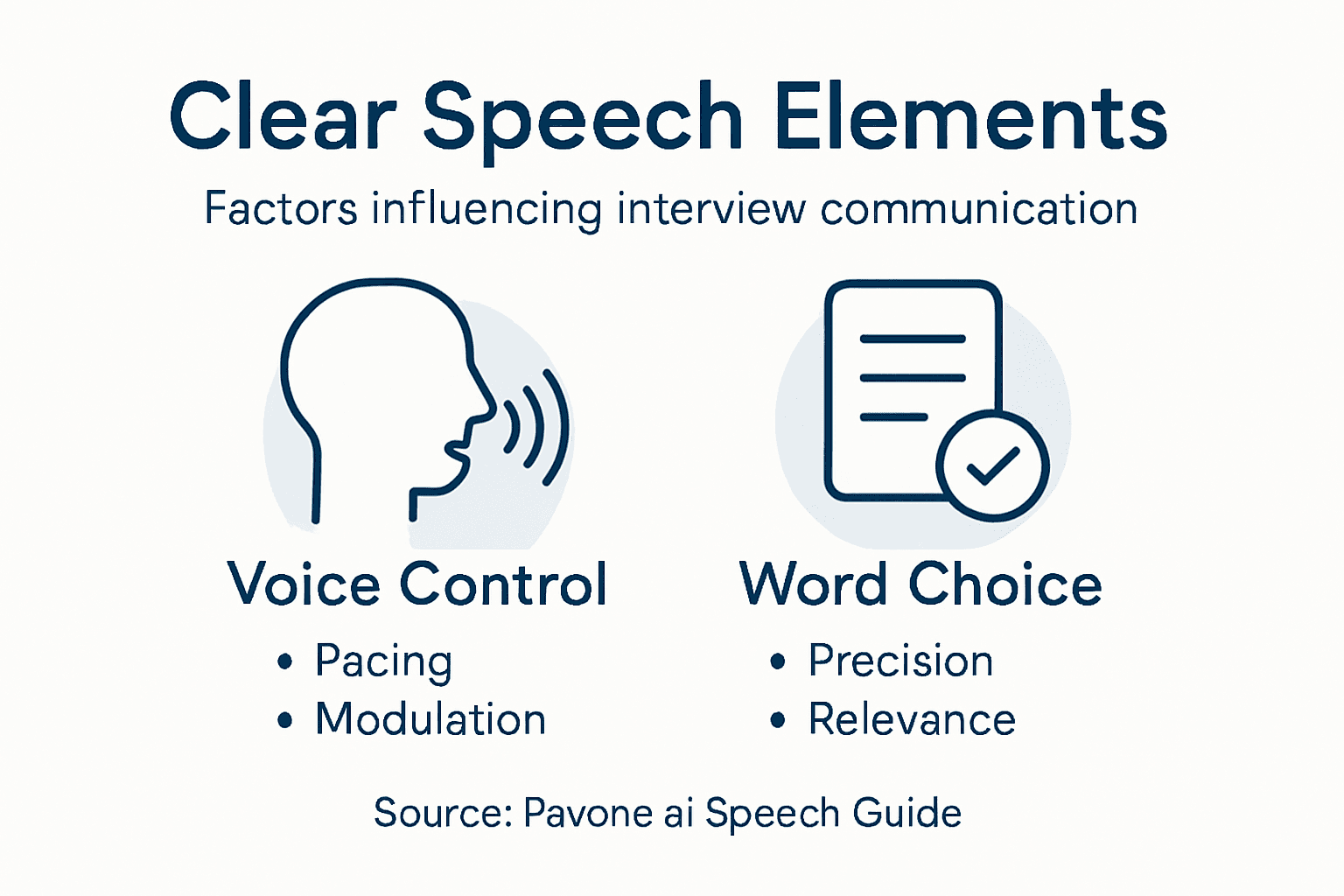
- Vocal modulation: Controlling pitch, tone, and volume to emphasise key points
- Linguistic precision: Selecting appropriate vocabulary and eliminating unnecessary words
- Cognitive organisation: Structuring thoughts logically before and during speaking
- Non-verbal communication: Aligning body language with verbal messaging
- Active listening: Understanding and responding directly to interview questions
Professional communication demands more than mere verbal articulation. Contextual understanding plays a crucial role in delivering messages that resonate with interviewers. Successful candidates demonstrate the ability to:
- Anticipate potential questions
- Prepare structured responses
- Adapt communication style to audience
- Maintain emotional composure
Understanding the psychological aspects of communication can dramatically improve interview performance. Confidence emerges from thorough preparation, strategic language use, and a deep understanding of one’s professional narrative.
Clear speaking is an art of balance: between information and engagement, technical detail and personal connection.
Pro tip: Develop a personal communication framework by recording and critically analysing your interview practice sessions, identifying specific areas for improvement in your speaking clarity.
Common Barriers for Non-Native Professionals
Non-native English speakers encounter unique communication challenges that can significantly impact their professional interview performance. Language barriers create profound disadvantages that extend far beyond simple linguistic differences.
The most critical barriers non-native professionals face include:
- Pronunciation nuances: Difficulty with specific English sound patterns
- Grammatical complexity: Navigating intricate language structures
- Idiomatic expression challenges: Understanding and using contextual language
- Cultural communication differences: Interpreting subtle communication cues
- Confidence inhibition: Fear of making linguistic mistakes
Linguistic challenges manifest in multiple complex dimensions. Cognitive processing requires non-native speakers to simultaneously translate, interpret, and articulate thoughts, which creates additional mental strain during high-pressure interview scenarios. This cognitive overhead means:
- Slower response formulation
- Increased mental fatigue
- Higher likelihood of communication misunderstandings
- Potential underrepresentation of actual professional capabilities
Cultural communication styles further compound these challenges. Different linguistic backgrounds bring unique communication perspectives that may not align seamlessly with traditional British or American interview expectations.
Language is not just about words, but about bridging cultural understanding and professional competence.
Pro tip: Practice interview responses with native English speakers who can provide nuanced feedback on both linguistic accuracy and cultural communication subtleties.
Effective Techniques to Improve Clarity
Enhancing speech clarity requires deliberate practice and strategic communication techniques. Practical speech improvement strategies provide professionals with a systematic approach to refining their communication skills.
Key techniques for improving speech clarity include:
- Controlled speaking pace: Slowing down to improve pronunciation and comprehension
- Deliberate articulation: Over-emphasising word sounds and consonants
- Strategic pausing: Using intentional breaks to enhance message impact
- Precise vocabulary selection: Choosing words that communicate exact meanings
- Minimising filler words: Reducing unnecessary verbal interruptions
Professional communication demands a multifaceted approach to clarity. Cognitive communication preparation involves developing a structured method for expressing thoughts, which includes:
- Practicing response frameworks
- Recording and analysing personal speech patterns
- Developing consistent vocal techniques
- Building confidence through repetitive practice
Technical proficiency in speech requires consistent, targeted exercise. Non-native speakers particularly benefit from systematic approaches that break down complex communication challenges into manageable skill development components.
Clarity is not about speaking perfectly, but communicating effectively and confidently.
Pro tip: Create a personal speech improvement journal, documenting specific communication challenges and tracking progress through regular self-assessment and recorded practice sessions.
Here is a comparison of improvement techniques, showing what each achieves and for whom it is especially useful:
| Technique | Main Benefit | Best Suited For |
|---|---|---|
| Controlled pacing | Enhances comprehension and clarity | All candidates |
| Strategic pausing | Gives time to organise thoughts | Non-native speakers |
| Vocabulary refinement | Delivers precise messages | Technical professionals |
| Recording practice | Identifies recurring issues | Nervous candidates |
| Feedback from peers | Identifies cultural nuances | Non-native speakers |
Mistakes to Avoid in Interview Communication
Professional communication during interviews demands precision and strategic awareness. Critical communication pitfalls can dramatically undermine a candidate’s potential and credibility.
The most detrimental communication mistakes include:
- Scripted responses: Delivering robotic, pre-prepared answers
- Insufficient preparation: Lacking research about the organisation
- Indirect communication: Failing to answer questions directly
- Excessive verbosity: Providing overly detailed or irrelevant information
- Inappropriate language: Using informal or unprofessional terminology
Communication mistakes stem from multiple underlying issues. Contextual communication understanding requires candidates to recognise the nuanced expectations of professional dialogue, which involves:
- Active listening techniques
- Precise response formulation
- Emotional intelligence management
- Non-verbal communication alignment
Psychological barriers often contribute to communication breakdown. Nervousness, lack of confidence, and unfamiliarity with interview dynamics can lead candidates to unconsciously sabotage their own performance through poor communication strategies.
Effective communication is not about perfection, but about authentic, clear, and purposeful dialogue.
Pro tip: Conduct mock interviews with trusted colleagues, recording and critically analysing your communication patterns to identify and systematically eliminate potential interview communication mistakes.
Enhance Your Interview Speech Clarity with Pavone.ai
Mastering speech clarity is essential for conveying confidence and professionalism during interviews. The challenges highlighted in “Speech Clarity Explained: Mastering Interview Presence” such as managing pacing, reducing filler words, and structuring answers logically are precisely what candidates struggle with most. If you find yourself nervous or rambling under pressure Pavone.ai offers a unique solution to develop clarity, confidence, and presence through personalised, real-time feedback.
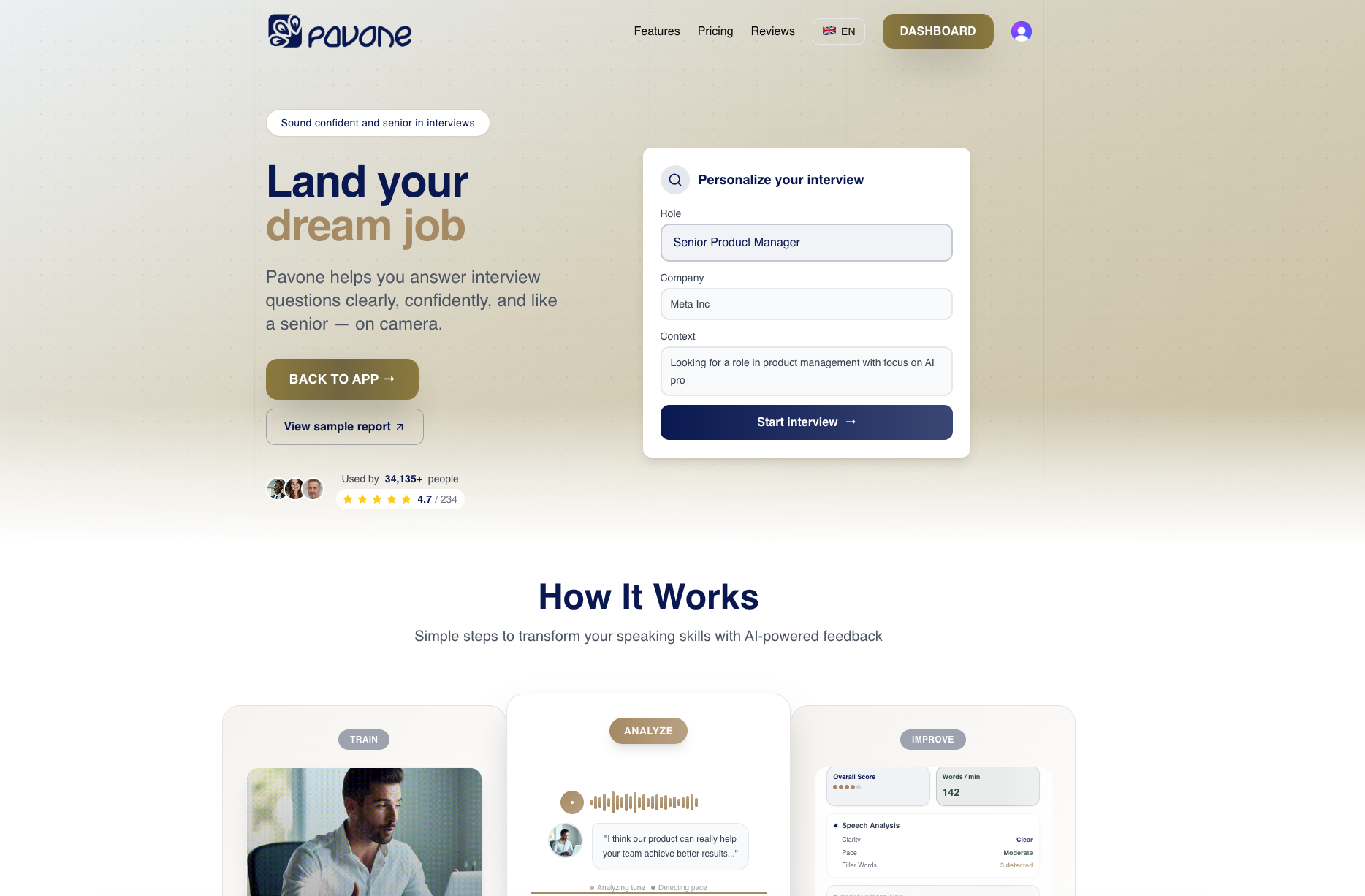
Elevate your interview communication skills by practising your answers on camera in a private, supportive environment. Pavone.ai transcribes and analyses your responses focusing on key clarity factors like pacing, articulation, and overall delivery so you can pinpoint areas for improvement. Start improving today with Pavone.ai — your personal interview coach available anytime. Discover how effective your communication truly is and transform nervousness into polished, compelling dialogue that impresses every interviewer. Visit Pavone.ai now to begin practising with confidence.
Frequently Asked Questions
What is speech clarity in interviews?
Speech clarity in interviews refers to the ability to articulate thoughts efficiently and effectively, ensuring that communication is coherent and resonates with purpose. It involves organised thought progression, precise language selection, and clear pronunciation among other factors.
How can I improve my speech clarity for interviews?
You can improve your speech clarity by practising controlled speaking pace, using deliberate articulation, selecting precise vocabulary, reducing filler words, and receiving feedback from peers or mentors through recorded mock interviews.
What are common clarity issues candidates face during interviews?
Common clarity issues include rambling responses, insufficient detail, nervous speech patterns, excessive filler words, and failing to directly address the interviewer’s questions, which can all hinder effective communication.
Why is vocal modulation important for clear speaking?
Vocal modulation is important because it helps control pitch, tone, and volume, allowing you to emphasise key points during communication. This enhances message delivery and keeps the listener engaged.
Recommended
- 7 Practical Ways to Improve Speech Clarity for Presentations | Pavone Academy
- Job Interview Preparation: Achieving Confident Delivery | Pavone Academy
- Interview Question What: Mastering Clarity and Impact | Pavone Academy
- How Do I Prepare for Interview: Achieve Clear Confident Delivery | Pavone Academy
- How to Build Hypnotherapy Confidence for Practitioners
Ready to practice?
Start improving your speaking skills with AI-powered feedback and analysis.
Try Pavone Free