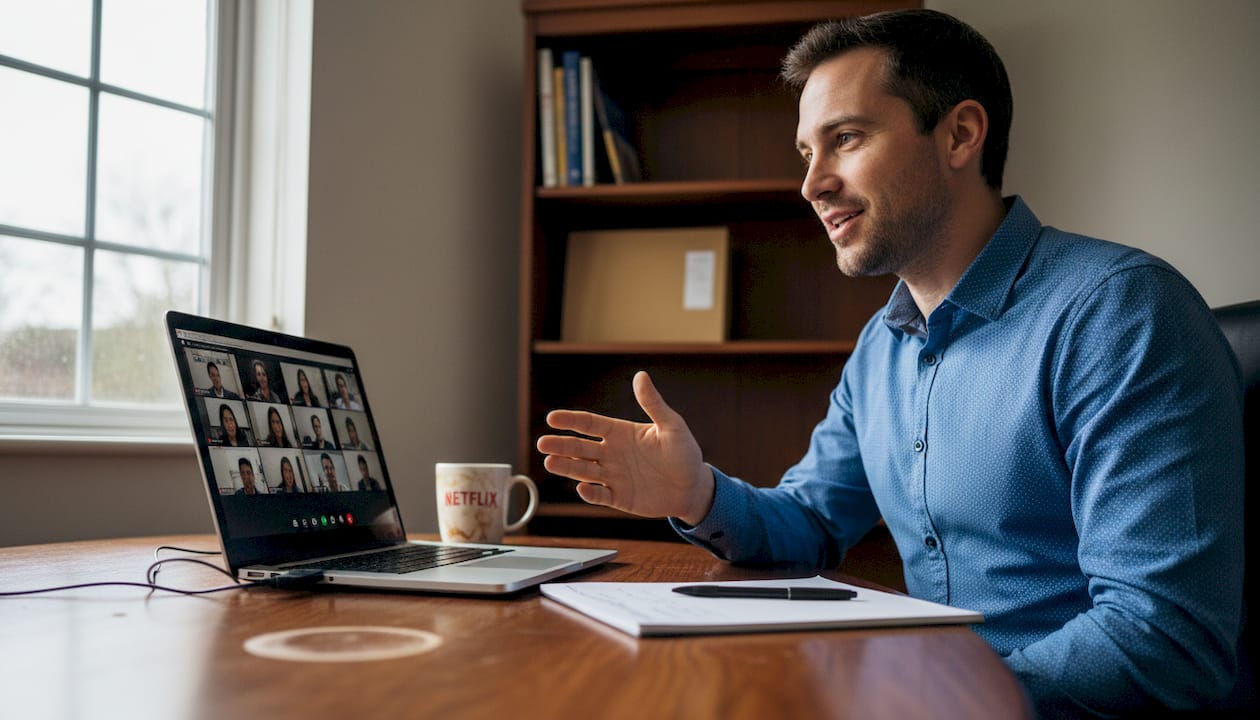
Master Job Interview Practice for Confident Success

Preparing for a senior-level job interview can feel like a test of both skill and composure, especially for experienced professionals aiming to stand out in a competitive European technology market. The pressure to communicate confidently and answer challenging questions effectively is real for many non-native English speakers. By prioritising a structured interview practice process, you can build genuine confidence and develop responses that highlight your expertise during any interview situation.
Table of Contents
- Step 1: Set Up Your Interview Practice Session
- Step 2: Select Relevant Interview Questions
- Step 3: Record Realistic Video Responses
- Step 4: Review Immediate Feedback And Insights
- Step 5: Refine Answers For Greater Impact
- Step 6: Track Progress To Achieve Confidence
Quick Summary
| Key Point | Explanation |
|---|---|
| 1. Set Up a Professional Environment | Select a quiet, well-lit space and record responses to simulate real interview conditions for effective practice. |
| 2. Choose Relevant Interview Questions | Tailor questions based on the job description to showcase your strengths and relate to the specific role you are pursuing. |
| 3. Record Video Responses for Improvement | Use video to authentically reflect your communication style, while identifying body language and clarity areas for enhancement. |
| 4. Seek and Review Immediate Feedback | Analyse recordings to assess clarity, body language, and structure, enabling you to track progress and make improvements. |
| 5. Track Progress Methodically | Document your practice sessions to objectively measure improvements and build confidence, focusing on both qualitative and quantitative aspects. |
Step 1: Set Up Your Interview Practice Session
Preparing for a job interview requires strategic and focused practice that simulates real-world conditions. Setting up an effective interview practice session helps you build confidence, refine communication skills, and develop a structured approach to responding to potential questions.
To create an optimal practice environment, you’ll need a few key elements. Effective interview preparation involves selecting a quiet, distraction-free space where you can record and review your responses. Consider these essential setup steps:
- Choose a calm, well-lit room with minimal background noise
- Position your camera at eye level to simulate direct eye contact
- Use a neutral background that looks professional
- Ensure reliable internet and recording equipment
Your practice session should mimic actual interview conditions as closely as possible. This means dressing professionally, having your CV and job description nearby, and treating each practice attempt with seriousness. Record your responses using a webcam or smartphone, which allows you to review your body language, tone, and overall presentation.
Practice tools like online interview platforms can provide structured question sets and immediate feedback, helping you track your improvement systematically. Focus on answering common behavioural and technical questions with clarity and confidence.
Expert Tip: Schedule your practice sessions during times when you’re typically most alert and focused to maximise your learning and performance improvement.
Step 2: Select Relevant Interview Questions
Selecting the most appropriate interview questions is crucial for creating a comprehensive and targeted practice strategy. Your goal is to build a repertoire of responses that demonstrate your professional capabilities and align closely with the specific role you are pursuing.
Interview preparation requires researching typical questions based on job competencies and your past professional accomplishments. By carefully analysing the job description, you can anticipate the types of questions likely to be asked. Consider these key categories of interview questions:
- Behavioural questions exploring past work experiences
- Situational questions testing problem-solving skills
- Technical questions specific to your professional domain
- Leadership and teamwork scenario questions
- Personal background and motivation inquiries
Prioritise questions that directly relate to the core competencies outlined in the job description. Focus on questions that highlight your unique professional strengths and provide opportunities to showcase your relevant experience. Some critical areas to prepare include discussing your achievements, addressing potential weaknesses constructively, and articulating your career aspirations.
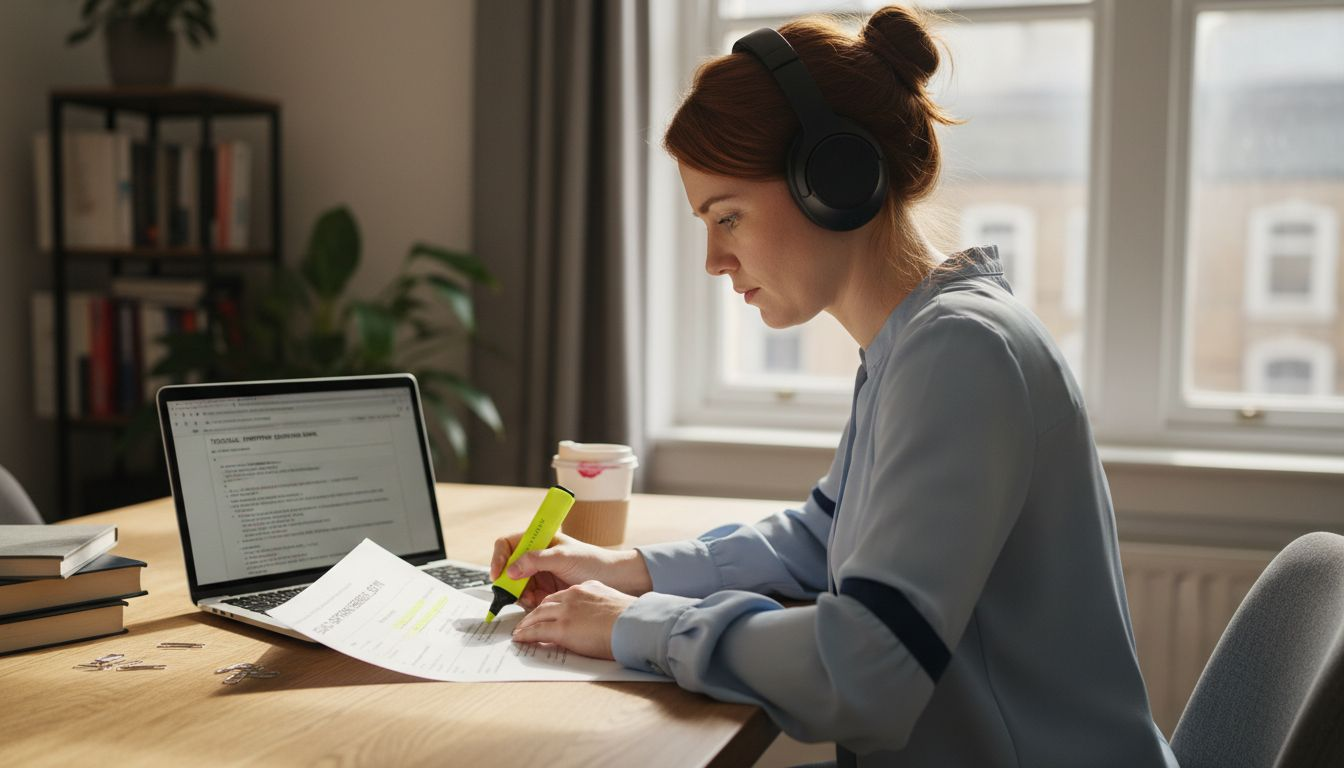
To clarify the main differences in interview question types, review this comparison:
| Question Type | Purpose | Example Focus Area | Typical Outcome |
|---|---|---|---|
| Behavioural | Assess past actions and attitudes | Work achievements | Predict future behaviour |
| Situational | Evaluate problem-solving approach | Handling dilemmas | Reveal decision-making |
| Technical | Test job-specific skills | Domain expertise | Demonstrate competency |
| Leadership/Teamwork | Explore management capabilities | Team coordination | Showcase leadership style |
| Motivation/Personal | Understand professional drivers | Career goals | Assess cultural fit |
Select questions that allow you to tell a compelling narrative about your professional journey and potential value to the prospective employer.
Additionally, incorporate interview questions specific to senior business roles that demonstrate strategic thinking and leadership potential. Practice crafting concise, impactful responses that provide concrete examples from your professional experience.
Expert Tip: Create a personalised question bank with 15-20 carefully selected questions that comprehensively cover different aspects of your professional profile and the target role.
Step 3: Record Realistic Video Responses
Recording your interview practice sessions transforms theoretical preparation into tangible skill development. Your goal is to create video responses that authentically represent your professional communication style while identifying areas for improvement.
Video conference tools enable realistic interview simulations that help candidates refine their presentation skills. Consider these essential elements when recording your practice responses:
- Position your camera at eye level
- Choose a neutral, professional background
- Ensure consistent, soft lighting
- Dress in interview-appropriate attire
- Check audio and video quality before recording
Approach each recording with intentionality. Treat the video capture as a genuine interview scenario, maintaining professional posture, making direct eye contact with the camera, and speaking with clarity and confidence. Aim to capture natural, conversational responses that showcase your personality while remaining polished and articulate.
Professional video responses demonstrate your ability to communicate effectively, even in a virtual environment.
Explore video response preparation techniques that help you develop a compelling on-camera presence. Review your recordings critically, paying attention to your body language, vocal tone, and the structure of your answers.
Expert Tip: Record multiple takes of each response, comparing them to identify subtle improvements in your communication style and confidence.
Step 4: Review Immediate Feedback and Insights
Reviewing feedback is a critical step in transforming your interview practice from theoretical preparation to tangible skill development. Your goal is to analyse your recorded responses objectively, identifying strengths and opportunities for improvement.
Immediate feedback dramatically influences learning performance by helping you rapidly correct communication patterns and refine your interview approach. Focus on these key areas during your review:
- Verbal clarity and articulation
- Body language and non-verbal communication
- Response structure and coherence
- Confidence and delivery tone
- Technical content accuracy
Approach your feedback review systematically. Break down each aspect of your performance, comparing your actual delivery against your intended communication. Pay special attention to unconscious habits like filler words, posture shifts, or hesitation patterns that might undermine your professional presentation.
Constructive self-reflection transforms interview practice from a passive exercise into a powerful personal development opportunity.
Explore advanced on-camera communication skills that can help you analyse and enhance your interview performance more effectively. Consider using structured feedback frameworks that provide objective, actionable insights.
Expert Tip: Create a personal feedback log tracking your progress across multiple practice sessions to visualise your improvement trajectory.
Step 5: Refine Answers for Greater Impact
Refinement is the critical bridge between good and exceptional interview performance. Your objective is to transform initial practice responses into polished, compelling narratives that demonstrate your professional capabilities with precision and confidence.
Training in strategic communication improves response quality by helping you develop more coherent and persuasive answers. Focus on these key refinement strategies:
- Eliminate unnecessary verbal fillers
- Enhance structural clarity
- Provide concrete, measurable examples
- Balance technical depth with storytelling
- Align responses with job description requirements
Develop a systematic approach to answer improvement. Listen critically to your recorded responses, identifying areas where you can enhance concision, relevance, and impact. Break down complex answers into clear, digestible segments that showcase your thought process and professional expertise.
Effective communication is not about saying more, but saying exactly what matters with precision and confidence.
Explore interview questions for senior business roles to understand how top professionals construct their responses. Practice transforming your initial drafts into more refined, strategic communication.
Expert Tip: Create a personal editing checklist that helps you progressively polish your interview responses, treating each iteration as an opportunity for incremental improvement.
Step 6: Track Progress to Achieve Confidence
Tracking your interview preparation journey transforms sporadic practice into strategic skill development. Your goal is to create a systematic approach that objectively measures your communication improvement and builds genuine professional confidence.
Progress monitoring enables responsive skill development by providing concrete evidence of your evolving capabilities. Consider implementing these tracking strategies:
- Document response times and clarity
- Record frequency of filler words
- Assess body language consistency
- Compare answers across multiple practice sessions
- Note improvements in technical articulation
Develop a structured performance tracking system. Create a personalised scorecard that quantifies your interview communication skills, allowing you to visualise your progression. Measure both qualitative and quantitative aspects of your interview performance, focusing on incremental growth rather than perfection.
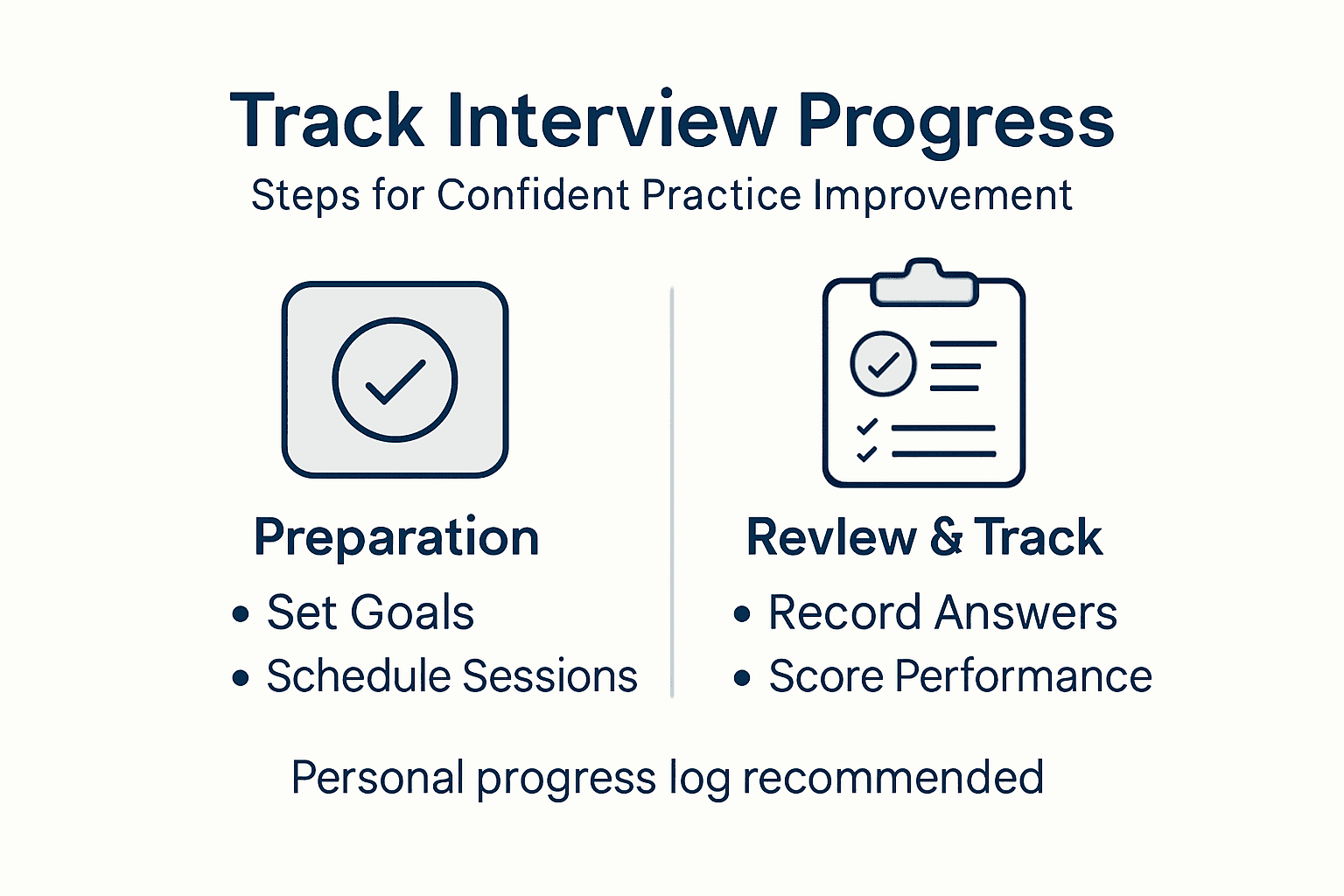
This table summarises methods to track interview progress and their benefits:
| Tracking Method | What It Measures | Benefit to Candidate |
|---|---|---|
| Response timing | Duration of answers | Helps achieve concise responses |
| Filler word analysis | Frequency of ‘um’, ‘ah’ | Improves verbal confidence |
| Body language review | Gestures and posture | Enhances non-verbal communication |
| Session comparison | Improvement over attempts | Visualises skill development |
| Technical accuracy log | Correctness of information | Ensures expertise is evident |
Confidence emerges from understanding your genuine capabilities through objective, systematic self-assessment.
Explore interview preparation techniques for confident delivery that can help you establish meaningful progress metrics. Regularly review your tracking data to identify patterns and adjust your preparation strategy.
Expert Tip: Use a digital tracking tool or spreadsheet to log your practice session insights, creating a visual representation of your skill development journey.
Enhance Your Job Interview Practice with Pavone.ai
The article “Master Job Interview Practice for Confident Success” highlights clear challenges such as feeling uncertain about body language and verbal delivery, overcoming filler words, and structuring answers with confidence and clarity. These are common pain points that can undermine your performance even when you know what to say. With concepts like recording realistic video responses and reviewing immediate feedback, it is clear that practising alone may not be enough without actionable insights.
Pavone.ai is designed precisely to address these concerns by acting as your personal interview coach available 24/7. The platform lets you record real interview-style answers in a private, simple setting and then provides detailed, immediate feedback on key areas like clarity, pacing, confidence, and filler word usage. This focused approach helps you refine your communication style easily and systematically, just as the article advises for refining answers and tracking progress.
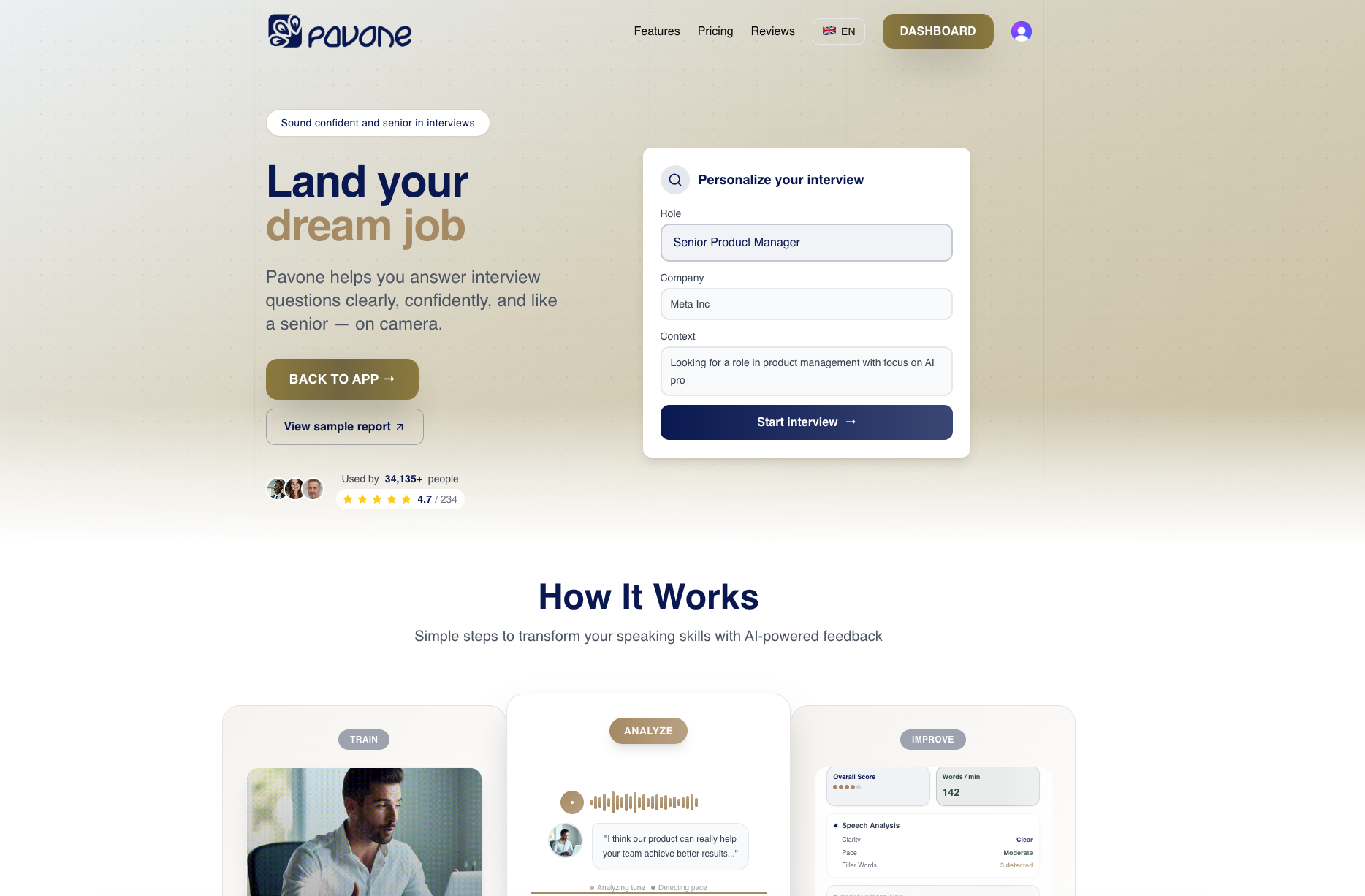
Ready to transform your interview practice into confident, clear, and professional responses that impress employers every time? Discover how Pavone’s unique feedback system can help you reduce anxiety, improve your on-camera presence, and master your interview delivery at Pavone.ai. Start practising smarter today with Video Interview Practice and explore advanced Business Interview Questions for Senior Roles to prepare with precision and impact.
Frequently Asked Questions
How can I set up an effective interview practice session?
To set up an effective interview practice session, choose a quiet, well-lit room with minimal distractions. Dress professionally, arrange your camera at eye level, and have your CV and job description handy. Aim to simulate actual interview conditions for the best results.
What types of interview questions should I focus on?
Focus on behavioural, situational, technical, leadership, and motivational questions. Review the job description to select the most relevant questions that showcase your professional strengths and achievements. Create a personalised question bank of 15-20 carefully chosen questions related to the role.
How should I record my video responses for practice?
Record your video responses with your camera at eye level in a neutral, professional setting. Ensure good lighting and sound quality, and treat each recording as a real interview. Aim for natural and clear communication that showcases your personality and professionalism.
What areas should I focus on when reviewing my recorded responses?
Focus on verbal clarity, body language, the structure of your responses, and your overall delivery tone. Pay attention to any unconscious habits, such as filler words or posture shifts, that could undermine your presentation. Take detailed notes on areas for improvement for each practice session.
How can I refine my answers for greater impact?
To refine your answers, eliminate unnecessary filler words and enhance the structure and clarity of your responses. Use concrete examples to make your points compelling and align your answers with the job description requirements. Treat each iteration as an opportunity to improve.
What tracking methods can I use to monitor my interview preparation progress?
Implement tracking methods such as documenting response times, analysing filler word frequency, and comparing answers across practice sessions. Create a structured scorecard to quantify your progress and assess both qualitative and quantitative aspects of your performance. Regularly review your data to identify improvement trends.
Recommended
- How to Speak Confidently in Job Interviews - Pavone
- How Do I Prepare for Interview: Achieve Clear Confident Delivery | Pavone Academy
- How Do I Prepare for Interview: Achieve Clear Confident Delivery | Pavone Academy
- How Do I Prepare for Interview: Achieve Clear Confident Delivery | Pavone Academy
Ready to practice?
Start improving your speaking skills with AI-powered feedback and analysis.
Try Pavone Free