
Use AI for interview success with clear confident delivery

You might believe AI cannot truly understand the nuances of human communication during interviews, but recent research proves otherwise. AI systems now evaluate eye contact, vocal tone, and emotional delivery with remarkable precision, often catching subtle patterns that even experienced interviewers miss. This technological advancement transforms how mid-career professionals prepare for high-stakes conversations, offering immediate, personalised feedback that builds genuine confidence. This article reveals how AI-powered tools analyse your performance, deliver actionable insights, and help you communicate with clarity and authority in every interview.
Table of Contents
- How AI Analyses Your Interview Performance
- AI-Powered Feedback To Improve Your Communication Skills
- Comparing Traditional Vs AI-Enhanced Interview Preparation
- How To Apply AI Tools For Confident Interview Performance
- Prepare With Pavone: Your Partner For AI-Driven Interview Success
- What Is AI For Interview Preparation?
Key takeaways
| Point | Details |
|---|---|
| AI evaluates multiple dimensions | Systems assess speech patterns, body language, and content with accuracy rates exceeding 90% |
| Performance improvements are measurable | Candidates using AI mock interviews show approximately 30% better interview outcomes |
| Cost efficiency transforms access | AI platforms reduce preparation costs by up to 76% whilst maintaining realistic practice environments |
| Dynamic feedback accelerates growth | Real-time insights on tone, pacing, and confidence help refine delivery between sessions |
How AI analyses your interview performance
Artificial intelligence has evolved beyond simple keyword matching to become a sophisticated evaluator of human communication. Modern AI systems process multiple data streams simultaneously, examining your verbal content, vocal delivery, and visual presentation to create a comprehensive performance profile. This multi-dimensional analysis captures elements that traditional preparation methods often overlook, giving you unprecedented insight into how you actually come across during interviews.
The technical capabilities are genuinely impressive. AI systems can accurately assess eye contact at 90% accuracy, speech rate at 95% accuracy, and the presence of filler words at 98% accuracy in interview responses. These precision levels mean the feedback you receive reflects genuine patterns in your communication, not vague impressions or subjective opinions. The algorithms track micro-expressions, vocal inflections, and linguistic structures that reveal your confidence level, emotional state, and clarity of thought.
What makes this analysis particularly valuable is its consistency and objectivity. Humans naturally bring biases and varying attention levels to evaluations. AI maintains the same rigorous standards across every session, identifying patterns you might not notice yourself. It measures pause duration, tracks your use of hedging language, and notes when your energy drops or your gaze wanders. These metrics translate into specific, actionable feedback rather than general encouragement.
The system examines content relevance alongside delivery quality. It assesses whether your answers address the question directly, maintain logical structure, and demonstrate appropriate depth. This combination of what you say and how you say it creates a complete picture of your interview readiness. Understanding body language in interviews becomes easier when AI highlights specific moments where your physical presence either reinforced or undermined your message.
Consider how this works in practice:
- AI tracks your eye contact patterns, noting when you look away during challenging questions
- Vocal analysis identifies moments where your pitch rises, suggesting nervousness or uncertainty
- Speech rate monitoring reveals whether you rush through important points or maintain steady pacing
- Filler word detection counts every “um,” “like,” and “you know” that weakens your authority
Pro Tip: Review your AI analysis immediately after each practice session whilst the experience remains fresh in your memory, making it easier to connect specific feedback with your actual thoughts and feelings during those moments.
“The precision of AI evaluation removes the guesswork from interview preparation. You receive concrete data about your communication patterns, enabling targeted improvement rather than generalised practice.”
AI-powered feedback to improve your communication skills
Receiving detailed analysis means nothing without a clear path to improvement. AI-powered platforms transform raw performance data into practical guidance that directly addresses your specific weaknesses. The feedback loop operates in real time, allowing you to adjust your approach between practice sessions and track measurable progress over weeks of preparation. This iterative process builds skills systematically rather than hoping vague advice will somehow translate into better performance.
The improvement statistics speak for themselves. Studies show a 30% improvement in interview performance after using AI mock interview tools, reflecting genuine skill development rather than temporary confidence boosts. This measurable change comes from addressing specific issues the AI identifies, whether that involves reducing filler words, maintaining steadier eye contact, or structuring answers more logically. Each practice session generates new insights, creating a continuous improvement cycle.
AI feedback operates across multiple dimensions simultaneously. You might receive guidance on vocal delivery, noting that your pitch rises when discussing technical challenges, suggesting you feel less confident in those areas. Simultaneously, the system might highlight that your answers become more concise and structured when discussing leadership experiences, indicating a strength to leverage. This comprehensive view helps you understand your communication patterns holistically rather than focusing on isolated elements.

The actionable nature of AI feedback distinguishes it from generic advice. Instead of hearing “be more confident,” you learn that eliminating three specific filler phrases and maintaining eye contact for two additional seconds per answer creates a measurably more authoritative presence. These concrete targets give you something specific to practise, making improvement feel achievable rather than mysterious. Exploring AI mock interview confidence and clarity techniques reveals how small adjustments compound into significant performance gains.
Implementing AI feedback follows a structured approach:
- Complete a practice interview session, answering typical questions for your target role
- Review the comprehensive analysis, noting your top three improvement areas
- Focus your next session specifically on those areas, ignoring other feedback temporarily
- Compare performance metrics between sessions to confirm improvement
- Gradually expand focus to additional feedback areas as you master initial targets
- Track long-term trends to ensure consistent progress rather than temporary changes
Pro Tip: Concentrate on mastering one specific feedback area per practice session rather than trying to address everything simultaneously, as this focused approach produces faster, more sustainable improvements.
The emotional regulation aspect deserves particular attention. AI systems detect subtle vocal and facial cues indicating stress, uncertainty, or discomfort during specific question types. This awareness helps you identify which topics trigger anxiety, allowing you to prepare more thoroughly for those areas or develop coping strategies for managing nerves when they arise. The technology essentially provides a mirror showing exactly how your internal state manifests externally.
Comparing traditional vs AI-enhanced interview preparation
Traditional interview coaching delivers value but comes with significant limitations in cost, availability, and feedback consistency. A typical session with a professional coach costs between £150 and £300, restricting how frequently most candidates can practise. The feedback quality varies based on the coach’s expertise, attention level, and personal biases. Scheduling constraints mean you practise on someone else’s timetable rather than when inspiration strikes or anxiety peaks.
AI platforms fundamentally reshape this equation. Interview Optimiser achieved a 76% reduction in per-session costs compared to traditional coaching, making frequent practice financially viable for most professionals. This cost efficiency removes the barrier that previously limited many candidates to just one or two practice sessions before important interviews. You can now practise daily if desired, building fluency and confidence through repetition rather than hoping a single coaching session provides lasting impact.
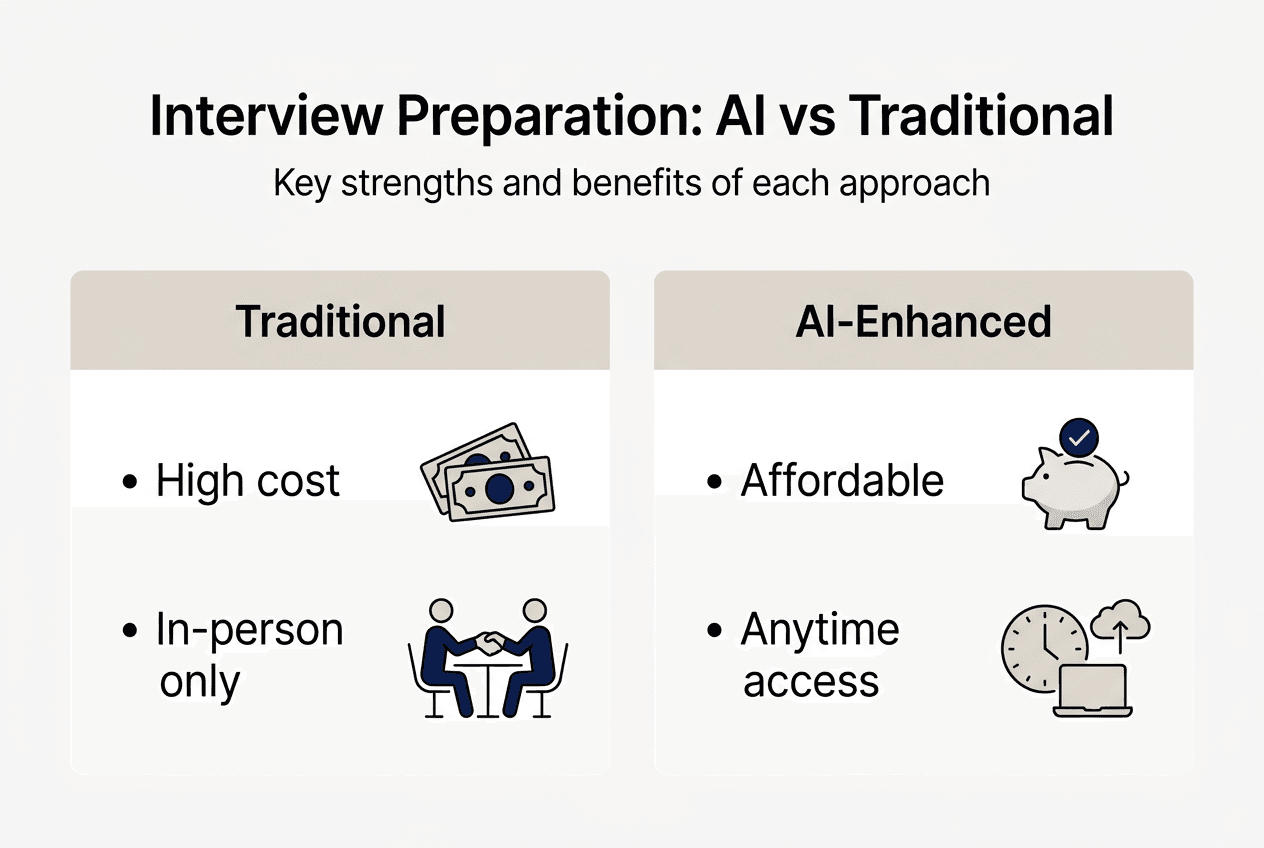
The realism factor surprises most first-time users. 60% of users rated the Interview Optimiser experience as more realistic than expected, challenging assumptions that AI interactions feel artificial or unhelpful. Modern systems simulate genuine interview pressure through adaptive questioning, realistic pacing, and professional presentation. The experience closely mirrors actual interviews whilst providing the psychological safety to experiment, fail, and improve without career consequences.
| Aspect | Traditional coaching | AI-enhanced preparation |
|---|---|---|
| Cost per session | £150 to £300 | £20 to £50 |
| Availability | Limited by scheduling | 24/7 access |
| Feedback consistency | Varies by coach | Standardised metrics |
| Practice frequency | 1 to 3 sessions typical | Unlimited sessions |
| Feedback detail | General observations | Specific measurable data |
| Progress tracking | Subjective assessment | Quantitative metrics |
The data-driven nature of AI feedback creates accountability that traditional methods struggle to match. You cannot ignore concrete statistics showing you used filler words 47 times in a 10-minute response or maintained eye contact only 60% of the time. These numbers create urgency for improvement that vague encouragement never achieves. Understanding AI interview practice anxiety reduction techniques demonstrates how objective feedback paradoxically reduces stress by clarifying exactly what needs improvement.
Pro Tip: Use AI platforms for frequent practice and detailed feedback, then schedule occasional sessions with human coaches to discuss strategy, industry-specific nuances, and career positioning that AI cannot fully address.
The optimal approach combines both methods strategically. AI handles the repetitive practice needed to build fluency and eliminate nervous habits. Human coaches provide strategic guidance on positioning your experience, navigating tricky questions about career gaps, and understanding company culture. This hybrid model maximises the strengths of each approach whilst minimising their respective limitations.
How to apply AI tools for confident interview performance
Integrating AI preparation into your interview routine requires intentional planning rather than sporadic practice when anxiety strikes. Successful candidates establish regular practice schedules, treating AI sessions with the same commitment they give to researching companies or updating their CVs. This consistency builds skills systematically whilst reducing the performance anxiety that comes from inadequate preparation.
Start by scheduling three practice sessions weekly, each lasting 20 to 30 minutes. This frequency provides enough repetition to build new habits without creating burnout. Space sessions across different days rather than clustering them, as your brain consolidates learning between practice attempts. Morning sessions often produce better results when your energy and focus peak, though evening practice works if that fits your schedule better.
Each session should target specific skills rather than attempting comprehensive improvement simultaneously. Monday might focus exclusively on eliminating filler words, Wednesday on maintaining steady eye contact, and Friday on structuring answers using the STAR method. This targeted approach produces faster progress than diffuse practice addressing everything at once. Building confidence on camera becomes manageable when you break the challenge into discrete, measurable components.
Hume’s Empathic Voice Interface provides dynamic feedback on vocal delivery including tone, confidence, and emotional regulation, helping you understand how subtle vocal shifts affect your perceived authority and competence. Pay particular attention to these vocal metrics, as research consistently shows voice quality influences hiring decisions as much as content quality. Your words matter, but how you deliver them often matters more.
Structure your practice sessions systematically:
- Begin with two warm-up questions to settle nerves and calibrate the system
- Record responses to five core questions relevant to your target role
- Review AI feedback immediately, noting your top improvement area
- Re-record one question incorporating that specific feedback
- Compare the before and after versions to confirm improvement
- Document your progress in a practice journal for long-term tracking
Pro Tip: Record yourself answering the same questions outside AI sessions using your phone, then compare those recordings with your AI practice to identify whether improvements transfer to unstructured environments or remain confined to the practice setting.
The feedback reports generated by AI systems contain more information than you can process in a single review. Save each report and revisit them weekly to identify patterns across multiple sessions. You might notice your filler word count drops consistently until you encounter questions about technical failures, revealing a specific anxiety trigger. These patterns guide your preparation focus more effectively than isolated session feedback.
Consistency matters more than perfection. Missing occasional practice sessions will not derail your progress, but abandoning regular practice certainly will. Treat your AI preparation schedule with the same seriousness you give to actual interviews. The confidence you build through systematic practice translates directly into calmer, more articulate performance when facing real interviewers.
Prepare with Pavone: your partner for AI-driven interview success
You have explored how AI transforms interview preparation through precise analysis and actionable feedback. Now take the next step by accessing expertly designed training that combines AI technology with proven communication frameworks. Pavone Academy offers comprehensive courses specifically built for mid-career professionals who want to present themselves with clarity and confidence in every interview conversation.
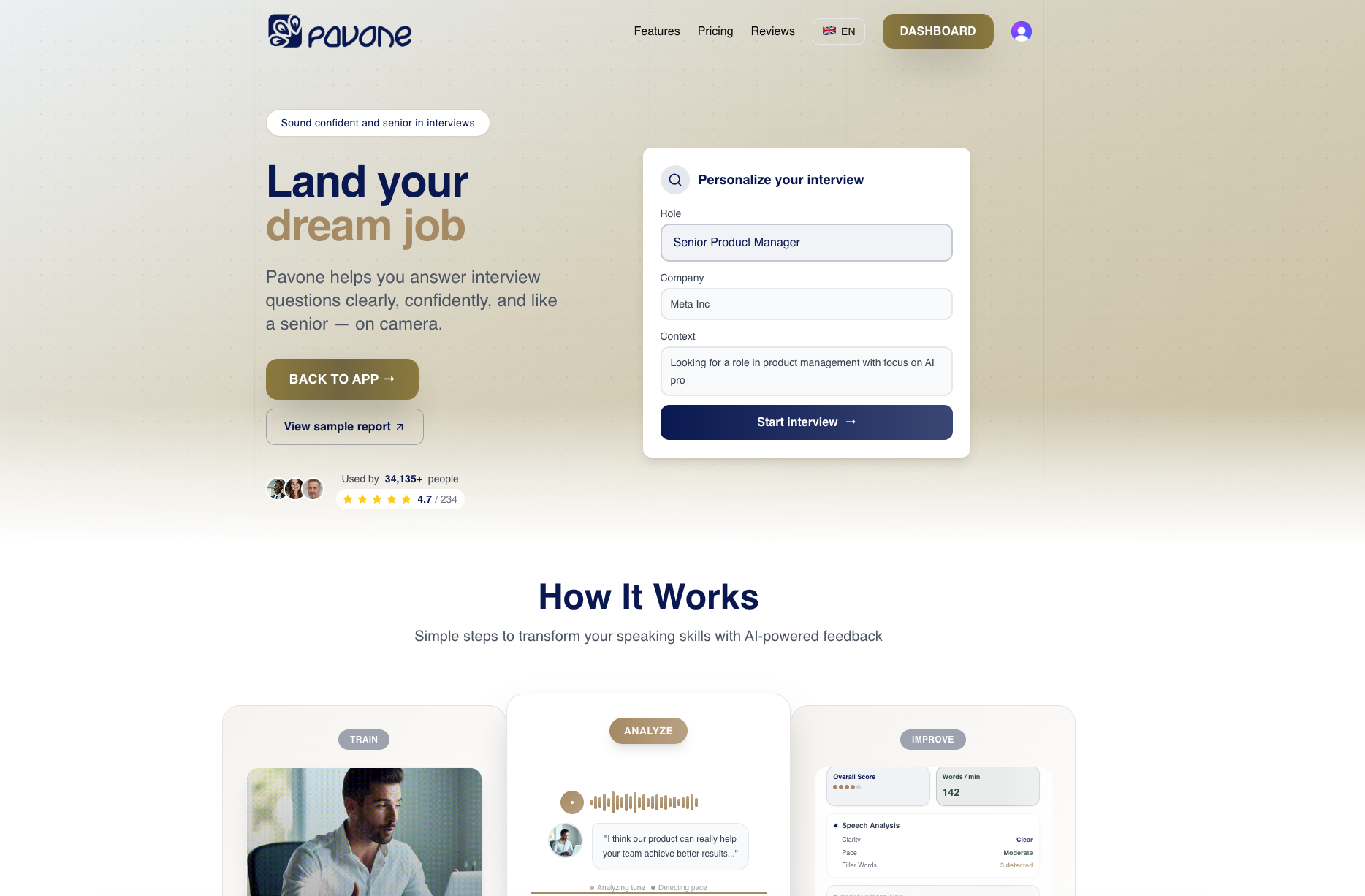
Our interview preparation guide walks you through systematic practice routines that build genuine skills rather than temporary confidence. You will learn to structure compelling answers, manage interview anxiety, and project authentic authority. The AI practice interview course delivers immediate feedback on your delivery, helping you refine your communication style through targeted practice. For comprehensive skill development, explore our AI mock interview training that combines realistic interview simulations with detailed performance analysis. These resources transform abstract advice into concrete improvement, giving you the tools to compete effectively in today’s demanding job market.
What is AI for interview preparation?
How does AI interview preparation actually work?
AI interview preparation uses computer vision and natural language processing to analyse your recorded practice responses. The system evaluates your speech patterns, facial expressions, body language, and answer content simultaneously, generating detailed reports on your performance strengths and improvement areas. This technology provides objective feedback that helps you understand exactly how you come across during interviews.
Can AI feedback really improve my interview performance?
Research demonstrates that candidates using AI mock interview tools show approximately 30% improvement in their interview performance compared to those relying solely on traditional preparation methods. The improvement comes from receiving specific, measurable feedback on communication patterns you might not notice yourself, allowing targeted skill development rather than vague practice.
Should I use AI tools instead of working with a human coach?
AI tools and human coaches serve complementary rather than competing roles in interview preparation. Use AI platforms for frequent practice sessions that build fluency and eliminate nervous habits through repetition and detailed feedback. Schedule occasional sessions with human coaches for strategic guidance on positioning your experience, navigating company-specific culture, and discussing career trajectory questions that require human judgement and industry expertise.
What specific skills can AI help me improve?
AI systems provide targeted feedback on vocal delivery including tone, pitch, and pacing; physical presence including eye contact and posture; linguistic patterns including filler words and hedging language; and content structure including logical flow and relevance. Exploring AI mock interview confidence and clarity techniques reveals how addressing these specific elements compounds into significantly stronger overall performance.
How often should I practise with AI interview tools?
Schedule three practice sessions weekly, each lasting 20 to 30 minutes, to build skills systematically without creating burnout. This frequency provides enough repetition to develop new communication habits whilst allowing time between sessions for your brain to consolidate learning. Consistency matters more than session length, so maintain your schedule even when progress feels slow.
Recommended
- AI Communication for Interviews: 40% Faster Confidence | Pavone Academy
- Pavone - AI Job Interview Practice
- Pavone - AI Job Interview Practice
- AI Consulting for SMEs: How Beginners Can Pitch and Deliver Services
- 10 ChatGPT Prompts for Entrepreneurial Self-Discovery: Your 2025 Growth Guide | Kickass Online
Ready to practice?
Start improving your speaking skills with AI-powered feedback and analysis.
Try Pavone Free