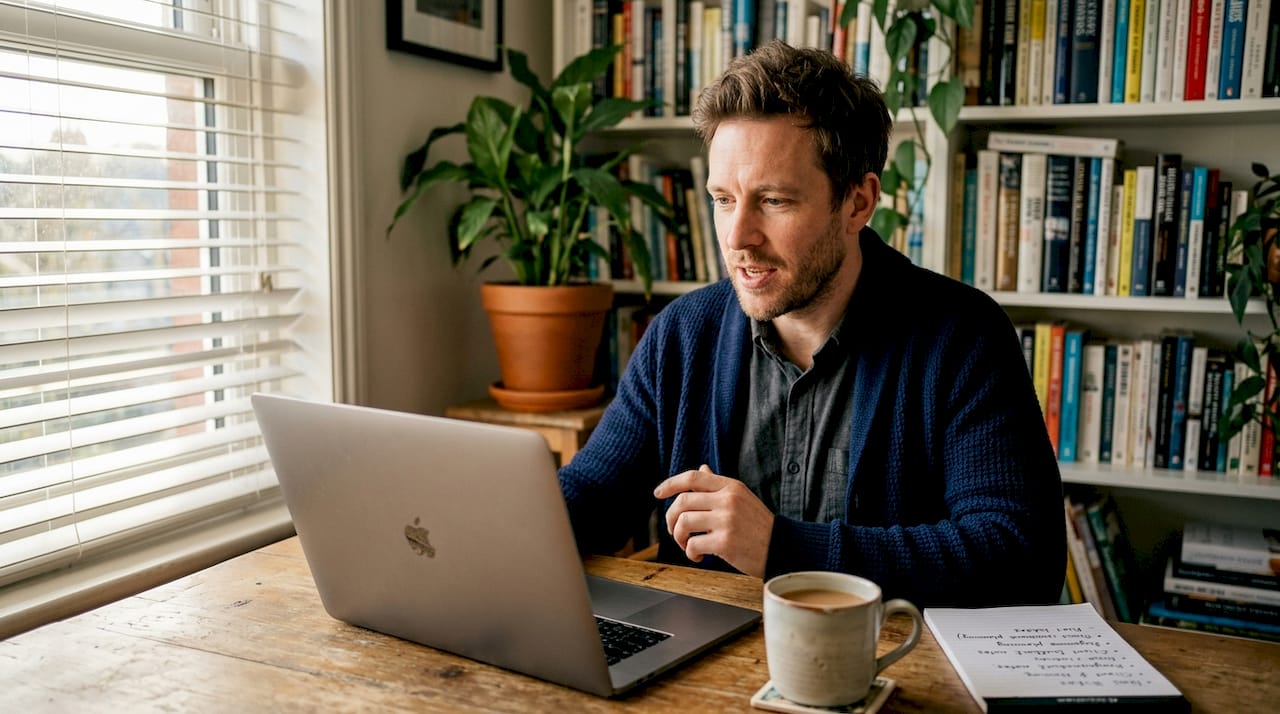
Master mock interviews for confident job success in 2026

Mid-to-senior professionals often struggle with interview anxiety, particularly when facing video-based conversations that demand confident on-camera delivery. Mock interviews offer a proven solution, allowing you to rehearse answers, refine your presentation, and reduce nervousness before real opportunities. This guide walks you through preparing, executing, and verifying your mock interview practice to maximise confidence and performance when it matters most.
Table of Contents
- Why Mock Interviews Are Essential For Job Seekers
- Preparing Effectively For Your Mock Interview
- Executing Your Mock Interview With Focus And Realism
- Verifying Progress And Refining Your Interview Skills
- Enhance Your Interview Skills With Pavone Academy
- FAQ
Key takeaways
| Point | Details |
|---|---|
| Mock interviews boost performance | Practice sessions improve outcomes by 55-60% and reduce anxiety for most candidates. |
| On-camera rehearsal reveals habits | Video recordings highlight filler words, pacing issues, and body language patterns you might otherwise miss. |
| AI and human mocks complement each other | AI provides consistent, structured feedback whilst human sessions offer personalised insights for senior-level nuances. |
| Strategic preparation is essential | Simulate realistic scenarios, practise STAR responses, and treat mocks as genuine interviews to maximise benefit. |
Why mock interviews are essential for job seekers
Mock interviews transform interview readiness by addressing both psychological and performance dimensions. Research shows that practice sessions improve performance by 55-60% and reduce anxiety for 79% of users, demonstrating measurable impact on confidence and delivery. Repeated exposure to interview questions builds familiarity, lowering nervousness and helping you respond more naturally under pressure.
AI-driven mock interviews offer consistent, structured feedback that proves particularly valuable for anxiety reduction. The technology analyses your answers for clarity, pacing, and filler words, delivering objective insights without subjective bias. Studies confirm that AI mock interviews improve perceived employability and real interview outcomes, especially when candidates practise multiple times to refine their responses.
Human mock interviews complement AI sessions by providing personalised nuance, particularly for senior-level challenges. Experienced interviewers can probe your strategic thinking, assess cultural fit, and simulate the conversational dynamics that matter in leadership roles. This combination creates a comprehensive preparation approach.
Pro Tip: Alternate between AI and human mocks throughout your preparation. Use AI sessions to build foundational confidence and structure, then engage human coaches to refine strategic messaging and leadership presence.
The benefits extend beyond answer content. Mock interviews force you to articulate your experience coherently, organise thoughts under time pressure, and adapt to unexpected follow-up questions. Each session strengthens neural pathways associated with interview performance, making confident delivery feel more automatic when facing real hiring managers.
“Mock interviews don’t just prepare your answers, they rewire your brain to handle interview pressure with composure and clarity.”
Key advantages include:
- Reduced nervousness through repeated exposure to interview scenarios
- Improved answer structure using frameworks like STAR
- Enhanced awareness of verbal and non-verbal communication patterns
- Measurable progress tracking across multiple practice sessions
For mid-to-senior professionals, mock interviews also reveal gaps in how you communicate strategic impact. You might discover that your answers focus too heavily on tactical execution rather than leadership judgement, or that you struggle to quantify business outcomes. Identifying these patterns early allows targeted improvement before real opportunities. Platforms like Pavone provide AI-driven feedback that highlights these exact issues, helping you sound more senior and confident.
Preparing effectively for your mock interview
Effective preparation begins with creating a realistic video environment that mirrors actual interview conditions. Set up proper lighting, test your camera angle, and ensure a professional background without distractions. On-camera practice highlights filler words and body language habits often unnoticed in face-to-face conversations, making environmental authenticity crucial for meaningful feedback.
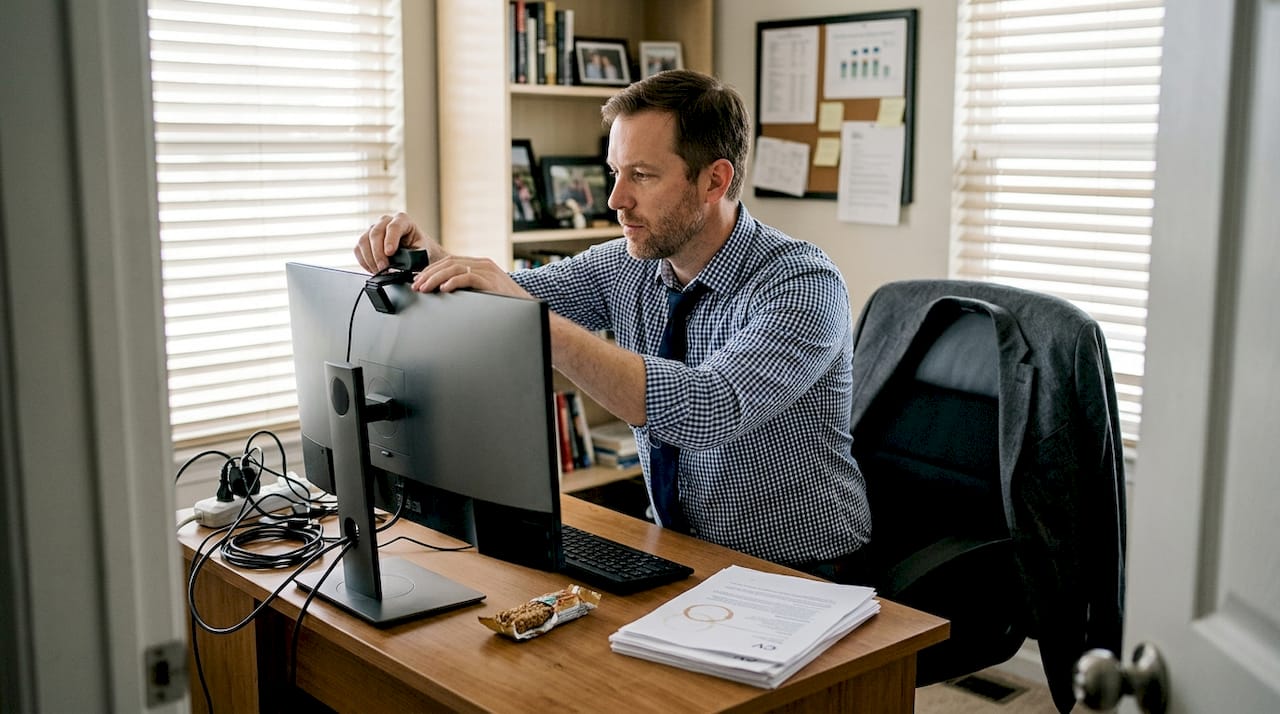
Your technology setup should include reliable recording equipment, stable internet connection, and backup devices in case of technical failures. Position your camera at eye level to maintain natural eye contact, and use headphones to minimise audio feedback. Test everything 24 hours before your mock session to troubleshoot any issues without time pressure.
Prepare answers focusing on STAR method and strategic leadership scenarios relevant to your target role. Mid-to-senior positions demand evidence of judgement, team motivation, and business impact, not just task completion. Structure responses to emphasise how you influenced outcomes, navigated ambiguity, and drove organisational change.
Follow these preparation steps:
- Research common questions for your role level and industry
- Draft STAR responses highlighting strategic thinking and measurable results
- Practise delivering answers within 90-120 seconds to maintain conciseness
- Prepare questions to ask your interviewer, demonstrating engagement and insight
- Review the job description to align your examples with required competencies
Mindset matters enormously. Treat the mock as a real interview to trigger authentic pressure responses and maximise learning. Half-hearted rehearsals produce limited benefit because your brain doesn’t engage the stress mechanisms that affect real performance. Commit fully to the simulation, including dressing professionally and eliminating distractions during the session.
Pro Tip: Schedule mocks at the same time of day as your real interviews. Your energy levels and cognitive sharpness vary throughout the day, so practising under similar conditions improves transferability of skills.
Gather necessary materials beforehand, including your CV, portfolio samples, and notes on the company’s recent initiatives. Having these resources available during the mock mirrors real interview preparation and helps you reference specific achievements naturally. This preparation also reduces cognitive load, allowing you to focus on delivery rather than scrambling to recall details.
| Preparation element | Purpose | Time required |
|---|---|---|
| Technology setup | Ensure reliable recording and playback | 30 minutes |
| STAR response drafting | Structure answers with clear impact | 2-3 hours |
| Company research | Align examples with organisational needs | 1 hour |
| Mock scheduling | Create accountability and realistic pressure | 15 minutes |
For candidates seeking structured guidance, practising on camera with strategic focus accelerates skill development and builds the confidence needed for senior-level conversations.
Executing your mock interview with focus and realism
During the mock interview, stay authentic and resist the temptation to over-rehearse answers that sound scripted. Hiring managers value genuine conversation over robotic recitation, so allow natural pauses and conversational flow whilst maintaining structure. Apply feedback in real time by adjusting your pacing or clarifying points when you notice confusion, just as you would in an actual interview.
Address both technical and strategic behavioural questions to prepare for the full spectrum of senior-level inquiries. Technical questions assess your domain expertise, whilst behavioural questions reveal how you navigate complexity, influence stakeholders, and drive results. Senior interviews focus on judgement and cultural fit, so mocks should simulate these nuances rather than focusing solely on competency checklists.
Use video recordings to self-assess and identify improvements immediately after the session. Watch for filler words like “um” and “like”, note when you lose eye contact with the camera, and observe whether your body language conveys confidence or nervousness. This immediate review reinforces learning whilst the experience remains fresh in your memory.
Follow these execution guidelines:
- Begin with a strong opening that establishes rapport and confidence
- Listen carefully to each question before responding, avoiding premature answers
- Use the STAR framework to structure responses with clear situation, task, action, and result
- Maintain eye contact with the camera to simulate engagement with the interviewer
- Conclude answers decisively rather than trailing off or adding unnecessary detail
- Ask clarifying questions when needed to demonstrate thoughtfulness
Treat AI or human mocks as realistic simulations of pressure and questioning. Your physiological stress response doesn’t distinguish between practice and reality if you commit fully to the scenario. This authentic engagement builds resilience and helps you perform confidently when stakes are highest.
Pro Tip: Record multiple takes of challenging questions during your mock session. Comparing different attempts reveals which delivery style feels most natural and effective, helping you refine your approach without overthinking.
Pay attention to pacing throughout the session. Nervous candidates often rush through answers, sacrificing clarity for brevity. Conversely, some professionals over-explain points, losing the interviewer’s attention. Aim for concise, impactful responses that respect time constraints whilst demonstrating depth of experience. Practising this balance during mocks prevents timing issues in real conversations.
Manage nerves by acknowledging them without letting anxiety dominate your performance. Brief pauses to collect your thoughts signal composure rather than uncertainty, and taking a breath before answering demonstrates confidence. These techniques become automatic through repeated mock practice, particularly when using structured on-camera rehearsal methods that emphasise delivery alongside content.
Verifying progress and refining your interview skills
Post-mock review techniques transform raw practice into measurable improvement. Use video playback to spot filler words and body language issues that undermine your professional presence. Count specific instances of “um”, “like”, or nervous gestures across multiple recordings to track reduction over time. This quantitative approach provides concrete evidence of progress and motivates continued refinement.
Track improvements in answer clarity and confidence metrics by comparing early and later mock sessions. Data shows that confidence improves by over 30% and answer structuring improves by 70% with mock interviews, demonstrating the measurable impact of deliberate practice. Document your performance across dimensions like conciseness, strategic framing, and vocal energy to identify remaining development areas.
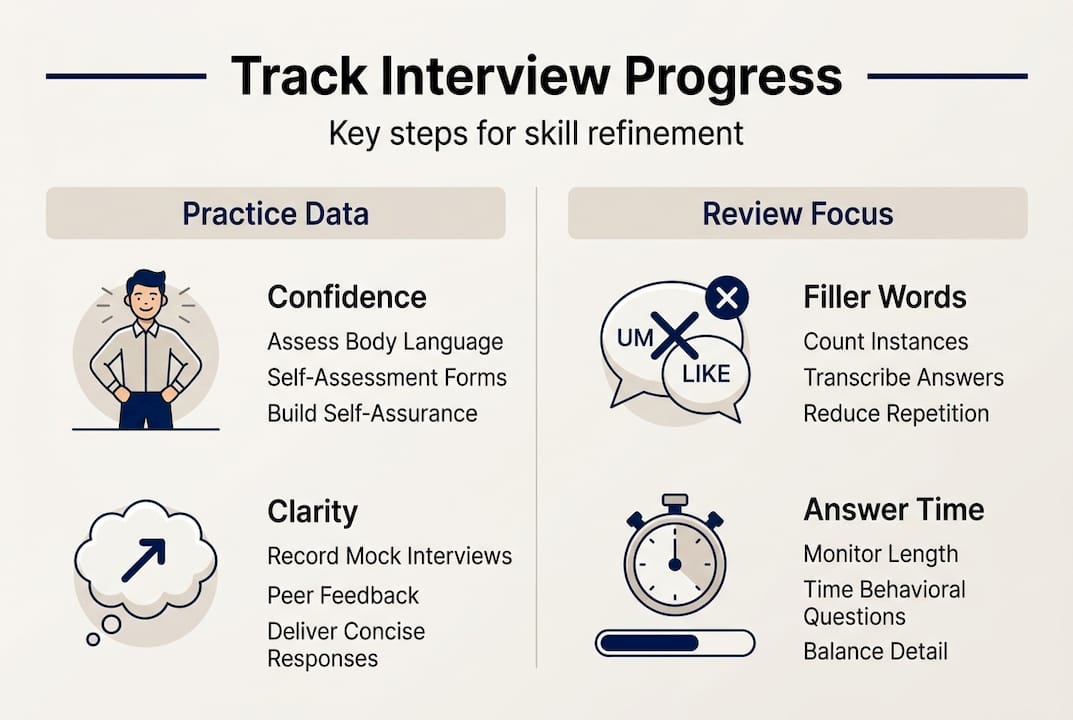
Iterate with more mocks to build mastery and reduce anxiety progressively. Single practice sessions offer limited benefit compared to spaced repetition over several weeks. Each iteration strengthens your ability to deliver polished answers under pressure, eventually making confident performance feel effortless rather than forced.
Key verification activities include:
- Reviewing transcripts to identify repetitive phrases or weak transitions
- Analysing body language for nervous habits like fidgeting or poor posture
- Timing answers to ensure they remain concise without sacrificing substance
- Soliciting feedback from coaches or peers on strategic messaging and impact
Compare AI feedback versus human feedback to exploit strengths of each approach. AI excels at identifying patterns across multiple sessions, highlighting consistent issues with filler words, pacing, or answer length. Human feedback provides contextual insights about how your answers land emotionally and whether your strategic framing resonates with senior-level expectations.
| Feedback type | Strengths | Best use case |
|---|---|---|
| AI-driven analysis | Consistent, objective metrics on delivery patterns | Building foundational confidence and structure |
| Human coach insights | Personalised, contextual guidance on strategic messaging | Refining leadership presence and cultural fit |
| Self-review via video | Immediate awareness of verbal and non-verbal habits | Real-time adjustment between practice sessions |
Pro Tip: Create a personal scorecard tracking specific metrics like filler word count, answer length, and confidence rating. Update it after each mock to visualise improvement and maintain motivation throughout your preparation journey.
Adjust future preparation based on verified gaps. If video review reveals that you struggle with behavioural questions about conflict resolution, dedicate your next mock session to practising those scenarios specifically. Targeted iteration accelerates skill development more effectively than generic repetition.
For structured progress tracking and AI-driven insights, platforms offering comprehensive interview practice resources help you verify improvement systematically whilst building the confidence needed for competitive opportunities.
Enhance your interview skills with Pavone Academy
Pavone Academy provides specialised online resources designed to help mid-to-senior professionals master mock interviews and confident on-camera delivery. Our expert-led modules focus specifically on the presentation skills that distinguish strong candidates in video-based interviews, addressing common challenges like filler words, pacing issues, and nervous body language.
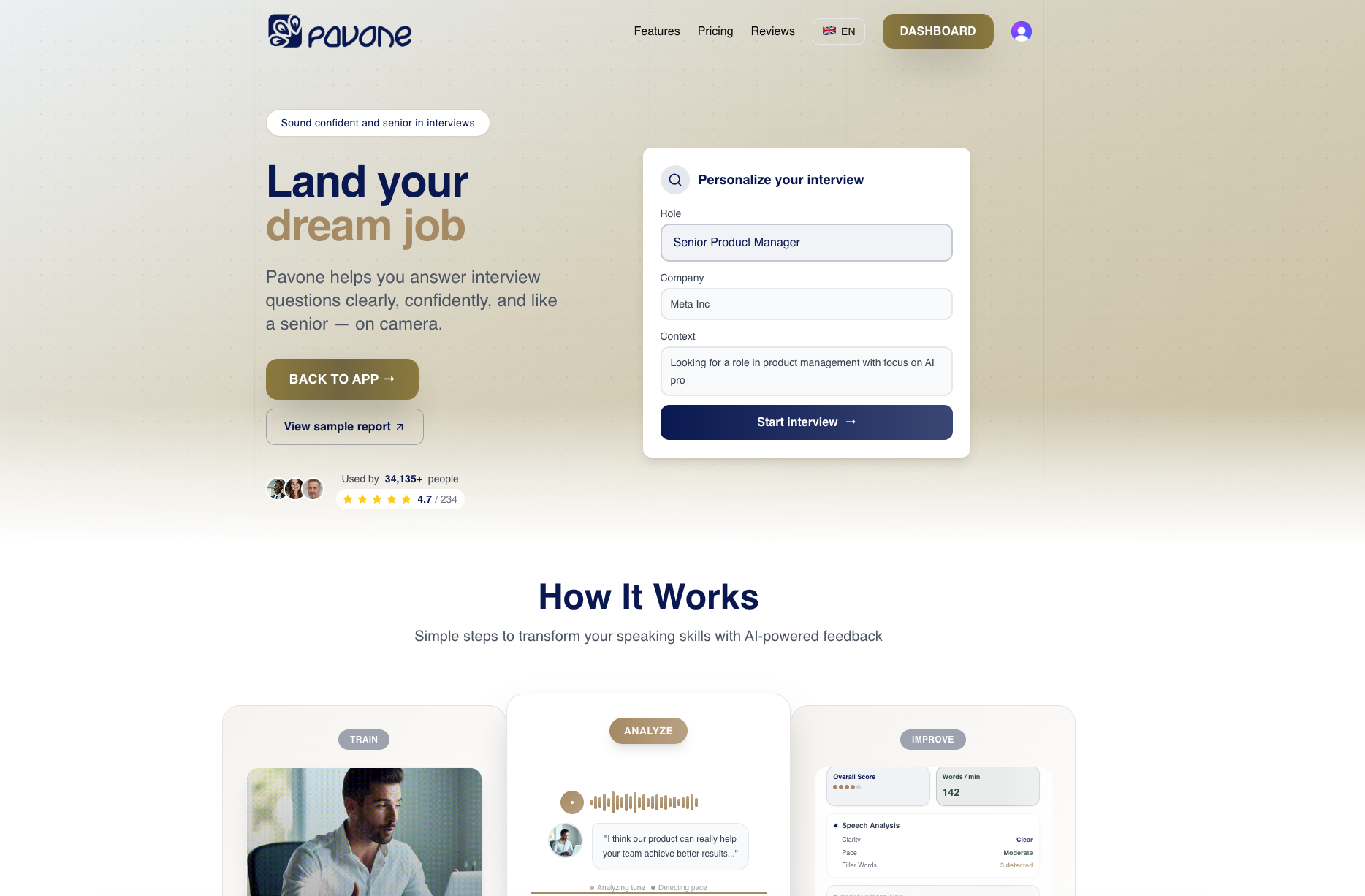
Access AI-driven mock interviews that deliver measurable confidence gains through consistent, objective feedback on your delivery. The platform analyses your answers for clarity, structure, and professional presence, helping you sound more senior and decisive in real conversations. Special emphasis on senior-level scenarios ensures you’re prepared for strategic behavioural questions that assess judgement and leadership impact. Whether you’re mastering online interview practice, building video confidence, or leveraging AI feedback to refine your approach, Pavone Academy accelerates your path to interview success.
FAQ
How can I reduce anxiety before a real interview?
Practise repeatedly with mocks to build familiarity and calm nerves through exposure. Your brain adapts to interview pressure when you simulate realistic conditions multiple times, making confident performance feel more natural. Use breathing exercises and visualisation techniques immediately before sessions to activate your parasympathetic nervous system and reduce physiological stress responses.
What is the difference between AI and human mock interviews?
AI offers consistent, structured feedback suited for repetition and anxiety management, analysing delivery patterns like filler words and pacing objectively. Human mocks provide personalised insights and address nuanced leadership scenarios, helping you refine strategic messaging and cultural fit. Combining both approaches maximises preparation effectiveness by leveraging complementary strengths.
How should I prepare for behavioural questions in senior interviews?
Use the STAR framework focusing on judgement, impact, and strategic vision rather than just task completion. Simulate realistic scenarios including team motivation, stakeholder influence, and deadline management to demonstrate leadership capabilities. Prepare examples that quantify business outcomes and emphasise how you navigated ambiguity or drove organisational change.
How many mock interviews should I do before the real one?
Multiple sessions spaced over weeks enable measurable improvement through deliberate practice and feedback integration. Adapt the number based on confidence and feedback until performance stabilises, typically requiring three to five mocks for most candidates. Senior-level roles may benefit from additional sessions to refine strategic messaging and leadership presence.
Should I memorise answers or speak naturally during mocks?
Speak naturally using structured frameworks rather than memorising scripts word-for-word. Memorised answers sound robotic and fail under pressure when interviewers ask unexpected follow-ups. Prepare key points and examples, then practise articulating them conversationally to maintain authenticity whilst demonstrating preparedness.
Recommended
Ready to practice?
Start improving your speaking skills with AI-powered feedback and analysis.
Try Pavone Free