Master interviewing practice for on-camera success in 2026

Professionals preparing for mid-to-senior level roles often struggle to communicate confidently and clearly during on-camera interviews. Nerves, unclear delivery, and lack of structured practice can undermine even the strongest candidates. This guide walks you through effective interviewing practice techniques that build confidence, refine clarity, and prepare you to excel in video interviews throughout 2026. You’ll learn essential preparation steps, execution strategies, troubleshooting methods, and validation techniques to transform your on-camera presence and significantly improve your hiring prospects.
Table of Contents
- Preparing Effectively For On-Camera Interviews
- Executing Your Interview Practice Sessions With Confidence
- Troubleshooting Common Challenges During Interview Practice
- Measuring Progress And Validating Your Interview Skills
- Boost Your Interview Skills With Pavone Academy
Key takeaways
| Point | Details |
|---|---|
| Interviewing practice boosts confidence | Regular on-camera rehearsal significantly improves clarity and reduces anxiety during real interviews. |
| Structured preparation enhances performance | Setting up your environment and understanding interview formats ahead of time leads to smoother delivery. |
| Technology and mock interviews simulate real conditions | Recording practice sessions and using AI feedback tools replicate authentic interview pressure. |
| Reviewing and refining answers drives improvement | Consistent self-assessment and external feedback accelerate skill development and communication quality. |
| Consistent practice raises hiring chances | Video interview practice can boost hiring chances by 25% in 2026. |
Preparing effectively for on-camera interviews
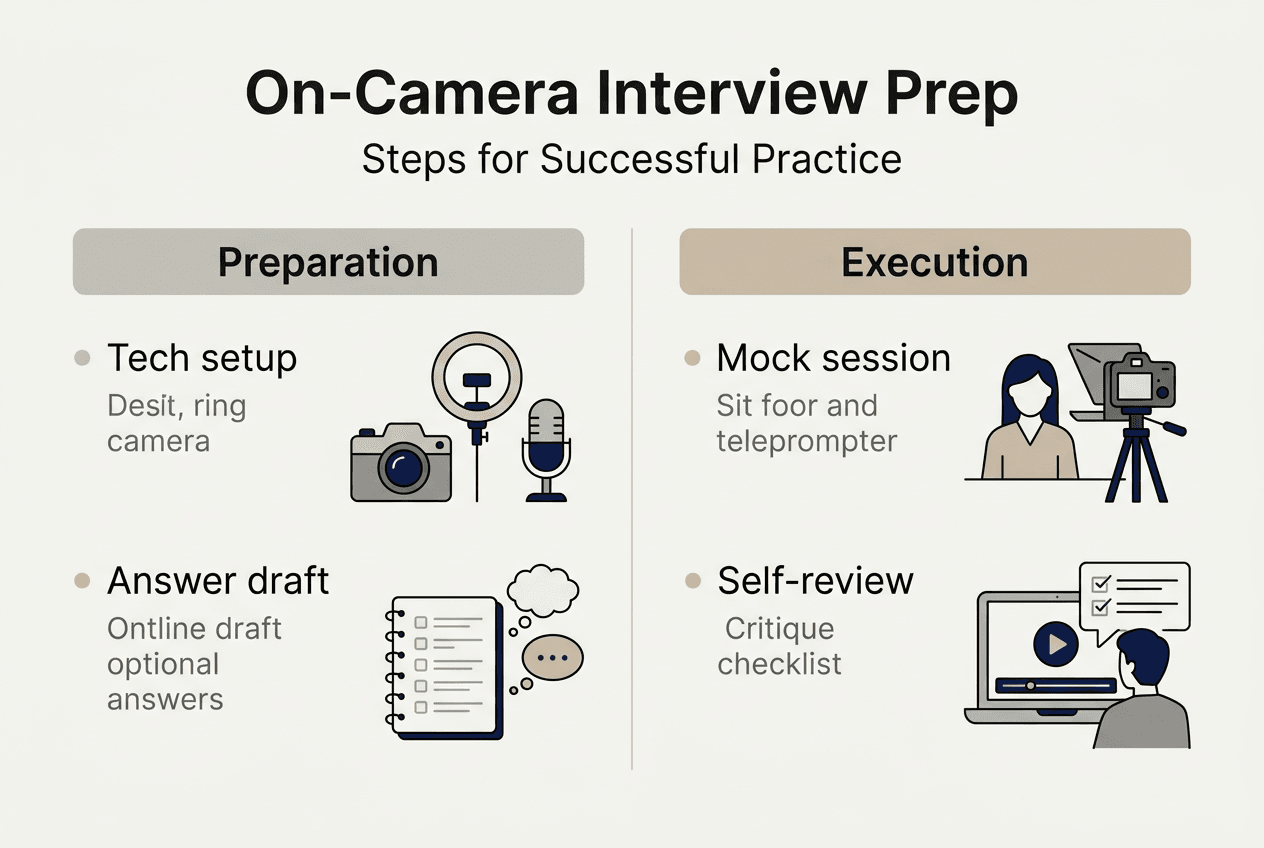
Before you record your first practice answer, establishing a solid foundation is essential. Preparation includes setting up your recording environment and understanding the interview format to reduce anxiety. Start by creating a distraction-free space with proper lighting that illuminates your face evenly, avoiding harsh shadows or backlighting. Position your camera at eye level to maintain natural eye contact with the lens, simulating a genuine conversation.
Familiarise yourself with the specific interview platform you’ll encounter, whether it’s Zoom, Microsoft Teams, or a proprietary system. Test your microphone, camera quality, and internet connection well in advance. Technical glitches during real interviews can derail even well-prepared candidates, so eliminating these variables during practice builds confidence.
Develop a comprehensive preparation checklist covering both technical and mental readiness:
- Verify camera angle, lighting, and background professionalism
- Test audio clarity and eliminate background noise sources
- Prepare a list of common mid-to-senior level interview questions
- Research the company, role, and industry trends thoroughly
- Practice grounding techniques like deep breathing or visualisation
Structured preparation combines research, content rehearsals, and self-assessment. Spend time crafting concise answers to behavioural questions using the STAR method (Situation, Task, Action, Result). Rehearse these answers aloud multiple times, refining your phrasing and timing. Consider creating a simple preparation table to track your readiness:
| Preparation element | Status | Notes |
|---|---|---|
| Technical setup | Complete | Camera, lighting, audio tested |
| Question research | In progress | 15 common questions identified |
| Answer frameworks | Draft complete | STAR method applied to 10 scenarios |
| Grounding techniques | Practised | Breathing exercises before each session |
Pro Tip: Record a brief test video before each practice session to verify your technical setup. This 30-second check ensures you won’t waste valuable practice time troubleshooting issues mid-session.
Mental preparation matters as much as technical readiness. Nerves often manifest as rushed speech, filler words, or stiff body language. Develop a pre-recording routine that calms your mind and centres your focus. Some professionals find success with brief meditation, others prefer reviewing key talking points, and some benefit from physical movement like stretching. Experiment to discover what works best for you.
Approach each practice session with clear objectives. Rather than vaguely “practising interviews,” target specific skills like reducing filler words, improving eye contact, or refining your closing statements. This focused approach accelerates improvement and provides measurable progress indicators. For comprehensive guidance on preparation strategies, explore job interview preparations for video confidence and master interview online practice techniques.
Executing your interview practice sessions with confidence
Once your preparation is complete, implementing effective practice techniques maximises your on-camera impact. Begin by answering common mid-to-senior level interview questions on camera, treating each recording as a genuine interview. This mindset shift transforms casual practice into realistic rehearsal, activating the same mental processes you’ll experience during actual interviews.
Follow this structured execution process:
- Select a specific question from your prepared list
- Set a timer matching typical interview response lengths (90-120 seconds for most questions)
- Record your answer without stopping, even if you stumble
- Review the recording immediately, noting specific improvement areas
- Record a second take incorporating your observations
- Compare both versions to identify progress
This iterative approach builds confidence through visible improvement. Video interview practice boosts hiring chances by 25% in 2026, largely because repeated exposure reduces anxiety and refines delivery. Multiple takes reveal patterns in your communication style, highlighting both strengths to leverage and weaknesses to address.
Focus on three critical delivery elements during each recording. First, maintain clear articulation by speaking slightly slower than your natural pace, enunciating key words, and pausing briefly between major points. Second, develop a steady, confident tone that conveys authority without arrogance. Third, project positive body language through relaxed shoulders, natural hand gestures, and consistent eye contact with the camera lens.
Simulate real interview conditions as closely as possible. Dress professionally, even though you’re alone. Set your phone to silent and close unnecessary browser tabs. If the actual interview will include panel members, imagine their presence and direct your gaze accordingly. Some professionals find it helpful to place photos near the camera lens, creating the illusion of speaking to real people.
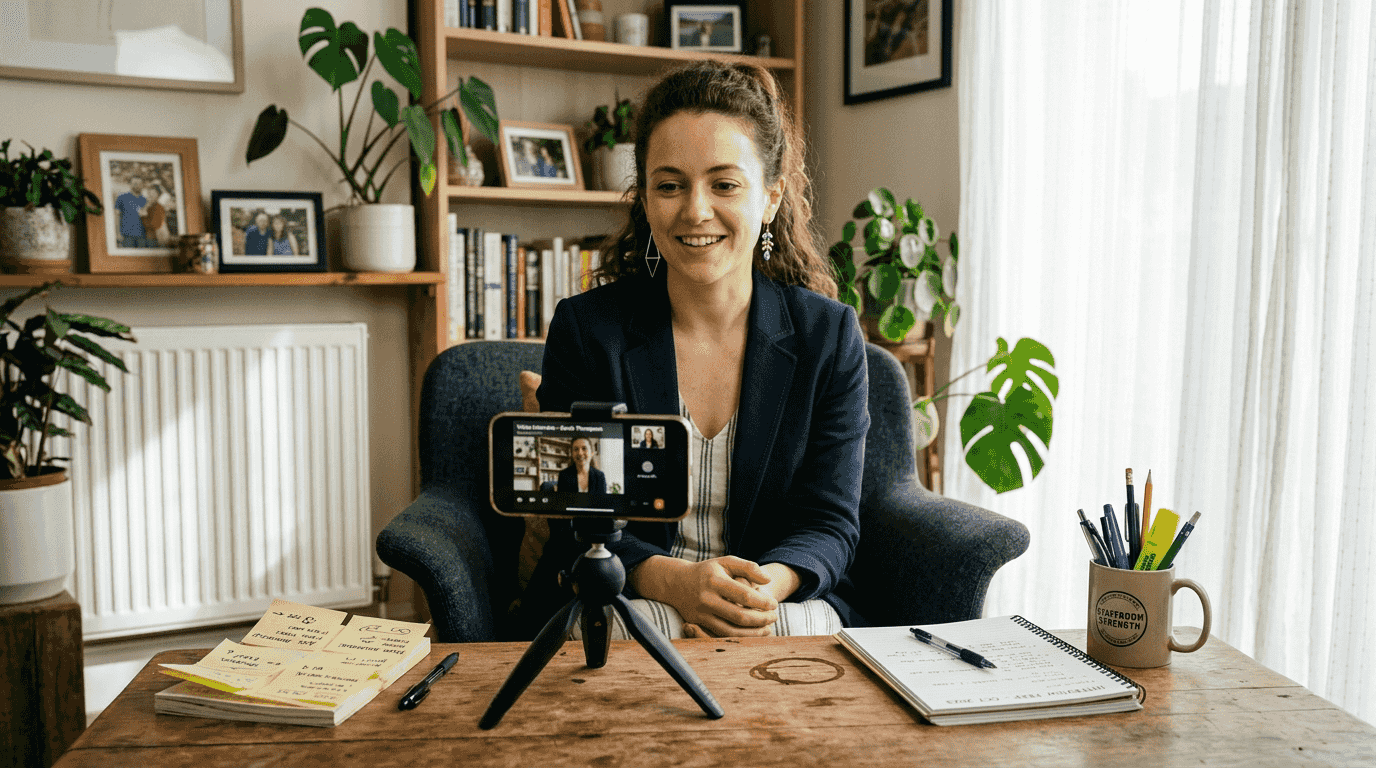
Pro Tip: Record at the same time of day you expect real interviews to occur. Your energy levels, voice quality, and mental sharpness vary throughout the day, so practising during your actual interview timeslot ensures authentic rehearsal conditions.
Implement feedback loops by reviewing recordings systematically. Watch each video twice: once for overall impression and once with a critical eye on specific elements like filler words, pacing, and body language. Consider sharing selected recordings with trusted mentors, colleagues, or career coaches who can provide objective critique. External perspectives often reveal blind spots you’ve missed.
For professionals seeking structured feedback and measurable progress, platforms offering interview practice confidence on camera and online interview practise confidence tools provide systematic improvement tracking and actionable insights.
Troubleshooting common challenges during interview practice
Even well-prepared professionals encounter obstacles during interview rehearsals. Recognising and addressing these challenges quickly prevents them from becoming ingrained habits. Common issues include monotone delivery, lack of eye contact, and excessive filler words like “um,” “like,” or “you know.” Each problem has specific solutions.
Monotone delivery often stems from nervousness or over-rehearsal. Combat this by varying your pitch naturally, emphasising key words, and injecting genuine enthusiasm into your responses. Record yourself telling a friend about an exciting project, then compare that energy to your interview practice. The contrast often reveals how much more animated you can be.
Distinguish between technical glitches and performance-related difficulties:
- Technical issues: poor lighting, audio delays, camera freezing, background noise
- Performance issues: nervous gestures, rushed speech, unclear structure, weak conclusions
- Hybrid challenges: looking at the wrong part of the screen, forgetting to unmute, losing place in notes
Technical problems require equipment upgrades or environmental changes. Performance issues demand focused practice and self-awareness. Hybrid challenges need both technical familiarity and mental preparation. Overcoming common mistakes in video interviews significantly improves perceived confidence and clarity.
Compare self-assessment effectiveness versus external feedback:
| Feedback source | Strengths | Limitations |
|---|---|---|
| Self-review | Immediate, private, unlimited repetition | Blind spots, subjective judgment, lack of expertise |
| Peer feedback | Honest perspective, relatable experience | Limited technical knowledge, potential bias |
| Professional coaching | Expert insights, industry standards, structured improvement | Cost, scheduling constraints, formal setting |
| AI platforms | Objective metrics, consistent standards, instant analysis | May miss nuanced communication subtleties |
Practical fixes for common challenges include breathing exercises before recording to calm nerves, script refinement to eliminate unnecessary complexity, and camera positioning adjustments to encourage natural eye contact. Place a small sticky note with a smiley face near your camera lens as a reminder to look directly at it, not at your own image on screen.
Rehearsal with AI tools or mock panels simulates pressure effectively. AI platforms analyse your speech patterns, pacing, and clarity objectively, while mock panels with colleagues recreate the interpersonal dynamics of real interviews. Both approaches build resilience and adaptability. For targeted improvement strategies, explore job interview practice for confident success and how to enhance persuasive speaking in interviews.
Measuring progress and validating your interview skills
Validating your improvement requires systematic evaluation methods. Create measurable criteria for assessing tone, pace, clarity, and engagement. Tone should sound confident yet approachable, conveying authority without arrogance. Pace should allow listeners to absorb your points without feeling rushed or bored. Clarity means every sentence adds value, with minimal filler words or tangents. Engagement reflects your ability to maintain interest through varied delivery and compelling content.
Develop a structured review schedule:
- Record baseline answers to five core questions at the start of your practice period
- Practice regularly for two weeks, recording multiple takes of various questions
- Re-record the same five baseline questions after two weeks
- Compare initial and current versions side by side, noting specific improvements
- Identify remaining weak areas and adjust your practice focus accordingly
- Repeat this cycle monthly until your interview date
This cyclical approach provides concrete evidence of progress, maintaining motivation during intensive preparation periods. Consistent interview practice with review cycles accelerates skills improvement and boosts hiring odds significantly.
Collect and apply structured feedback from multiple sources. Peers offer relatable perspectives on how you come across, mentors provide industry-specific insights, and AI platforms deliver objective metrics on speech patterns and delivery quality. Synthesise this feedback into actionable improvement targets rather than trying to address everything simultaneously.
Use benchmarks from mid-to-senior interview best practices as standards. Research indicates successful senior-level candidates typically speak at 140-160 words per minute, pause naturally between major points, maintain eye contact 60-70% of the time, and use hand gestures sparingly but purposefully. Compare your recordings against these standards to identify gaps.
Track improvements systematically:
| Metric | Week 1 baseline | Week 2 progress | Week 4 target |
|---|---|---|---|
| Filler words per minute | 8 | 4 | 2 or fewer |
| Average response length | 145 seconds | 120 seconds | 90-120 seconds |
| Eye contact percentage | 45% | 60% | 65-70% |
| Confidence rating (1-10) | 5 | 7 | 8-9 |
Maintain a practice log or journal documenting each session’s focus, challenges encountered, and breakthroughs achieved. This record serves multiple purposes: tracking progress over time, identifying patterns in your improvement, and providing motivation during difficult preparation periods. Review your journal weekly to celebrate wins and adjust your practice strategy based on emerging trends.
For professionals seeking comprehensive progress tracking and validation tools, platforms offering video interview practice that boosts hiring chances and AI mock interview confidence and clarity solutions provide structured frameworks for measuring and validating your interview readiness.
Boost your interview skills with Pavone Academy
Having explored comprehensive preparation, execution, troubleshooting, and validation strategies, you’re equipped with the knowledge to transform your on-camera interview performance. Pavone Academy accelerates this journey by offering focused, practical online interview practice designed specifically for professionals targeting mid-to-senior level roles.
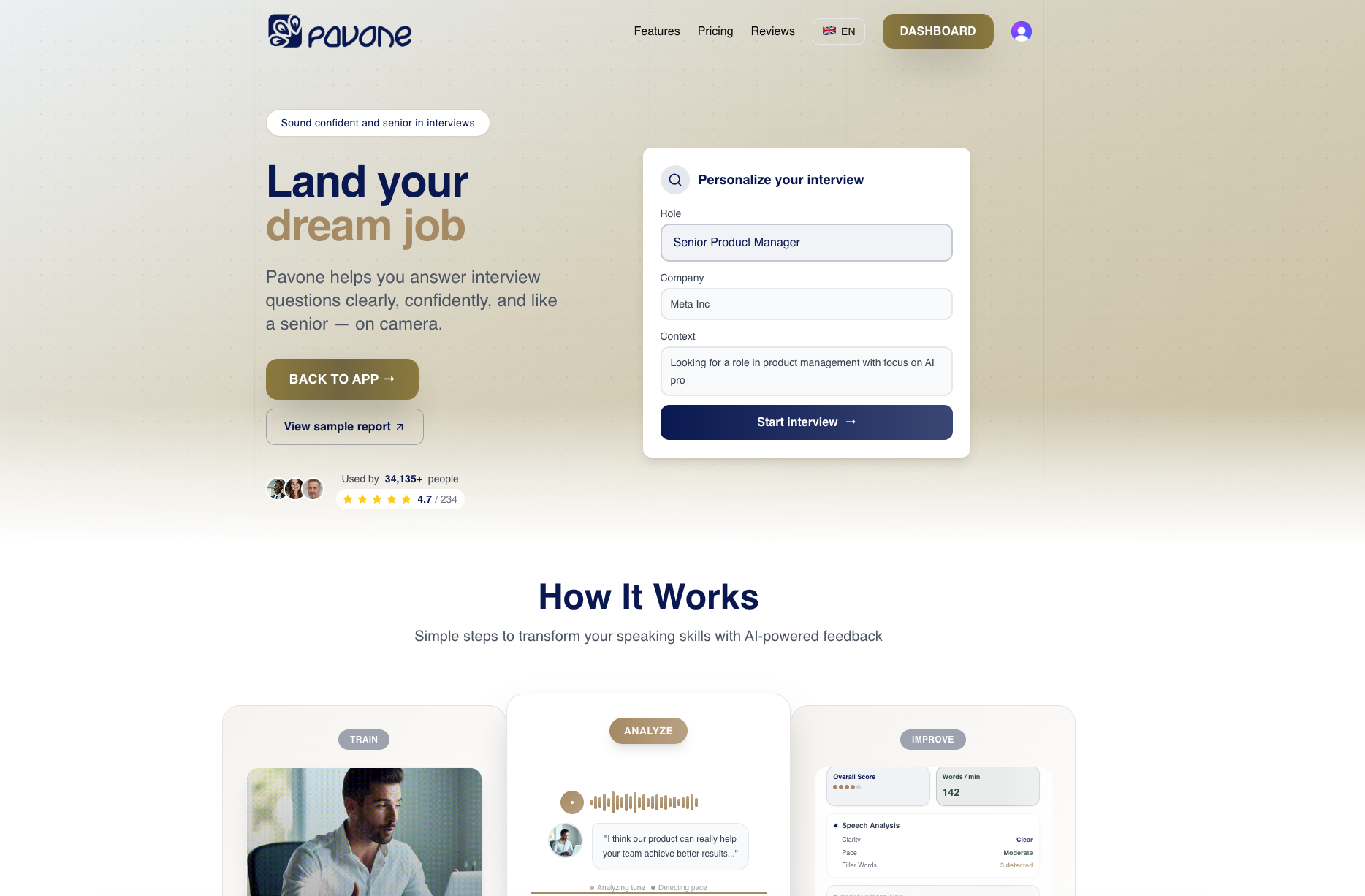
Our AI-driven mock interviews provide personalised feedback on clarity, structure, pacing, and confidence, helping you identify and address specific improvement areas quickly. The platform analyses your delivery objectively, highlighting filler words, pacing issues, and structural weaknesses that self-review often misses. Professionals using structured interview practice for confidence on camera report significantly improved performance and reduced anxiety. With proven methods that boost hiring chances by 25% in 2026, Pavone Academy offers the practical support you need to present your best self during critical career opportunities.
FAQ
How can I practice interviewing for mid-to-senior level roles on camera?
Use role-specific questions relevant to your target position and record your responses on video. Review these recordings regularly, focusing on clarity, confidence, and professional presence. Seek feedback from mentors, peers, or AI platforms to identify improvement areas. Simulate real interview platforms and settings for authenticity, including proper lighting, camera angles, and professional attire. Consistent practice with interview practice confidence on camera techniques builds the skills needed for success.
What common mistakes should I avoid during video interview practice?
Avoid monotone delivery, excessive filler words like “um” or “like,” poor eye contact with the camera, and technical distractions such as notifications or background noise. Many candidates rush their answers or provide overly complex responses that lose clarity. Practice maintaining natural energy and authenticity while controlling nerves through breathing exercises and mental preparation. Regular self-review and external feedback help identify and eliminate these mistakes. Learn how to enhance persuasive speaking in interviews for targeted improvement strategies.
How do I know when my interviewing practice is successful?
Successful practice demonstrates consistent clarity, confident body language, smooth answer delivery, and positive feedback from peers or AI tools. You’ll notice reduced filler words, improved pacing, and more natural eye contact. Improvement over time becomes evident when comparing early recordings with recent ones, showing measurable progress in tone, structure, and engagement. Meeting personal benchmarks like response length targets and confidence ratings confirms readiness. Explore job interview practice for confident success to validate your preparation effectively.
How often should I practice interviewing on camera?
Practice three to five times weekly for optimal results, with each session lasting 30-45 minutes. This frequency builds muscle memory and confidence without causing burnout. Focus on quality over quantity by targeting specific skills each session rather than generic repetition. Increase practice intensity as your interview date approaches, potentially adding daily sessions during the final week. Consistent, focused practice yields better results than sporadic, lengthy sessions.
Can AI tools really improve my interview performance?
AI platforms provide objective, consistent feedback on speech patterns, pacing, clarity, and filler word usage that self-assessment often misses. They analyse your delivery against proven standards for successful interviews, highlighting specific improvement areas. While AI cannot replicate the nuanced interpersonal dynamics of human interviewers, it excels at identifying technical communication issues and tracking progress over time. Combining AI feedback with human mentorship and self-reflection creates a comprehensive improvement strategy.
Recommended
Ready to practice?
Start improving your speaking skills with AI-powered feedback and analysis.
Try Pavone Free