
Roleplay AI chatbots: Boost confidence for mid-senior interviews

TL;DR:
- AI roleplay chatbots simulate realistic interview pressure, boosting confidence and communication skills.
- They significantly improve pass and completion rates compared to traditional preparation methods.
- Candidates should focus on features like industry-specific questions, adaptive follow-ups, and short, focused sessions for best results.
If you believe the only way to conquer interview nerves is through live practice with a real human panel, the evidence is about to challenge that assumption. 87% of users say AI interview conversations feel genuinely real, and the technology behind that realism is advancing rapidly. Roleplay AI chatbots now simulate the pressure, unpredictability, and emotional weight of actual hiring conversations, delivering measurable gains in confidence and clarity. This guide breaks down how these bots work, what the research proves about their impact, which features matter most for mid-to-senior candidates, and where their real limits lie.
Table of Contents
- How roleplay AI chatbots work: Breaking down the engine
- Proven impact: How AI roleplay transforms interview outcomes
- What mid-senior candidates should look for: Features that matter
- Pitfalls, limits, and how to maximise benefit
- Our perspective: When and how roleplay AI supercharges interview prep
- Boost your next interview with Pavone Academy
- Frequently asked questions
Key Takeaways
| Point | Details |
|---|---|
| AI realism now rivals human | Latest chatbots use adaptive personas and emotional response to simulate genuine interview pressure and realism. |
| Evidence of better outcomes | AI practice boosts hiring pass rates, confidence, and long-term skill retention versus traditional interview preparation. |
| Features drive prep value | Tools with industry, adaptability, and feedback depth deliver the greatest benefit for mid-senior job seekers. |
| Know AI’s limitations | Short, focused sessions avoid context loss or hallucination, and blending with human feedback tackles complex scenarios. |
How roleplay AI chatbots work: Breaking down the engine
Now that the potential of AI-driven realism is established, let’s uncover the mechanics powering these bots. At their core, modern roleplay AI chatbots are not simple question-and-answer scripts. They are sophisticated systems that blend several technologies to create a genuinely dynamic conversation.
Roleplay AI chatbots use adaptive personas, dynamic questioning, and post-session feedback to build on-camera confidence and communication. The “adaptive persona” element is particularly important. The bot does not just play a generic interviewer. It can model different personality types, levels of formality, and even emotional states, such as a sceptical hiring manager or an enthusiastic but probing technical lead. This variety forces you to read the room and adjust your tone, which is exactly what you need to practise.
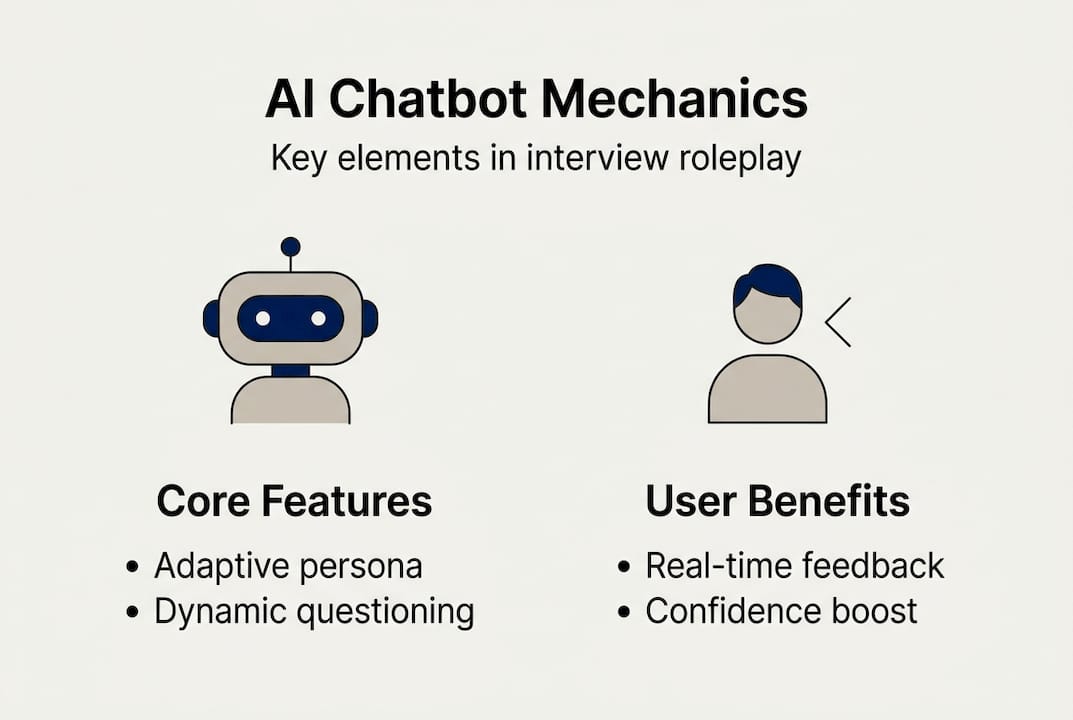
The questioning itself is not pre-scripted. When you give a vague answer, a well-built bot will probe further. When you demonstrate strong knowledge, it will escalate the complexity. This real-time adaptation is what separates modern AI roleplay chat from older, static mock interview tools.
Here is a quick breakdown of the core components:
- Adaptive AI personas: The bot shifts its style, tone, and challenge level based on your responses
- Dynamic questioning: Follow-up questions are generated in context, not pulled from a fixed list
- Voice synthesis: Many platforms include voice output to simulate the audio pressure of a real video call
- Post-session feedback loops: Transcripts are analysed for clarity, filler words, structure, pacing, and confidence signals
- Competency scoring: Sessions are tagged with scores across key skills, giving you a data trail to track improvement
| Feature | Basic tools | Advanced roleplay bots |
|---|---|---|
| Question adaptation | Fixed scripts | Real-time, context-driven |
| Feedback type | Generic tips | Specific, scored, per-answer |
| Persona variety | Single interviewer | Multiple styles and sectors |
| Session analytics | None | Timestamps, scores, logs |
“The most effective AI roleplay systems do not just test what you know. They test how you communicate under pressure, which is precisely what hiring panels are evaluating.”
For candidates exploring roleplay for job interviews, understanding these mechanics helps you use the tools more intentionally, rather than treating them as a novelty.
Proven impact: How AI roleplay transforms interview outcomes
With a grasp of the core features, it is vital to ask: does AI roleplay actually improve real-world results? The short answer is yes, and the data is striking.

AI roleplay boosts completion rates to 80 to 90%, with a 54% pass rate in human interviews compared to just 34% for traditional preparation methods. That is not a marginal improvement. It represents a fundamentally different level of readiness. Candidates who practise with adaptive AI systems arrive at real interviews having already faced difficult follow-up questions, handled unexpected pivots, and refined their delivery through repeated, low-stakes attempts.
Here is why the numbers stack up:
- Repeatability: You can practise the same question ten times without anyone judging you, which removes the social anxiety that limits growth in human-led sessions
- Immediate feedback: You do not wait days for a coach’s notes. Insights arrive the moment your session ends
- Data-driven tracking: Competency scores across multiple sessions reveal genuine trends, not just one-off impressions
- Confidence calibration: Repeated exposure to challenging questions lowers cortisol responses over time, making the real interview feel familiar rather than threatening
| Metric | Traditional prep | AI roleplay prep |
|---|---|---|
| Interview pass rate | 34% | 54% |
| Completion rate | Variable | 80 to 90% |
| Onboarding speed | Baseline | Up to 3x faster |
| Confidence gains | Moderate | Significant, especially on camera |
Pro Tip: Track your competency scores across at least five sessions before your real interview. A consistent upward trend in clarity and structure scores is a reliable signal that your communication is genuinely improving, not just feeling better.
For a broader view of what the best tools offer, the top interview platforms guide compares leading options side by side. You can also explore AI mock interview results and review how a structured mock job interview framework amplifies these gains further.
What mid-senior candidates should look for: Features that matter
Since not all AI bots are created equal, the right features make all the difference for challenging interviews. At the mid-to-senior level, you are not just answering competency questions. You are demonstrating strategic thinking, leadership judgement, and sector-specific expertise. Generic tools simply will not cut it.
Mid-senior interviews benefit most from tools with industry-specific libraries, adaptive follow-ups, and multimodal feedback. Here is what to prioritise when evaluating a platform:
- Industry-specific question libraries: Look for tools that include questions tailored to your sector, whether that is technology, finance, healthcare, or consulting. Generic questions will not prepare you for the nuanced scenarios hiring panels use at senior levels
- Adaptive follow-up questioning: The bot should respond to your answers, not cycle through a fixed list. This is the single most important feature for realism
- Multi-modal feedback: The best platforms analyse voice (pacing, tone, filler words), text (structure, clarity, conciseness), and sometimes nonverbal cues via video. Each layer adds a dimension of insight
- Session length control: Short, focused sprints of 10 to 20 minutes are far more effective than marathon sessions. Look for platforms that support this format natively
- Spaced repetition: Tools that resurface weaker areas in later sessions help you build lasting skills rather than short-term familiarity
- Competency score history: A clear visual record of improvement across sessions keeps you motivated and helps you identify persistent gaps
Pro Tip: Before committing to a platform, run a single practice session on a question you know well. If the bot’s follow-up questions feel generic or disconnected from your answer, that is a red flag. Genuine adaptivity is non-negotiable for senior-level prep.
For detailed guidance on structuring your sessions, the mock interview best practices resource offers a practical framework you can apply immediately.
Pitfalls, limits, and how to maximise benefit
But for all their power, AI bots have real boundaries. Here is what you need to know to avoid disappointment.
The most significant technical limitation relates to extended, multi-turn conversations. LLMs degrade in multi-turn, knowledge-grounded roleplay, especially with long context, hallucinations, and missed intentions. In plain terms: the longer and more complex a session becomes, the more likely the bot is to lose track of earlier context, contradict itself, or give feedback that misses the point of what you said.
Common issues you may encounter include:
- Context drift: The bot forgets details you shared earlier in the session and asks redundant questions
- Character inconsistency: The interviewer persona shifts mid-session, breaking the realism
- Incomplete intention fulfilment: Your nuanced answer is scored on surface-level signals rather than the substance of your argument
- Hallucinated feedback: Occasionally, feedback references things you did not actually say
“AI roleplay is most powerful when treated as a precision tool, not a marathon simulator. Short, sharp sessions produce better outcomes than long, unfocused ones.”
The practical solution is straightforward. Structure your sessions into focused 10 to 20 minute sprints, each targeting a specific question type or competency. Reset between sessions rather than chaining them together. And for complex, industry-unique scenarios where nuance really matters, combine AI practice with a human coach or a trusted peer who knows your sector.
Pro Tip: After each AI session, spend five minutes writing down one insight the bot gave you and one thing you felt it missed. This reflection habit sharpens your critical thinking and stops you from over-relying on automated scores.
For a balanced view of where AI helps and where it falls short, the AI benefits and drawbacks guide is worth reading before you commit to a preparation strategy.
Our perspective: When and how roleplay AI supercharges interview prep
Having dissected strengths and limitations, here is our perspective on what actually works in serious interview prep. The candidates who get the most from AI roleplay are not the ones who use it most. They are the ones who use it most deliberately.
AI bots are a transformative baseline. They are perfect for drilling the fundamentals, experimenting with different communication styles, and lowering the baseline anxiety that makes real interviews feel so high-stakes. That repeatability without judgement is genuinely rare and genuinely valuable.
But the real magic happens when you treat each bot session as a pressure rehearsal, then bring your sharpest insights to a human coaching conversation. The AI surfaces patterns. The human helps you interpret what those patterns mean in the context of your specific role, your industry, and the subtle judgements real hiring panels make.
Treat competency scores as data points, not verdicts. A low clarity score tells you something worth investigating. It does not tell you why your clarity dipped or how to fix it in a way that fits your natural communication style. That interpretive layer is yours to own. Use the confident delivery skills resources to bridge that gap between raw feedback and genuine, lasting improvement.
Boost your next interview with Pavone Academy
Ready to put these insights into action? Pavone Academy’s expert resources make it seamless to move from understanding AI roleplay to actively improving your interview performance.
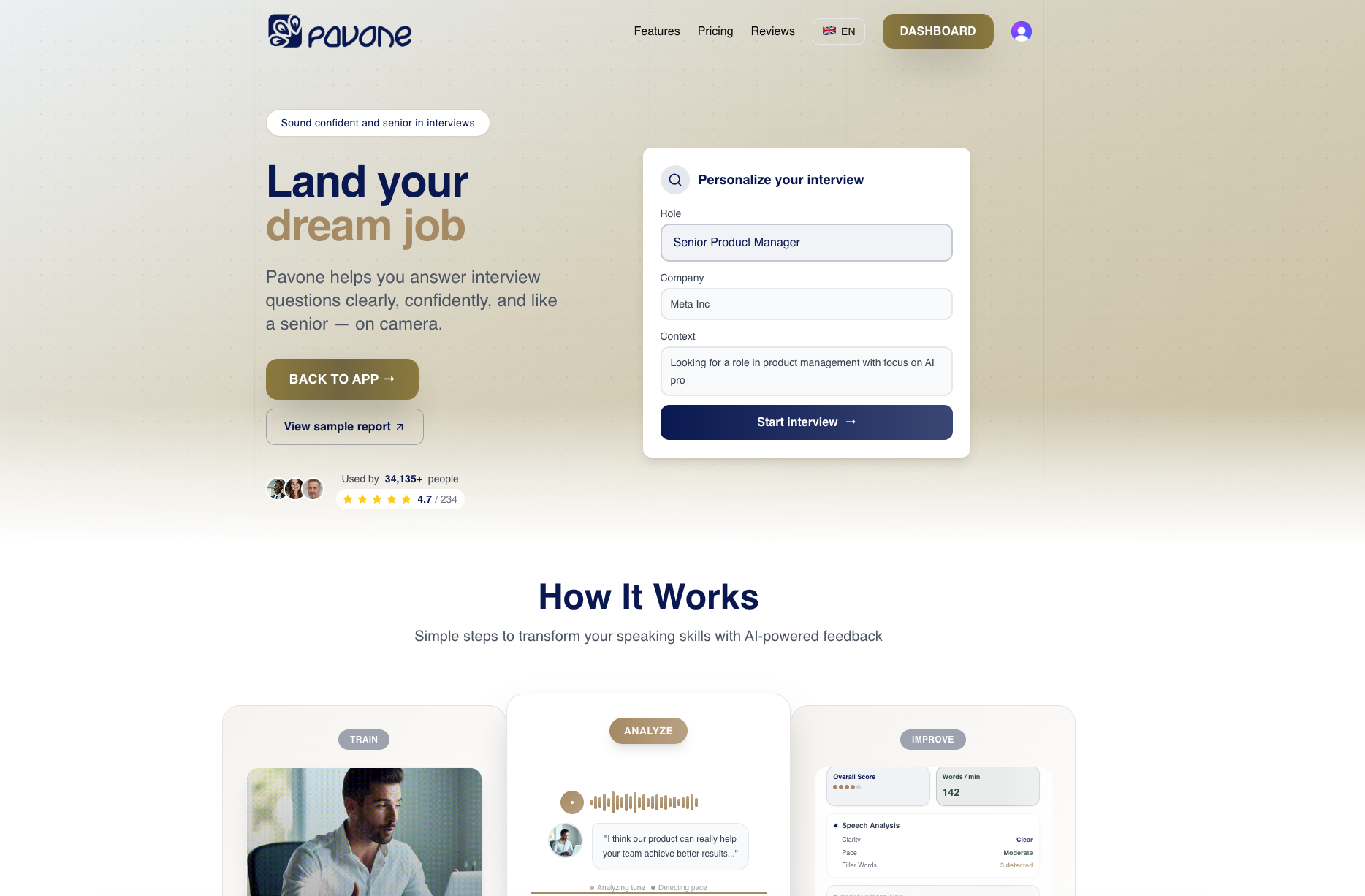
Pavone Academy offers focused, practical modules built specifically for mid-to-senior candidates who want to sharpen their on-camera presence and communication clarity. Whether you are looking to master interview online practice, build stronger video interview preparations, or discover how consistent practice can boost hiring chances, Pavone Academy has the resources to support every stage of your journey. Start a session today and turn the insights from this guide into real, measurable progress.
Frequently asked questions
How do roleplay AI chatbots improve on-camera communication skills?
Adaptive personas and dynamic feedback simulate real interview pressure, helping you refine clarity, structure, and delivery through repeated, low-stakes practice that builds genuine confidence over time.
Are AI interview chatbots more effective than traditional methods?
Benchmarks show a 54% pass rate versus 34% for traditional preparation, alongside higher completion rates and faster onboarding, making AI roleplay a measurably stronger foundation for interview readiness.
What limitations should candidates be aware of with AI roleplay bots?
LLMs degrade in multi-turn roleplay with long context, so keep sessions short and focused, and supplement with human coaching for complex or highly nuanced interview scenarios.
Which features are most important in an interview roleplay AI chatbot?
Industry-specific libraries and adaptive follow-ups are essential, alongside multi-modal feedback and session analytics that help mid-senior candidates track meaningful improvement across competencies.
Recommended
Ready to practice?
Start improving your speaking skills with AI-powered feedback and analysis.
Try Pavone Free