
Essential Google interview topics for mid-to-senior candidates

TL;DR:
- Google interviews emphasize clear communication, structured problem-solving, and on-camera delivery.
- Preparation involves technical mastery, system design understanding, and practicing verbal explanations.
- Candidates should focus equally on technical skills and confident English communication to succeed.
Google interviews are among the most demanding in the tech industry, and for good reason. They test not just what you know, but how clearly and confidently you can communicate it, often on camera, in English, under real pressure. The structured, repeatable process Google uses means every candidate faces the same high bar: clarify requirements, work through solutions methodically, think aloud, and analyse complexity. This article breaks down the essential topics, evaluation criteria, and communication strategies you need to prepare for mid-to-senior level roles, so you can walk into your interview feeling genuinely ready.
Table of Contents
- Google interview evaluation criteria
- Top technical interview topics and frameworks
- Expert communication and on-camera delivery
- Google interview topic comparison and strategic recommendations
- Why most candidates underestimate Google’s interview process
- Further resources for confident Google interview preparation
- Frequently asked questions
Key Takeaways
| Point | Details |
|---|---|
| Structured interview evaluation | Google interviewers follow a defined process that values clarity, optimal thinking, test cases, and English communication. |
| Critical technical topics | Candidates should prioritise data structures, algorithms, and system design, with edge case handling for senior roles. |
| Communication and on-camera presence | Clear, structured verbal responses and confident video delivery are just as vital as technical strengths. |
| Preparation benchmarks | Recommended preparation includes 4–6 weeks DSA practice, 2–3 weeks system design, and frequent mocks. |
Google interview evaluation criteria
Before you can prepare effectively, you need to understand exactly what Google is looking for. It is not simply about arriving at the correct answer. The process is far more structured than that.
Google uses a structured interview process designed to produce fair, repeatable evaluations across all candidates. Every interviewer follows the same framework, which means your ability to demonstrate a clear, methodical approach matters just as much as your technical output. Here is what that framework looks like in practice:
- Clarify requirements first. Before writing a single line of code, ask questions. Confirm input types, output expectations, and any constraints. This signals senior-level thinking immediately.
- Present brute force, then optimise. Start with a working solution, even if it is inefficient. Then explain how and why you would improve it. Interviewers want to see your reasoning, not just your conclusion.
- Think aloud throughout. Your verbal commentary is being evaluated. Silence is not neutral; it reads as uncertainty. Structure your spoken explanation as clearly as your code.
- Test with examples and edge cases. Walk through your solution with concrete inputs, including boundary conditions. This demonstrates thoroughness and catches errors before they become problems.
- Analyse time and space complexity. Finish by discussing trade-offs. Why is this approach better? What would you sacrifice for speed versus memory?
Pro Tip: Practise narrating your thought process aloud, even when solving problems alone. The habit of structured verbal explanation is one of the hardest things to build under pressure, and one of the most important.
For a deeper look at how to apply these criteria in practice, explore practical Google interview strategies that map directly to this framework.
With the structured process established, let’s explore the specific topics candidates should master for Google’s technical interviews.
Top technical interview topics and frameworks
Knowing how you will be evaluated is step one. Knowing what to prepare is step two. Google’s technical interviews consistently draw from a well-defined set of subject areas, and at mid-to-senior level, the depth expected is significant.
The most frequently tested topics include:
- Arrays and strings: Sliding window, two-pointer techniques, and in-place manipulation.
- Trees and graphs: Depth-first and breadth-first search, shortest paths, and cycle detection.
- Recursion and dynamic programming: Memoisation, tabulation, and recognising overlapping subproblems.
- System design: Scalability, data partitioning, caching strategies, and trade-off analysis.
- Sorting and searching: Binary search variations and custom comparators.
For mid-to-senior candidates, surface-level knowledge is not enough.
Here is a practical preparation benchmark based on community data:
| Topic area | Recommended preparation time | Key focus |
|---|---|---|
| Data structures and algorithms | 4 to 6 weeks | 150+ Google-tagged LeetCode problems |
| System design | 2 to 3 weeks | Scalability, trade-offs, real-world examples |
| Behavioural questions | 1 to 2 weeks | STAR method, leadership principles |
| Mock interviews | Ongoing | Timed, on-camera practice sessions |
Empirical benchmarks suggest 4 to 6 weeks on DSA, focusing on Google-tagged problems, followed by 2 to 3 weeks on system design. That is a serious commitment, and it pays off.
Pro Tip: Use an interview question generator to create role-specific practice prompts that mirror what Google interviewers actually ask. Variety in your practice builds adaptability.
For more guidance on how to apply these topics in a virtual setting, the resource on on-camera Google interview strategies is worth reviewing before your first mock session.
Expert communication and on-camera delivery
Strong technical answers must be matched with equally effective English communication. Both are essential for success, and this is where many candidates fall short.
Google’s virtual interviews take place via Google Meet, and the technical setup requirements are non-negotiable: log in early, grant camera and microphone access, and present only one window. These are basics, but failing them creates a poor first impression before you have said a word.
Beyond logistics, here is what strong on-camera delivery looks like:
- Prepare your environment. A neutral, quiet background removes distractions and keeps the interviewer’s focus on you.
- Test all equipment beforehand. Camera, microphone, laptop charge, and internet stability. Do this the day before, not five minutes before.
- Speak at a measured pace. Nervousness accelerates speech. Slow down deliberately, especially when explaining complex ideas.
- Structure your responses. Use signposting phrases: “First, I want to clarify…”, “My initial approach would be…”, “The trade-off here is…”. This creates a mental roadmap for your interviewer.
- Handle technical issues calmly. If your connection drops or your screen freezes, stay composed. Acknowledge it briefly and continue. Panic is more damaging than the technical glitch itself.
“Structure responses, explain trade-offs, and use Google Docs as a digital whiteboard to keep your thinking visible and organised throughout the session.”
Building on-camera interview skills takes deliberate practice. Recording yourself and reviewing the footage is uncomfortable, but it reveals habits you cannot notice in the moment, such as filler words, rushed pacing, or lack of eye contact. Platforms focused on interview confidence and clarity can accelerate this process significantly. If you want to go further, AI-driven interview practice gives you structured feedback on exactly these dimensions.

Google interview topic comparison and strategic recommendations
After covering both technical and communication mastery, let’s compare top topics and map strategic preparation for different candidate profiles.
Not all topics carry equal weight at every level. Topic depth varies by role and level, with Google expecting candidates to propose optimisations and handle edge cases, especially from L5 upwards. Here is a side-by-side comparison to help you prioritise:
| Topic | Mid-level (L4) priority | Senior level (L5+) priority | Frequently overlooked? |
|---|---|---|---|
| Arrays and strings | High | High | No |
| Dynamic programming | Medium | High | Sometimes |
| System design | Medium | Very high | Often |
| Edge case handling | Medium | Critical | Yes |
| Behavioural questions | Medium | High | Yes |
| Complexity analysis | High | High | Rarely |
For senior roles, the shift is clear: system design, edge case handling, and unprompted optimisation proposals become the differentiators. Technical correctness is assumed. What separates L5 candidates is the ability to think at scale and communicate that thinking fluently.
Here are strategic recommendations based on your profile:
- If you have a strong algorithms background: Shift focus to system design and behavioural preparation. Your technical foundation is solid; your communication and architecture thinking may need more work.
- If system design feels uncertain: Spend dedicated time on real-world case studies. Practice designing systems you have actually used, such as search engines, messaging platforms, or recommendation systems.
- If past assessments flagged communication: Prioritise on-camera practice above all else. Technical revision without communication improvement will not move the needle.
Pro Tip: Review feedback from any previous technical assessments honestly. Patterns in past performance are your most reliable guide to where to focus next.
For a full breakdown of how to apply these recommendations, the guide on practical strategies for Google interviews offers structured preparation paths by level.
Why most candidates underestimate Google’s interview process
Here is a hard-won lesson that most preparation guides skip over: technical revision alone will not get you through a Google interview.
The majority of candidates spend weeks grinding LeetCode problems and feel confident walking in. Then they freeze when asked to explain their reasoning clearly on camera, in English, to a stranger watching their every expression. The structured verbal responses and camera presence that Google demands are not skills you develop by solving problems silently at your desk.
Communication is a separate skill set, and it requires separate practice. Knowing the optimal solution to a graph traversal problem means very little if you cannot articulate your approach calmly and clearly under observation. Many candidates discover this too late.
The fix is straightforward but requires honesty: record yourself answering interview questions on camera, review the footage, and seek specific feedback on your delivery. Not just whether your answer was correct, but how confident you sounded, how structured your explanation was, and whether your pacing helped or hindered understanding. Platforms built around confident English interview practice exist precisely for this gap. Use them.
Further resources for confident Google interview preparation
If you are serious about performing at your best in a Google interview, the next step is structured, on-camera practice with real feedback.
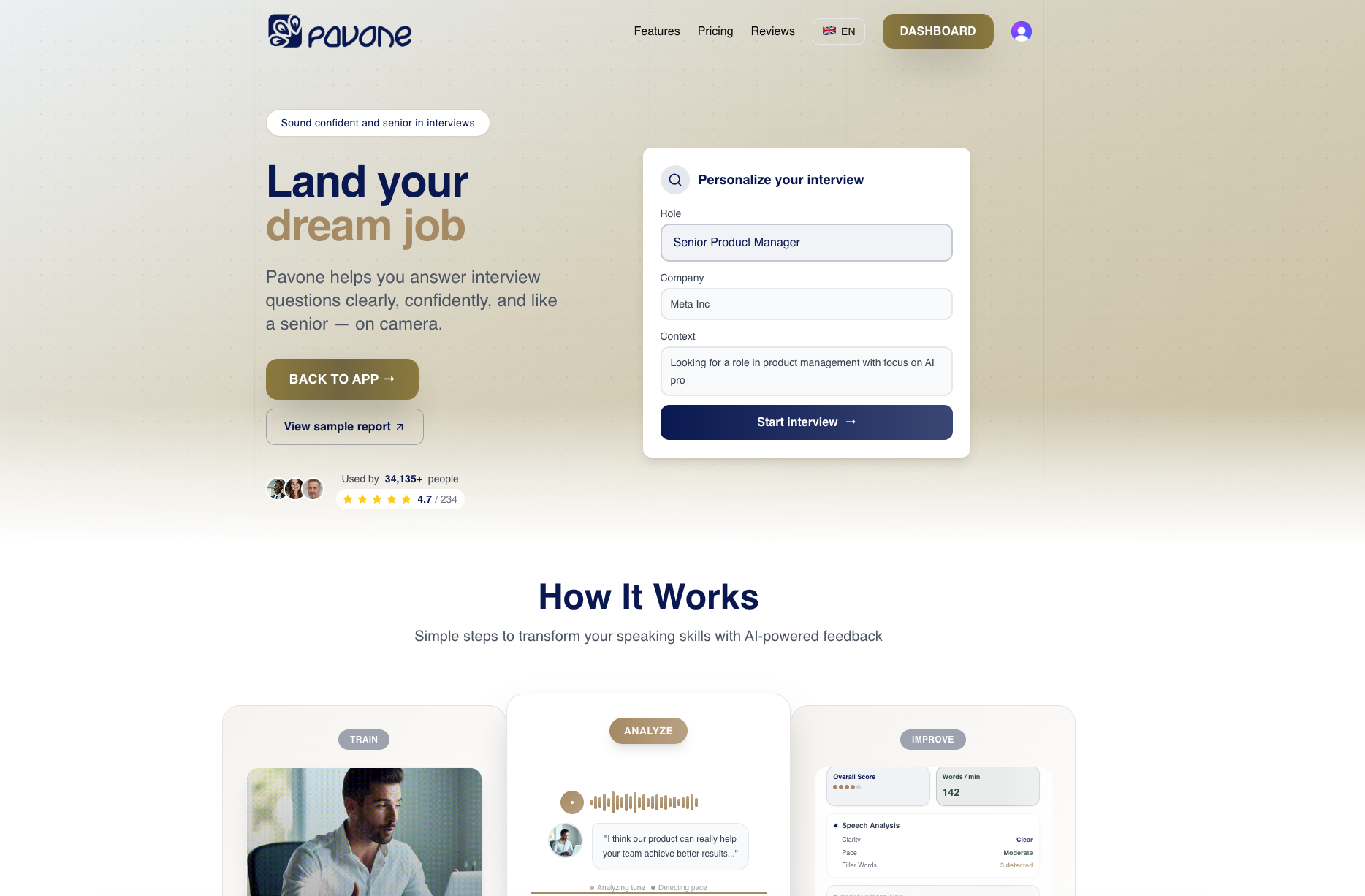
Pavone.ai gives you a private space to record interview-style answers and receive immediate, actionable feedback on clarity, structure, pacing, and confidence. You can start with online interview practice to build your on-camera presence, use the interview question generator tool to practise Google-specific prompts, and take the interview confidence quiz to identify where your delivery needs the most attention. Short sessions, honest feedback, and measurable improvement over time.
Frequently asked questions
Which Google interview topics are most important for senior candidates?
Algorithms, data structures, and system design are highest priority, with extra focus on proposing optimisations and handling edge cases. At L5 and above, surface edges first and propose improvements without being prompted.
How much practice is recommended for Google technical interviews?
Experts suggest 4 to 6 weeks practising data structures and algorithms, with 2 to 3 weeks on system design and mock interviews. Prep 4 to 6 weeks DSA using 150 or more Google-tagged LeetCode problems before moving to system design.
How should candidates prepare for virtual interviews in English?
Set up a quiet, neutral environment, test all equipment, and practise structured responses aloud in English to ensure clarity. A quiet neutral background and stable internet connection are non-negotiable starting points.
What is Google’s approach to evaluating interview answers?
Interviewers use a structured framework: clarify requirements, present solutions, test edge cases, and analyse trade-offs. The clarify requirements process is the first step every candidate is expected to follow before proposing any solution.
Recommended
Ready to practice?
Start improving your speaking skills with AI-powered feedback and analysis.
Try Pavone Free