
Excel at Netflix interview questions with expert strategies

Landing a role at Netflix is genuinely difficult. You might be a strong engineer with years of production experience, yet still stumble in the interview loop because Netflix demands something most companies do not: a precise blend of practical coding ability, system design fluency, and deeply authentic cultural alignment. Many talented candidates walk away confused, not because they lacked skill, but because they were unprepared for the specific shape of the challenge. This guide walks you through every stage of the Netflix interview process, from the recruiter screen to the final culture round, so you can prepare with clarity and step into each conversation with real confidence.
Table of Contents
- Understanding the Netflix interview process
- What technical questions to expect at Netflix
- Tackling Netflix behavioural and culture-fit questions
- Common pitfalls and mistakes to avoid
- Verifying your readiness and getting feedback
- Enhance your Netflix interview preparation with expert support
- Frequently asked questions
Key Takeaways
| Point | Details |
|---|---|
| Expect practical problems | Netflix focuses on real-world coding and production challenges, not just algorithmic puzzles. |
| Culture fit is crucial | Success depends on authentic alignment with Netflix’s values and transparent communication. |
| Verbal reasoning matters | Clear explanation of your thinking is valued as much as the solution itself in technical rounds. |
| Practice and feedback pay off | Recorded mock interviews and targeted rehearsals significantly boost confidence and readiness. |
Understanding the Netflix interview process
Now that we have outlined the challenge, it is crucial to understand exactly how Netflix structures its interview process and what it demands from candidates.
The Netflix interview loop typically follows this sequence: an initial recruiter screen, one or more technical assessments (often a take-home or live coding session), and then a multi-round interview loop covering coding, system design, and behavioural questions. Unlike many companies that lean heavily on abstract algorithm puzzles, Netflix favours practical coding scenarios such as building a cache with TTL and LRU concurrency, alongside LeetCode-style questions.
The behavioural round is where Netflix truly stands apart. Nine distinct values from the Netflix Culture Memo shape every question in this round. These values include judgement, communication, curiosity, courage, passion, selflessness, innovation, inclusion, and integrity. Interviewers are not just checking boxes; they are assessing whether you would thrive in a high-trust, high-autonomy environment.
“The Keeper Test asks: if someone told me they were leaving for a similar role elsewhere, would I fight to keep them? Netflix applies this standard to hiring decisions too.”
This means your answers must reflect genuine ownership, candour, and the ability to operate without hand-holding. Preparing for video interview practice early in your process helps you get comfortable articulating these qualities on camera before the real thing.
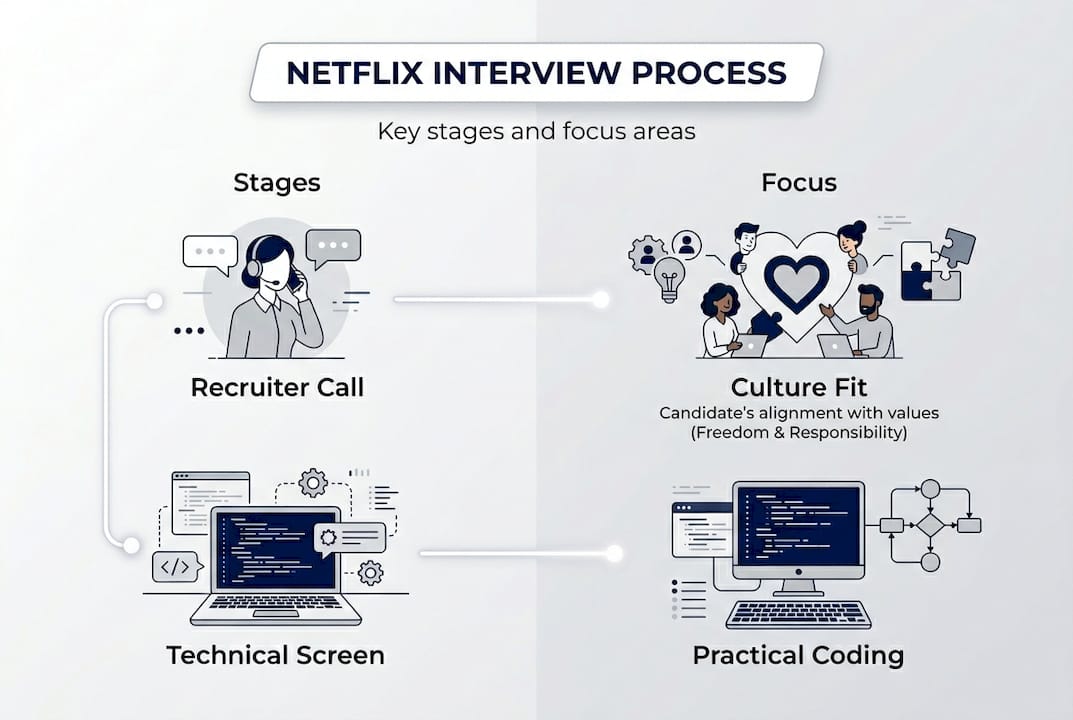
| Interview stage | Format | Primary focus |
|---|---|---|
| Recruiter screen | Phone or video call | Background, motivation, culture basics |
| Technical assessment | Take-home or live coding | Practical problem-solving |
| Coding round | Live, shared editor | Algorithms, edge cases, verbal reasoning |
| System design round | Whiteboard or virtual | Architecture, trade-offs, scalability |
| Behavioural round | Conversational | Culture Memo values, Keeper Test |
Reviewing Netflix interview experiences from past candidates on Glassdoor gives you a realistic sense of the variation across teams and roles.
What technical questions to expect at Netflix
Armed with an understanding of the process, let us break down exactly what technical challenges to expect and how to address them confidently.
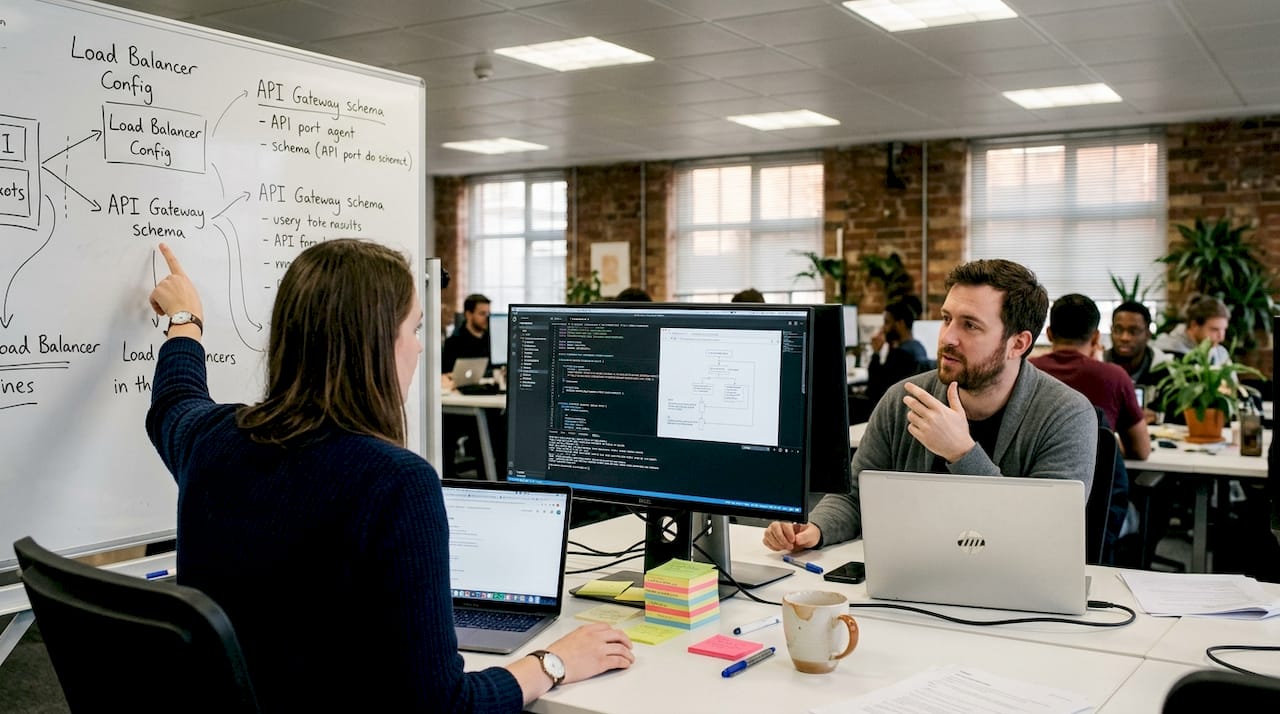
Netflix coding interviews are not purely about finding the optimal solution. They test production-like scenarios such as rate limiting, anomaly detection, cache design with TTL, and data streaming. The expectation is that you can write clean, working code while explaining your reasoning aloud.
| Question type | Example problem | Main focus |
|---|---|---|
| Caching and concurrency | LRU cache with TTL | Thread safety, design clarity |
| Graph and ordering | Topological sort, scheduling | Algorithmic thinking |
| Rate limiting | Token bucket implementation | System constraints |
| Data streaming | Sliding window anomaly detection | Efficiency, edge cases |
| API design | RESTful service with retries | Practical engineering |
Here is a step-by-step approach to tackling a Netflix-style coding question:
- Clarify the problem. Ask about constraints, input size, and expected behaviour before writing a single line.
- State your approach aloud. Explain your initial thinking, even if it is not optimal yet.
- Write clean, readable code. Netflix values clarity over cleverness.
- Discuss trade-offs. Explain why you chose one approach over another.
- Handle edge cases explicitly. Empty inputs, null values, and concurrency issues should all be addressed.
- Review your solution. Walk through it once more and invite questions.
The real difference at Netflix is the expectation that you verbalise your trade-offs throughout. Silence is not neutral; it reads as uncertainty. Building confidence practising technical interviews on camera helps you develop the habit of thinking aloud under pressure. You can also explore mastering coding answers to sharpen how you structure and deliver technical explanations.
Pro Tip: For each core topic area (concurrency, data streaming, graph problems), practise at least one scenario framed in a production context. Ask yourself: “How would this behave at Netflix scale?” That framing sharpens both your solution and your verbal explanation.
You can find a broad range of real Netflix questions on Glassdoor to supplement your preparation.
Tackling Netflix behavioural and culture-fit questions
Technical mastery is only half the story at Netflix. Next, let us ensure your culture-fit answers genuinely resonate with the team.
Netflix behavioural interviews probe nine values and apply the Keeper Test, meaning even strong technical candidates can be rejected without a convincing culture fit. The STAR framework (Situation, Task, Action, Result) is your structural foundation, but at Netflix you need to go further. Your stories must demonstrate the specific values Netflix cares about, not just competence.
Here are the key values and example questions you should prepare for:
- Judgement: “Tell me about a time you made a difficult decision with incomplete information.”
- Courage: “Describe a situation where you challenged a senior colleague’s approach.”
- Candour: “Tell me about a time you delivered difficult feedback.”
- Selflessness: “Give an example of when you prioritised the team’s success over your own.”
- Curiosity: “What is something you taught yourself recently to solve a work problem?”
The Keeper Test question often surfaces as: “Would your current manager fight to keep you if you said you were leaving?” Prepare a grounded, honest answer that reflects your impact and your awareness of your own strengths.
“Authenticity matters more than polish at Netflix. A rehearsed-sounding answer that lacks genuine detail will raise more doubts than a slightly rough answer that feels real.”
Practising your stories out loud is essential. Reducing behavioural interview anxiety starts with repetition in a low-stakes environment, and on-camera practice helps you notice when your delivery feels flat or unconvincing before it matters.
Pro Tip: Record yourself answering one culture question per day in the week before your interview. Watch it back and ask: does this story feel specific and honest, or does it sound like a template?
The full Netflix Culture Memo is publicly available and worth reading in full. It is the clearest signal Netflix gives you about what they are looking for.
Common pitfalls and mistakes to avoid
Having outlined how to succeed, let us ensure you avoid the stumbling blocks that derail even experienced engineers.
Even high-calibre candidates can fail on culture-fit or by not verbalising their reasoning in technical rounds. Knowing the most common mistakes gives you a real advantage.
The most frequent reasons for rejection include:
- Arriving without prepared culture stories, assuming technical strength will carry the interview
- Focusing only on finding the optimal solution without explaining the reasoning behind it
- Leaving edge cases unaddressed or only mentioning them at the end
- Giving vague behavioural answers that do not reference specific situations
- Underestimating the Keeper Test question and answering it too casually
Here is a pre-interview checklist to run through before each session:
- Have you prepared at least two stories for each of the nine Netflix values?
- Can you explain your last three technical decisions and the trade-offs involved?
- Have you practised thinking aloud while coding, not just solving in silence?
- Do you know the Netflix Culture Memo well enough to reference it naturally?
- Have you reviewed your answers for vague language and replaced it with specific detail?
- Have you timed your answers to ensure they are concise but complete?
Pro Tip: Use mock interview feedback to catch tone and pacing issues you cannot spot when practising alone. Watching yourself back is uncomfortable, but it is one of the fastest ways to improve.
Verifying your readiness and getting feedback
After addressing the common pitfalls, it is time to ensure your preparation holds up in realistic, high-pressure conditions.
Video practice and targeted feedback can dramatically boost hiring chances. The method you use to rehearse matters as much as the time you put in.
| Preparation method | Strengths | Limitations |
|---|---|---|
| Solo practice | Flexible, low pressure | No external perspective |
| Peer mock interviews | Realistic dialogue, honest feedback | Scheduling friction, inconsistent quality |
| AI-driven mock interviews | Instant feedback, available 24/7 | Requires good prompts and self-reflection |
| Recorded self-review | Reveals tone and pacing issues | Can feel uncomfortable to watch |
Here are the most effective rehearsal methods to build both technical and behavioural readiness:
- Record a full mock interview loop covering one coding question, one system design question, and two culture questions
- Review the recording for filler words, pacing, and whether your answers feel structured
- Set a weekly deadline to complete at least two full mock sessions
- Ask a peer to play the role of a sceptical Netflix interviewer and push back on your answers
- Use confidence building resources to work on your on-camera presence specifically
The goal is not perfection. It is consistency. When you can deliver a clear, structured, authentic answer under pressure, you are ready.
Enhance your Netflix interview preparation with expert support
You now have a clear roadmap for every stage of the Netflix interview process. The next step is turning that knowledge into practised, confident delivery.
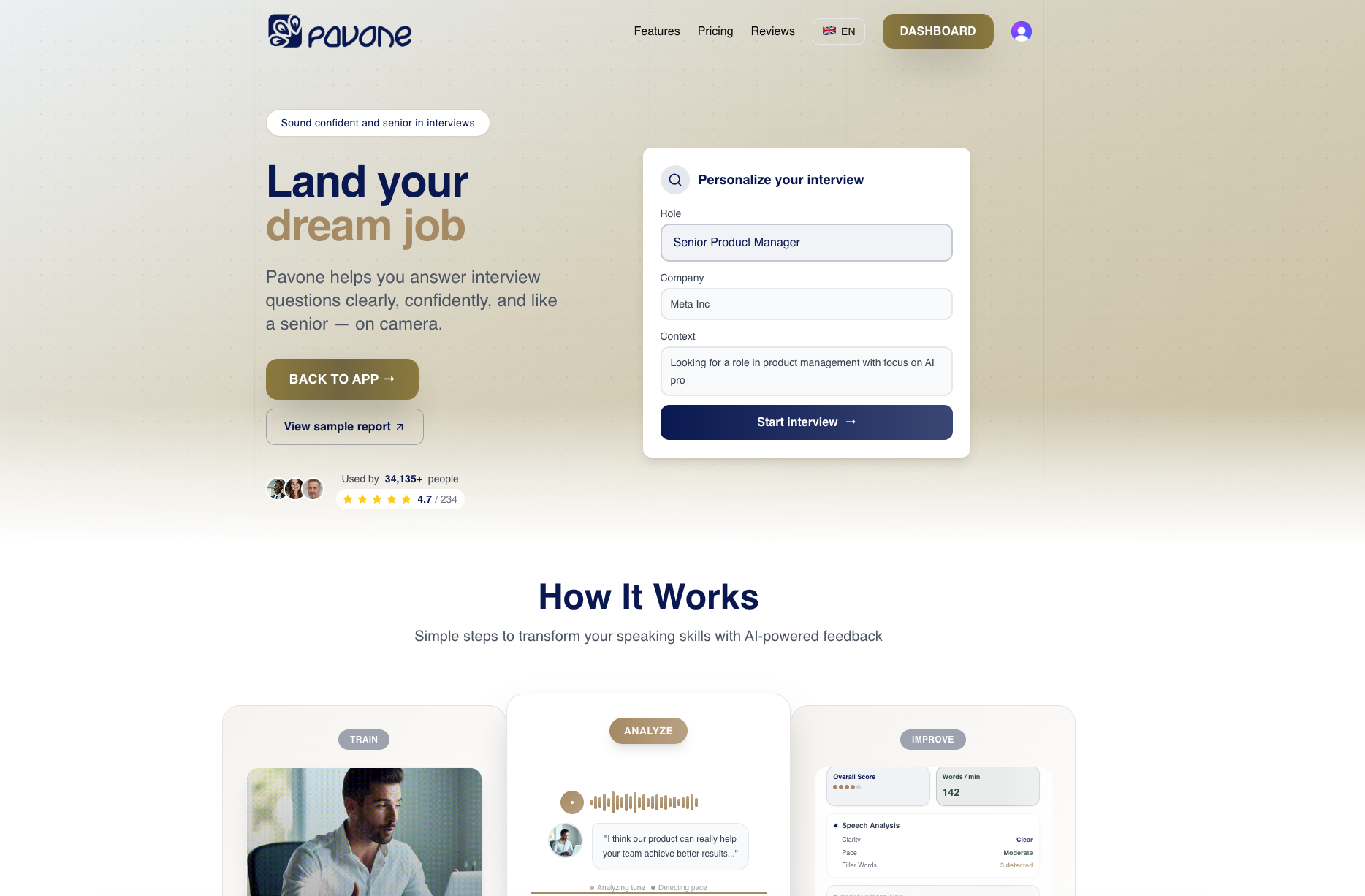
Pavone.ai gives you a private space to record real interview-style answers and receive immediate, actionable feedback on your clarity, structure, pacing, and confidence. You can master Netflix interview answers with targeted practice sessions that fit around your schedule, whether you have 10 minutes or an hour. The platform analyses how you communicate, not just what you say, so you can hear exactly where your answers lose focus or confidence. Explore video-based interview prep to build the on-camera presence that Netflix interviewers respond to. Start practising today and walk into your interview loop knowing you have genuinely prepared.
Frequently asked questions
What are the most common Netflix interview questions for software engineers?
Expect practical coding scenarios such as cache with TTL and LRU, alongside system design tasks and culture-fit questions drawn directly from the Netflix Culture Memo.
How is the Netflix interview different from other tech companies?
Netflix places far greater emphasis on verbal reasoning, practical production scenarios, and cultural alignment than most FAANG-level interviews, with the Keeper Test applied throughout the process.
How can I prepare for Netflix behavioural interviews?
Use the STAR framework to build specific stories that align with Netflix’s nine values, and practise delivering them authentically rather than from a script.
Does Netflix value technical or culture interviews more?
Both carry equal weight. Strong technical candidates can and do get rejected for weak culture-fit answers, so neither round can be treated as secondary.
Recommended
Ready to practice?
Start improving your speaking skills with AI-powered feedback and analysis.
Try Pavone Free