
Master general interview questions with confidence in 2026

Candidates who deliver clear, confident answers on camera are rated 40% higher in competence by interviewers. Yet many mid-career professionals struggle not with knowing what to say, but with how to say it effectively on camera. This guide clarifies what general interview questions are and teaches you to master answering them with clarity, confidence, and impact.
Table of Contents
- Understanding General Interview Questions
- Why Answer Delivery Matters More Than You Think
- Common Misconceptions About Interview Preparation
- Effective Frameworks To Structure Your Answers
- The Power Of On-Camera Practice And Feedback
- Practical Tips For Mastering General Interview Questions
- Turning Preparation Into Interview Success
- Improve Your Interview Skills With Pavone Academy
- Frequently Asked Questions
Key takeaways
| Point | Details |
|---|---|
| General interview questions assess skills, experience, and workplace fit through behavioural, situational, and competency-based formats | Understanding question categories helps you tailor responses effectively |
| Answer delivery matters as much as content, with clear communication boosting perceived competence ratings by 40% | Clarity, confidence, pacing, and non-verbal cues significantly influence interviewer impressions |
| On-camera practice reduces interview anxiety by up to 30% whilst improving delivery skills | Video feedback reveals filler words, pacing issues, and body language weaknesses |
| Frameworks like STAR and PREP structure answers logically, enhancing clarity and engagement | STAR suits behavioural questions whilst PREP works for situational responses |
| Combining content mastery with deliberate delivery practice creates measurable interview success | Regular practice cycles with feedback tools build confidence and communication impact |
Understanding general interview questions
General interview questions are broad inquiries designed to assess your skills, experience, and cultural fit within an organisation. Employers use behavioural, situational, and competency-based questions to evaluate how well candidates communicate and solve problems.
These questions fall into three main categories:
- Behavioural questions explore past behaviour as a predictor of future performance, asking you to describe specific situations you’ve encountered
- Situational questions present hypothetical scenarios to assess how you’d approach challenges you haven’t faced
- Competency-based questions require demonstrating particular skills like leadership, adaptability, or problem-solving through concrete examples
For mid-career professionals, interviewers focus heavily on leadership capabilities, conflict resolution, and strategic thinking. Typical examples include “Tell me about a time you led a project under tight deadlines” or “How would you handle disagreement with a senior stakeholder?”

Understanding these question types helps you prepare relevant examples and structure responses appropriately. When you recognise a behavioural question, you know to share a specific past experience. When you hear a situational prompt, you can outline a thoughtful approach to a hypothetical challenge.
Why answer delivery matters more than you think
Your interview success depends less on what you say and more on how you say it. Clarity ensures interviewers grasp your message quickly, creating positive impressions that influence hiring decisions. Confidence signals competence and trustworthiness, qualities employers value in mid-career hires.
Interviewers rate candidates 40% higher in perceived competence when answers are delivered clearly, confidently, and at an appropriate pace. Poor pacing and excessive filler words like “um” or “ah” decrease engagement scores by up to 18%, undermining even well-prepared content.
Non-verbal communication carries enormous weight in video interviews. Eye contact establishes connection and demonstrates engagement. Hand gestures emphasise key points and convey enthusiasm. Posture communicates professionalism and confidence. These elements combine to create an impression that often outweighs the actual words you speak.
Practising on camera strengthens these delivery elements substantially. Recording yourself reveals habits you can’t notice in real time, like looking away from the camera, speaking too quickly when nervous, or using repetitive filler words. Monitoring your speaking pace for career success becomes essential to maintaining interviewer engagement.
Consider this: two candidates provide identical content in their answers, but one speaks clearly at a measured pace with strong eye contact whilst the other rushes through their response peppered with filler words. The first candidate will consistently receive higher ratings despite saying essentially the same thing.
Common misconceptions about interview preparation
Many mid-career professionals approach interview preparation with strategies that actually undermine performance. Understanding these misconceptions helps you avoid wasting time on ineffective methods.
Memorising answers word for word seems logical but creates robotic delivery that interviewers immediately recognise. This approach leads to 18% lower engagement scores because rehearsed responses lack authenticity and spontaneity. When you forget a memorised line under pressure, you panic rather than adapting naturally.
Believing content alone determines success ignores the reality that delivery shapes interviewer perception. You might have brilliant examples and insights, but if you can’t convey them clearly on camera, interviewers won’t appreciate their value. Your facial expressions, tone variations, and pacing matter as much as your words.
Many candidates ignore anxiety management, assuming nervousness will simply disappear with experience. Anxiety actively degrades delivery quality by increasing filler words, accelerating speech pace, and reducing clarity. Without deliberate practice managing these responses, you perpetuate poor performance patterns.
The most effective preparation combines content mastery with delivery rehearsal. Know your examples thoroughly but practise expressing them naturally on camera. Develop frameworks for structuring answers whilst building comfort with the video interview format itself. This integrated approach addresses both what you say and how you communicate it.
Effective frameworks to structure your answers
Structured frameworks transform rambling responses into clear, compelling narratives that interviewers can easily follow and remember. Two frameworks dominate professional interview preparation: STAR and PREP.
The STAR method is highly effective for behavioural questions, organising your story into four components:
- Situation: Set the context briefly, explaining the relevant background
- Task: Describe your specific responsibility or challenge
- Action: Detail the steps you took to address the situation
- Result: Share measurable outcomes and lessons learned
PREP works brilliantly for situational or opinion-based questions:
- Point: State your main answer or position clearly
- Reason: Explain why this approach makes sense
- Example: Provide a concrete illustration supporting your reasoning
- Point: Restate your position, reinforcing the message
| Framework | Best for | Strength | Example question |
|---|---|---|---|
| STAR | Behavioural questions about past experiences | Creates compelling narratives with clear outcomes | “Describe a time you resolved team conflict” |
| PREP | Situational scenarios and opinion questions | Delivers persuasive arguments efficiently | “How would you prioritise competing projects?” |
These interview question frameworks provide mental scaffolding that keeps you organised under pressure. Rather than wondering what to say next, you follow the structure naturally. Interviewers appreciate organised responses because they can extract relevant information quickly.
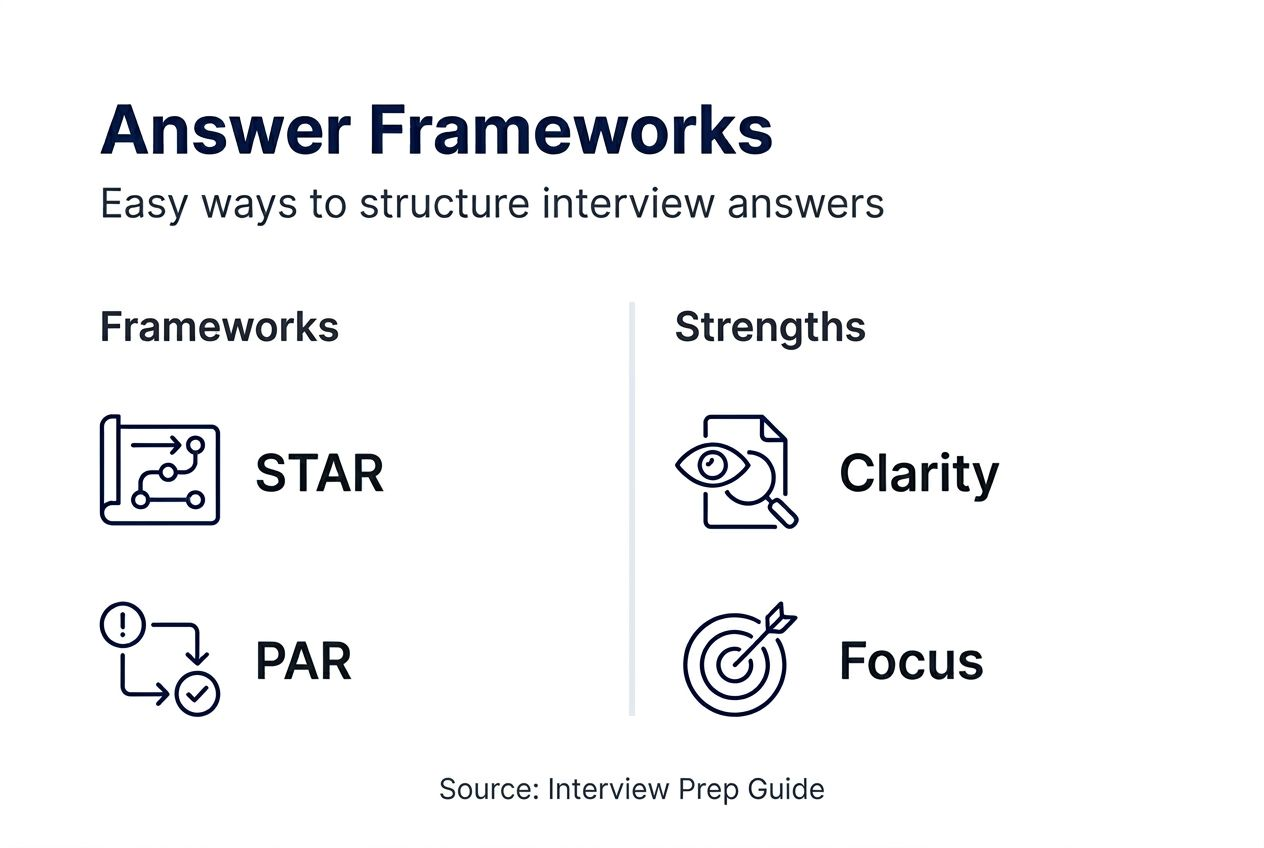
Practise applying these frameworks to common questions until they become second nature. Eventually, you’ll structure answers instinctively without conscious effort, freeing mental resources to focus on delivery quality and interviewer engagement.
The power of on-camera practice and feedback
Video practice transforms interview preparation from theoretical to practical, exposing delivery weaknesses you can’t identify through mental rehearsal alone. Recording yourself creates uncomfortable self-awareness initially, but this discomfort drives rapid improvement.
When you watch recordings, you notice unconscious habits that undermine your message. Perhaps you look down when thinking, breaking eye contact at crucial moments. Maybe you speak much faster than you realised, rushing through key points. These insights enable targeted corrections impossible without visual feedback.
Practising with video reduces interview anxiety by up to 30% over four weeks because repeated exposure to the camera environment normalises what initially feels stressful. The format becomes familiar rather than threatening. You develop interview practice confidence on camera through gradual desensitisation.
Real-time feedback highlights specific areas needing improvement:
- Filler word frequency and patterns
- Speaking pace variations and rushed sections
- Body language including posture and hand gestures
- Eye contact consistency throughout responses
- Tone variations that enhance or flatten delivery
Tracking progress over multiple practice sessions shows measurable gains in clarity and confidence. You’ll notice filler words decreasing, pacing becoming more controlled, and delivery feeling increasingly natural. This visible improvement builds momentum and motivation.
Pro Tip: Use private video tools to practise answers to good interview questions for practice, reviewing recordings immediately whilst the experience remains fresh. Focus on one delivery aspect per session rather than trying to perfect everything simultaneously.
Practical tips for mastering general interview questions
Mastering general interview questions requires balancing thorough content preparation with deliberate delivery improvement. These actionable strategies help mid-career professionals elevate their interview performance immediately.
Balance content depth with simple, structured delivery. Avoid overcomplicating answers with excessive detail that confuses rather than clarifies. Choose 2-3 key points per response and articulate them clearly using frameworks like STAR or PREP.
Reduce filler words through slow, mindful pacing. When you feel “um” forming, pause silently instead. Brief silence feels longer to you than to interviewers, who appreciate thoughtful pauses over verbal clutter. Practising deliberate pausing trains your brain to eliminate fillers naturally.
Use mock interviews and feedback tools to build confidence systematically. Platforms like Pavone.ai provide structured practice environments where you can record answers, receive detailed feedback, and track improvement over time. This data-driven approach accelerates skill development.
Manage anxiety through breathing exercises before and during interviews. Deep, controlled breathing activates your parasympathetic nervous system, countering stress responses that degrade performance. Practise box breathing: inhale for four counts, hold for four, exhale for four, hold for four.
Pro Tip: Record and watch your practice videos, rating yourself on clarity, confidence, and body language using a simple 1-10 scale. Track these scores over time to identify trends and celebrate progress. Self-assessment builds metacognitive awareness that enhances real-time performance adjustments.
Consult comprehensive resources like this prepare for interview guide for additional strategies. External perspectives on interview preparation tips offer complementary approaches you can integrate into your routine.
Turning preparation into interview success
Success in mastering general interview questions requires integrating structured answer content with confident, clear delivery. Neither element alone produces optimal results, but their combination creates compelling interview performance that differentiates you from other candidates.
Consistent on-camera practice and review are critical to overcoming anxiety and improving communication impact. The discomfort you feel initially transforms into confidence through repeated exposure and deliberate skill-building. Each practice session strengthens neural pathways that support smooth delivery under pressure.
Adopt deliberate practice routines in the weeks leading to real interviews. Schedule regular recording sessions, focusing on different question types and delivery aspects each time. Review recordings critically, identifying specific improvements rather than general dissatisfaction. This targeted approach accelerates skill acquisition.
Remember that mastering general questions demands both knowledge and communication skill. You must know what to say and how to say it effectively on camera. Invest time in both dimensions equally, recognising that delivery often determines whether interviewers remember your excellent content.
Improve your interview skills with Pavone Academy
Ready to transform your interview performance from adequate to outstanding? Pavone Academy offers video interview practice tools specifically designed for mid-career professionals seeking to enhance on-camera confidence and answer clarity.
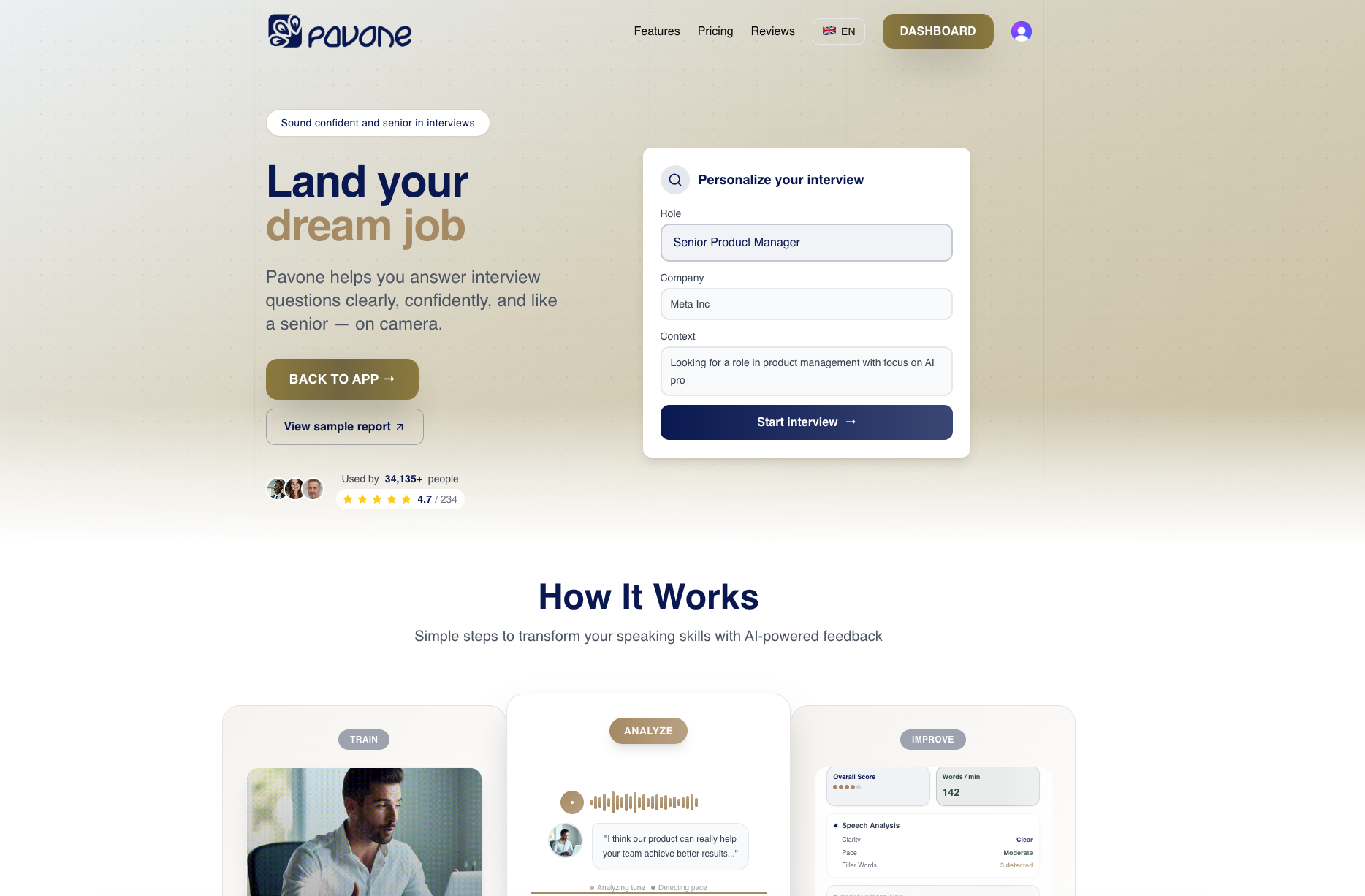
Our platform provides private recording environments where you can practise responding to common interview questions, receive immediate feedback on delivery aspects like pacing and filler words, and track measurable improvement over time. Courses focus specifically on reducing anxiety whilst building the communication skills that make you stand out in competitive interviews.
Explore resources for master interview online practice that fits your schedule, building interview practice confidence on camera through systematic skill development. Comprehensive guidance in our prepare for interview guide ensures you address both content and delivery dimensions effectively.
Frequently asked questions
What are general interview questions?
General interview questions assess your skills, experience, and cultural fit using common formats like behavioural and situational questions. They evaluate how you communicate and solve problems in typical workplace scenarios.
How can I improve my confidence for video interviews?
Regular on-camera practice using self-recording reduces anxiety by familiarising you with the video format. Reviewing recorded answers helps identify delivery weaknesses like filler words or poor pacing. Structured feedback tools accelerate confidence building through measurable progress tracking.
What is the best answer framework for behavioural interview questions?
The STAR method is regarded as best practice for behavioural questions because it organises stories clearly: Situation, Task, Action, Result. This structure increases answer clarity and interviewer engagement by presenting information logically.
How do I manage interview anxiety effectively?
Practise interviews on camera to familiarise yourself with the format and reduce fear of the unknown. Use slow, deep breathing techniques to calm nerves before and during interviews. Thorough preparation including delivery practice boosts confidence and reduces anxiety naturally.
Recommended
Ready to practice?
Start improving your speaking skills with AI-powered feedback and analysis.
Try Pavone Free