Role of Self-Assessment in Speaking: Boost Confidence 72%
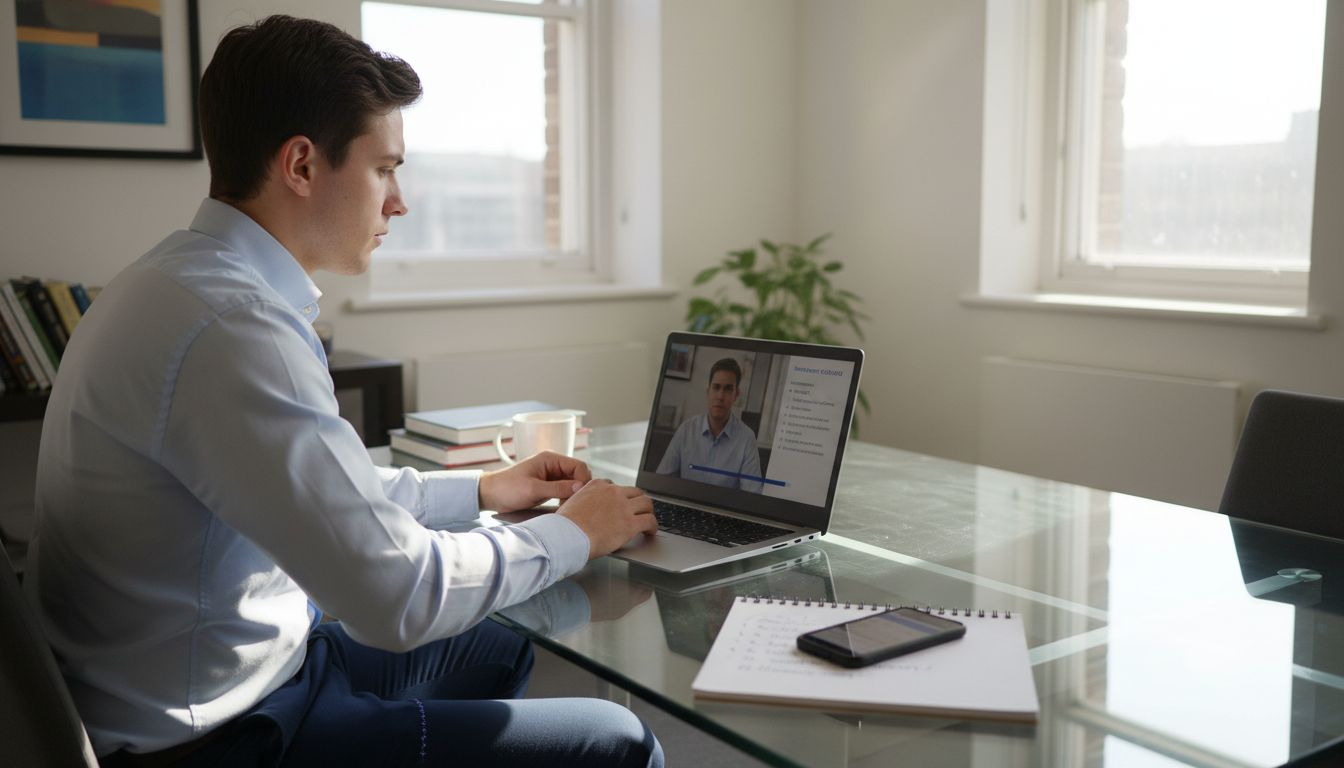
Most non-native English speakers misjudge their speaking errors without guidance. Research shows that individuals cannot accurately identify their pronunciation errors when self-evaluating. This gap between perception and reality creates a critical barrier for professionals preparing for mid-to-senior interviews. Understanding self-assessment as systematic evaluation of speaking performance transforms how you approach interview preparation, turning uncertainty into measurable confidence gains.
Table of Contents
- Introduction To Self-Assessment In Speaking
- Psychological And Performance Benefits Of Self-Assessment
- Common Misconceptions And Limitations Of Self-Assessment
- Frameworks And Methods For Effective Self-Assessment
- Applying Self-Assessment Specifically For Interview Preparation
- Measuring Progress And Integrating Self-Assessment Into Routine
- Boost Your Interview Speaking Confidence With Pavone Academy
- Frequently Asked Questions
Key Takeaways
| Point | Details |
|---|---|
| Self-assessment boosts confidence | Repeated self-assessment activities significantly improve self-efficacy and speaking confidence by up to 72% with consistent practice. |
| Combined feedback accelerates improvement | Pairing self-assessment with peer or AI feedback reduces anxiety and increases accuracy. |
| Common pitfalls limit accuracy | Pronunciation errors go unnoticed without structured rubrics or external validation. |
| Structured methods enable objectivity | Video recordings and clear evaluation criteria help you see yourself as interviewers do. |
| Regular practice drives ongoing gains | Short, frequent self-assessment sessions foster clearer communication and sustained growth. |
Introduction to Self-Assessment in Speaking
Self-assessment is your systematic evaluation of speaking skills and delivery behaviors. It involves watching yourself present answers, identifying what works, and pinpointing areas needing refinement. This skill matters especially for non-native professionals who face unique communication challenges during interviews.
Self-awareness separates effective speakers from those who repeat the same mistakes. You recognize vocal patterns, body language, and content structure that help or hinder your message. This awareness gives you agency over improvement rather than waiting passively for external feedback.
Confident speaking in interviews requires understanding interview expectations first. Before you can evaluate yourself effectively, you need clarity on what interviewers value in responses. You also need willingness to reflect honestly on your performance without defensiveness.
Effective self-assessment differs from external feedback by emphasizing personal reflection. You control the timing, focus areas, and action steps. This autonomy builds ownership over your development.
Prerequisites for meaningful self-assessment include:
- Familiarity with interview speaking standards and common question formats
- Basic recording equipment or smartphone for video capture
- Willingness to watch yourself critically without excessive self-judgment
- Clear criteria or rubric defining strong versus weak responses
- Time commitment for regular review and practice cycles
Psychological and Performance Benefits of Self-Assessment
Self-assessment delivers measurable psychological advantages. Research demonstrates that repeated self-assessment activities significantly improve self-efficacy and speaking confidence in English language learners. This confidence stems from concrete evidence of progress rather than vague feelings of improvement.
You gain tangible performance improvements through systematic evaluation. Your content becomes better organized as you notice rambling patterns. Pacing smooths out when you catch rushed or hesitant delivery. Audience engagement rises as you identify and eliminate distracting behaviors.
Self-assessment improves speakers’ confidence by fostering a growth mindset, shifting focus from fixed ability to continuous development.
Learner autonomy grows with each self-assessment cycle. You stop depending entirely on coaches or mentors to tell you what needs work. Instead, you develop internal standards and self-correction mechanisms that function independently. This autonomy proves invaluable when preparing for enhancing persuasive speaking in high-stakes interviews.
Structured peer feedback combined with self-assessment reduces speaking anxiety and improves content organization and delivery. The combination works better than either method alone. Peer input validates your self-observations or reveals blind spots, while self-assessment ensures you internalize lessons rather than passively receiving advice.
Key psychological benefits include:
- Increased self-efficacy through visible progress documentation
- Reduced speaking anxiety via repeated exposure and reflection
- Development of growth mindset replacing fear of failure
- Enhanced motivation from autonomous goal-setting and achievement
- Stronger metacognitive skills enabling real-time adjustment during interviews
Common Misconceptions and Limitations of Self-Assessment
Many professionals believe self-assessment guarantees full accuracy. This assumption proves false. Most non-native English speakers cannot accurately identify their pronunciation errors without guided feedback. Your ears hear what you intend to say rather than what actually comes out.
Another misconception suggests self-assessment delivers instant confidence without quality practice. Watching yourself once creates awareness but not skill. You need repeated cycles of recording, reviewing, and refining before meaningful change occurs.
Some assume self-assessment replaces all external feedback. This creates dangerous blind spots. Without structured criteria and feedback, self-assessment can lead to over or under-estimation of speaking abilities. You might fixate on minor issues while missing major delivery problems.
Inaccuracies arise particularly around pronunciation and subtle speaking errors. Native speakers naturally catch rhythm and intonation problems that non-native speakers miss. Your internal model of correct English may contain persistent gaps you cannot self-diagnose.
Sole reliance on self-assessment creates skewed skill perception. You become trapped in your own perspective without external calibration. This tunnel vision prevents breakthrough improvements requiring fresh insight.
Practical fixes include:
- Using peer reviews to validate your self-observations
- Adopting structured rubrics with specific, observable criteria
- Incorporating AI tools like Pavone that provide objective speech analysis
- Recording yourself answering the same question multiple times to spot patterns
- Seeking guided speaking practice balancing independence with expert input
Routine incorporation of external feedback sources keeps your self-assessment grounded in reality. You maintain objectivity while building autonomous evaluation skills.
Frameworks and Methods for Effective Self-Assessment
Structured frameworks transform vague self-reflection into actionable improvement. Follow this sequence for systematic self-assessment:
- Record yourself answering a common interview question on video
- Watch the recording using a structured rubric covering clarity, pacing, content organization, and body language
- Note three specific strengths and two improvement priorities
- Research and practice industry-specific vocabulary relevant to your target role
- Re-record the same answer incorporating adjustments
- Gather external feedback from peers or AI mock interview tools to validate your self-observations
- Repeat the cycle with new questions, tracking progress across sessions
Pro Tip: Schedule four 15-minute self-assessment sessions per week rather than one long monthly session. Consistent short practices build skill faster than irregular marathon efforts.
Regular self-assessment practice leads to higher learner autonomy, motivation, and speaking engagement. The frequency matters more than duration. You retain lessons better when spaced over multiple days.
| Approach | Strengths | Limitations | Best Used When |
|---|---|---|---|
| Unguided Self-Assessment | Complete flexibility; builds independence; no scheduling constraints | High risk of blind spots; pronunciation errors missed; may reinforce bad habits | You have strong baseline skills and clear internal standards |
| Self-Assessment Plus Peer Feedback | Validates observations; catches missed errors; builds collaborative skills | Requires coordination; peer skill level varies; may feel uncomfortable | You have access to trusted colleagues or study partners |
| AI-Supported Video Tools | Objective metrics; available 24/7; tracks progress over time; identifies patterns | Requires technology access; may miss cultural nuance; less personalized than human feedback | You need consistent, private practice with data-driven insights |
Combining technology and peer input increases both accuracy and engagement. AI tools provide consistent baseline evaluation while peers offer contextual insight and encouragement. This hybrid approach addresses limitations of each method individually.
Applying Self-Assessment Specifically for Interview Preparation
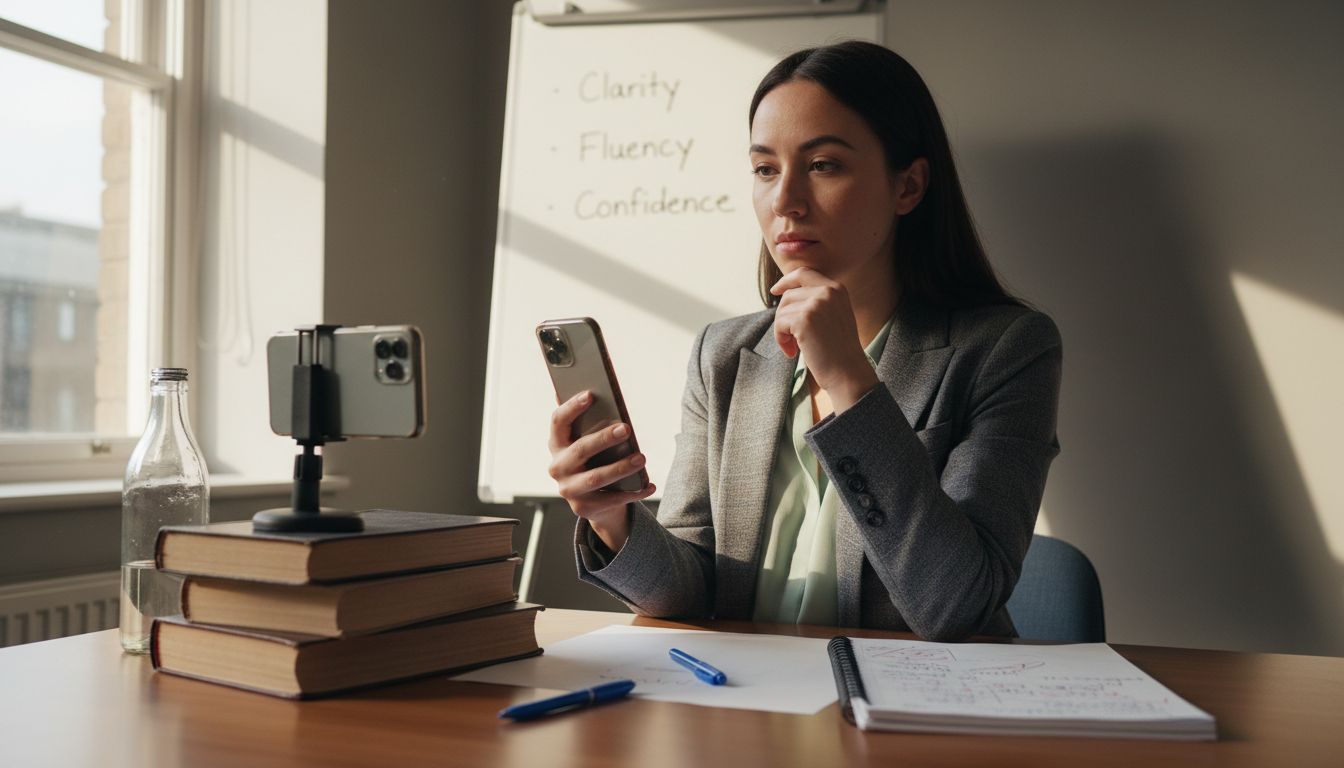
Interview preparation demands targeted self-assessment focused on clarity, fluency, and confidence. Recording answers to behavioral questions like “Tell me about a time you led a difficult project” reveals how you structure narratives under pressure. You notice whether you ramble, skip critical details, or fail to highlight your specific contribution.
Integrating vocabulary and jargon specific to your target industry elevates your credibility. Practicing with industry-specific jargon in self-assessment improves interviewer impression and clarity. You sound like an insider rather than an outsider guessing at terminology. This authenticity matters especially at mid to senior levels where technical fluency signals expertise.
Tracking progress across multiple dimensions provides concrete motivation. You measure changes in confidence by rating your comfort level before and after each practice session. Clarity improves as filler word counts drop. Fluency increases as hesitation pauses shorten.
Pro Tip: Practice answering the same question three times in one session, then review all three recordings together. You will spot improvement patterns within a single practice block, building momentum and confidence.
Interview online practice benefits enormously from combining recorded self-assessment with real-time feedback tools. You simulate interview pressure while maintaining control over pacing and reflection.
Specific tactics include:
- Creating a personal question bank with 10-15 common interview questions for your field
- Setting a two-minute target for each recorded answer to practice conciseness
- Using a checklist covering opening strength, specific examples, results quantification, and closing impact
- Noting filler words like “um,” “like,” and “you know” with tally marks during review
- Practicing responses both scripted and impromptu to build flexibility
- Recording yourself standing versus sitting to assess body language differences
Combining these approaches creates a comprehensive self-assessment system tailored to interview success. You build skills that transfer directly to actual interview conversations.
Measuring Progress and Integrating Self-Assessment into Routine
Quantifiable indicators make improvement visible and motivating. Track these specific metrics across your practice sessions:
- Speech clarity and fluency rubric scores on a consistent 1 to 5 scale
- Filler word frequency per minute of speaking
- Self-reported confidence ratings before and after each session
- Count of industry-specific terms incorporated naturally into answers
- Average response length compared to target duration
- Number of complete practice cycles completed per week
A simple rubric example provides clear evaluation standards:
| Dimension | Score 1 | Score 3 | Score 5 |
|---|---|---|---|
| Clarity | Mumbled; hard to understand | Mostly clear with occasional unclear phrases | Crisp enunciation; every word understandable |
| Pacing | Too fast or slow; uncomfortable rhythm | Generally appropriate with minor rushed or slow sections | Steady, natural rhythm matching conversational speech |
| Confidence | Hesitant; numerous pauses; uncertain tone | Moderate confidence; some hesitation but generally steady | Strong, assured delivery; minimal uncertainty |
| Filler Words | More than 8 per minute | 3 to 7 per minute | Fewer than 3 per minute |
Frequency and duration guidelines ensure sustainable practice. Aim for three to four sessions weekly, each lasting 15 to 20 minutes. This schedule prevents burnout while maintaining skill development momentum. You see measurable progress within two to three weeks rather than waiting months for vague improvement.
Pro Tip: Create a simple spreadsheet tracking your rubric scores and filler word counts weekly. Visualizing progress over four to six weeks keeps motivation high and shows exactly which areas improved most.
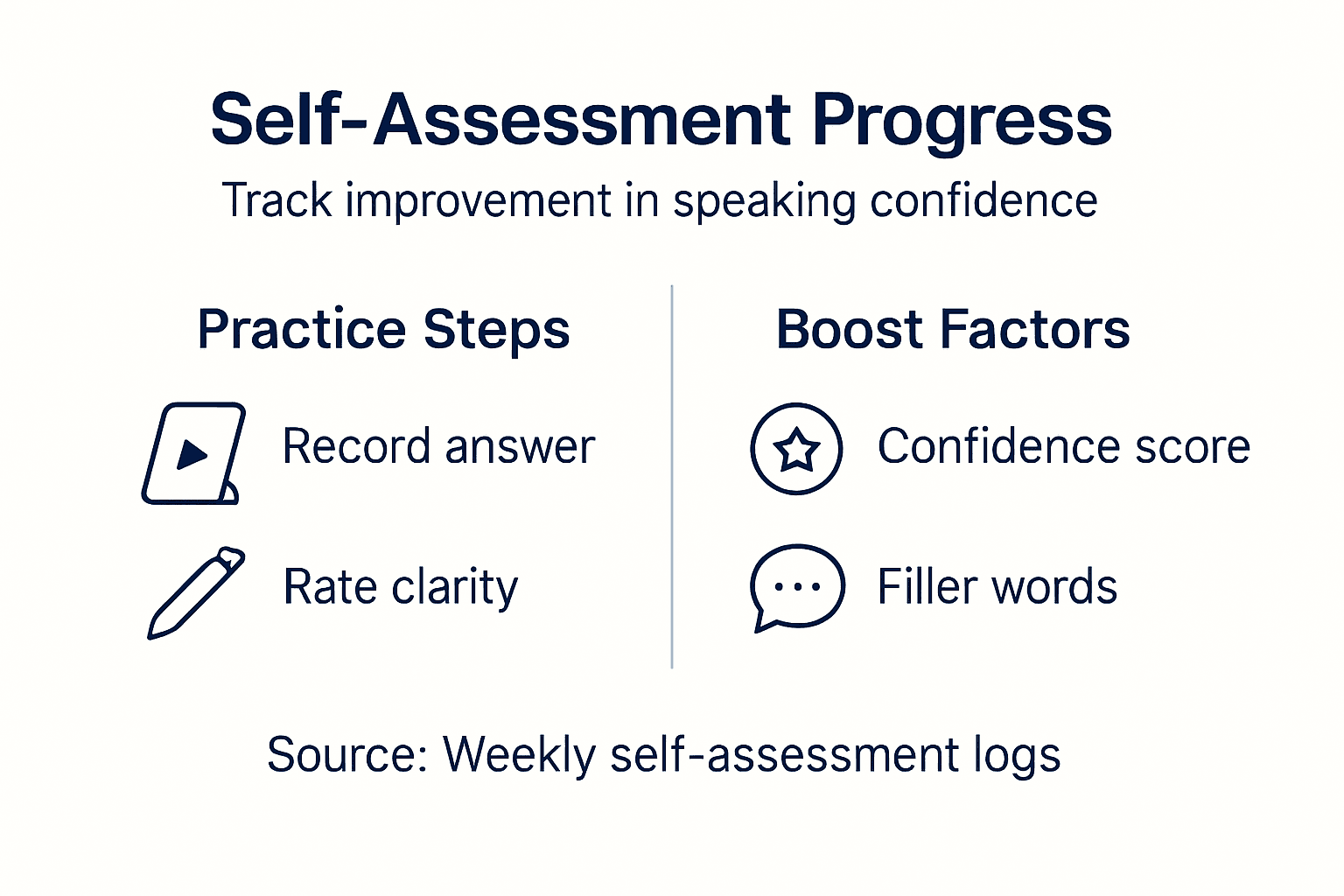
Integrating self-assessment into daily or weekly routines makes practice automatic rather than optional. Link it to existing habits like morning coffee or evening wind-down. Consistency trumps intensity. Building speaking confidence routinely through small daily actions creates lasting change more effectively than sporadic intensive efforts.
Schedule specific practice times in your calendar just like important meetings. Treat self-assessment as non-negotiable professional development. You invest 45 to 60 minutes weekly total, a small commitment yielding significant interview performance returns.
Boost Your Interview Speaking Confidence with Pavone Academy
Applying these self-assessment strategies becomes easier with purpose-built tools designed for interview preparation. Pavone Academy offers video recording and AI-powered feedback tailored specifically for practicing interview answers. You receive objective, data-driven insights on clarity, pacing, filler words, and delivery that complement your self-observations.
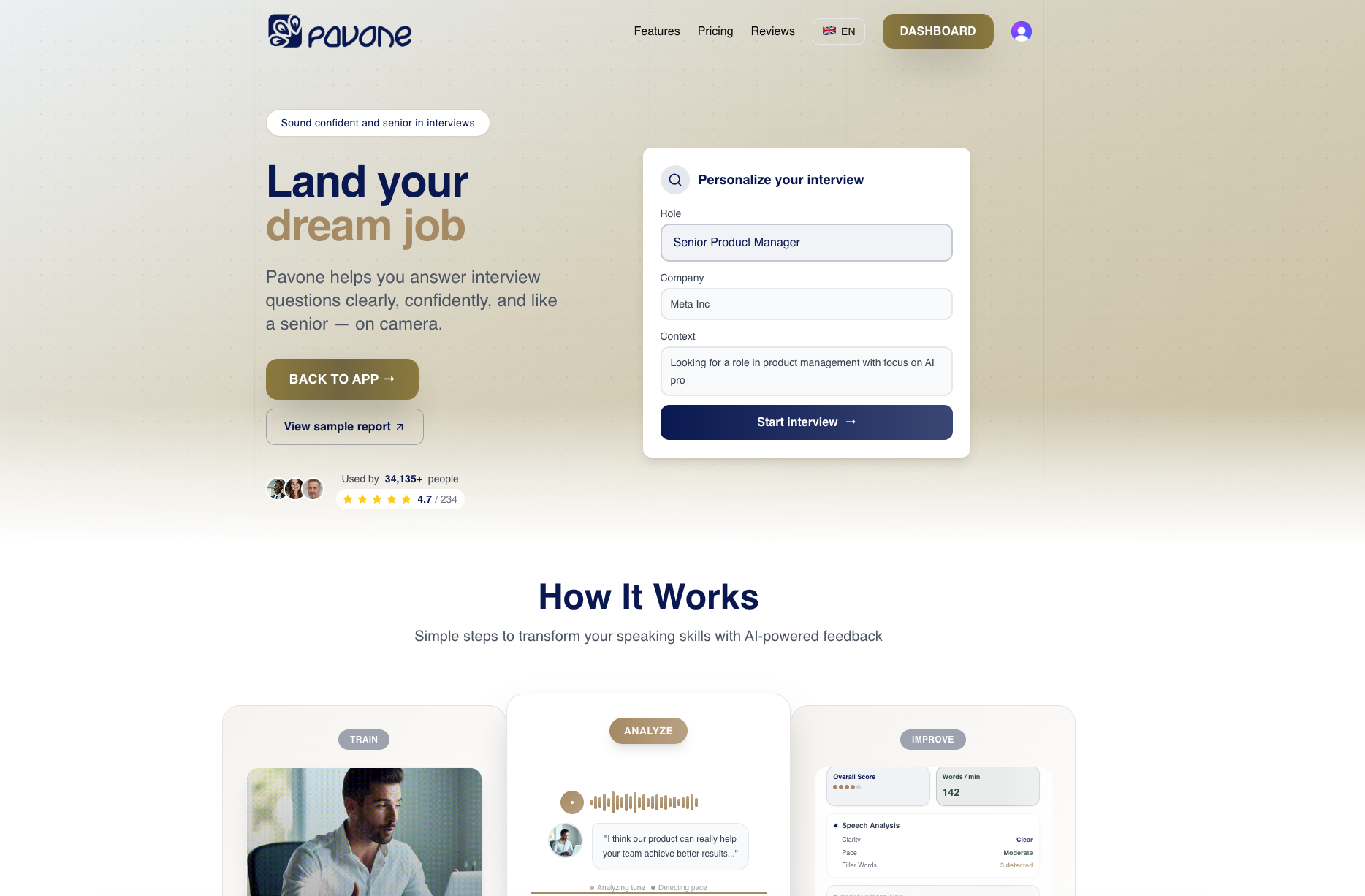
Busy professionals appreciate the convenience of practicing anytime without scheduling coaches or coordinating peer sessions. Pavone provides guided practice sessions with performance metrics tracking your improvement over weeks and months. The platform reduces speaking anxiety by giving you a private space to experiment, fail, and refine before facing real interviewers. Whether you need to master interview online practice, gain AI mock interview confidence and clarity, or improve job interview preparations with video confidence, Pavone turns self-assessment theory into measurable results.
Frequently Asked Questions
What is the role of self-assessment in speaking?
Self-assessment enables you to reflect independently on speaking clarity and confidence. It helps identify unique strengths and weaknesses in your delivery style and content organization. You gain awareness of patterns that external observers might miss or that emerge only through repeated self-review. This personal insight drives targeted improvement more effectively than generic advice.
How can I accurately self-assess my speaking skills?
Use video recordings paired with structured rubrics focusing on pacing, clarity, and filler word frequency. Incorporate external feedback from peers or AI tools to catch blind spots your self-review misses. Compare multiple recordings of the same answer to spot improvement patterns and persistent issues requiring different approaches.
What are common mistakes when self-assessing speaking for interviews?
Overestimating pronunciation accuracy without external validation creates false confidence. Neglecting non-verbal cues like body language, eye contact, and pacing means missing half the communication equation. Reviewing only once instead of tracking changes across multiple sessions prevents pattern recognition and measurable progress documentation.
How often should I practice self-assessment?
Aim for brief sessions three to four times per week, approximately 15 minutes each. Consistency delivers better results than occasional long practices because spaced repetition strengthens skill retention. This frequency allows you to test adjustments between sessions and build momentum through visible weekly progress.
Recommended
Ready to practice?
Start improving your speaking skills with AI-powered feedback and analysis.
Try Pavone Free