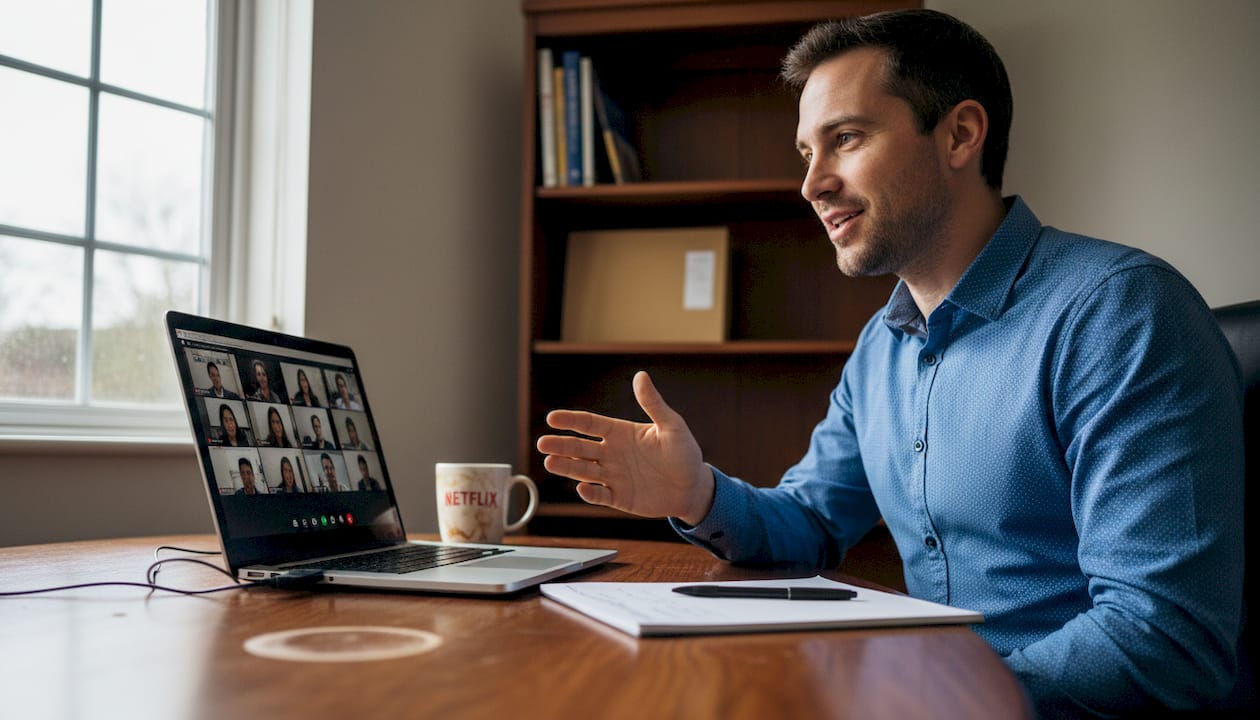
Interview Magazine’s on-camera secrets for interviews

TL;DR:
- Authentic, unscripted conversations teach adaptability and confidence under unexpected interview questions.
- Actors and celebrities use preparation, emotional control, and spontaneity techniques to perform calmly on camera.
- Practicing with video review and embracing mistakes builds resilience and genuine presence for interviews.
Most professionals assume that polished on-camera communication is a skill reserved for celebrities and media personalities. Yet video interviews are now a standard part of hiring at mid-to-senior level, and the pressure to come across as confident, clear, and credible on screen is very real. Interview Magazine has quietly been modelling something far more useful than glamour: authentic, unscripted conversation under scrutiny. This article takes the lessons hidden inside those celebrity exchanges and translates them into practical strategies you can use in your next professional video interview.
Table of Contents
- What Interview Magazine reveals about authentic on-camera conversation
- Actors’ secrets: Clarity, confidence, and communicating under pressure
- Building interview confidence: Lessons from comedy and failure
- From entertainment to employment: Translating media skills to job interviews
- Why most professionals miss the real lessons of on-camera interviews
- Get ready to own your next on-camera interview
- Frequently asked questions
Key Takeaways
| Point | Details |
|---|---|
| Model authenticity | Interview Magazine’s dialogues show that genuine, peer-level conversation builds trust in any interview—celebrity or professional. |
| Embrace mistakes | Confidence grows when you accept minor stumbles and recover smoothly, turning errors into opportunities for connection. |
| Transfer media skills | Adapting entertainment interview techniques—like vocal clarity and selective openness—can make your job interview delivery compelling. |
| Practise on camera | Regular recording and review of your responses is the fastest way to develop poise and structured delivery under pressure. |
What Interview Magazine reveals about authentic on-camera conversation
Having introduced the surprising relevance of Interview Magazine, let us examine the hallmarks of its interview style.
Interview Magazine’s peer-to-peer format is built on something most recruitment interviews are not: genuine, unscripted dialogue between equals. There is no rigid question sheet, no formal panel, and no rehearsed corporate script. What you get instead is two people navigating a conversation in real time, which is precisely what makes it so instructive.
This format mirrors the unpredictability of real interview environments far more closely than most candidates realise. When a hiring manager goes off-script or asks something unexpected, your ability to adapt, stay composed, and respond authentically is what separates a memorable answer from a forgettable one. Watching how high-profile personalities handle curve-ball questions teaches you to read a room and adjust your tone accordingly.
Consider the contrast between a typical recruitment interview and the peer-to-peer celebrity exchange:
| Feature | Recruitment interview | Celebrity peer interview |
|---|---|---|
| Structure | Formal, question-led | Fluid, conversational |
| Tone | Professional distance | Warm, peer-level |
| Emphasis | Correct answers | Authentic exchange |
| Adaptability needed | Moderate | High |
| Trust signals | Credentials and titles | Genuine personality |
One of the most instructive examples is when Cazzie David interviewed her father, Larry David. The dynamic flipped entirely. Larry, usually the one in control, had to respond to unexpected personal questions from someone who knew him well. His composure, humour, and willingness to be vulnerable were what made it compelling. For you, the lesson is this: when an interviewer shifts the dynamic, lean in rather than freeze.
Key behaviours to borrow from this format include:
- Listening actively before responding, rather than preparing your next answer while they are still speaking
- Mirroring the energy of the conversation to build rapport naturally
- Pausing with purpose rather than filling silence with filler words
- Staying curious about the interviewer’s perspective, not just your own narrative
You can sharpen these habits further by exploring public speaking techniques designed specifically for interview settings. Modelling conversational skills from real dialogues is one of the fastest ways to improve your natural delivery.
Actors’ secrets: Clarity, confidence, and communicating under pressure
Beyond the overall style, actors’ coping strategies offer insider methods for remaining composed.
Actors face relentless scrutiny every time they appear on camera. Their preparation is not accidental. It involves vocal coaching, emotional regulation, and structured self-reflection. These are not skills exclusive to Hollywood. They are transferable, learnable, and directly relevant to how you perform in a video interview.
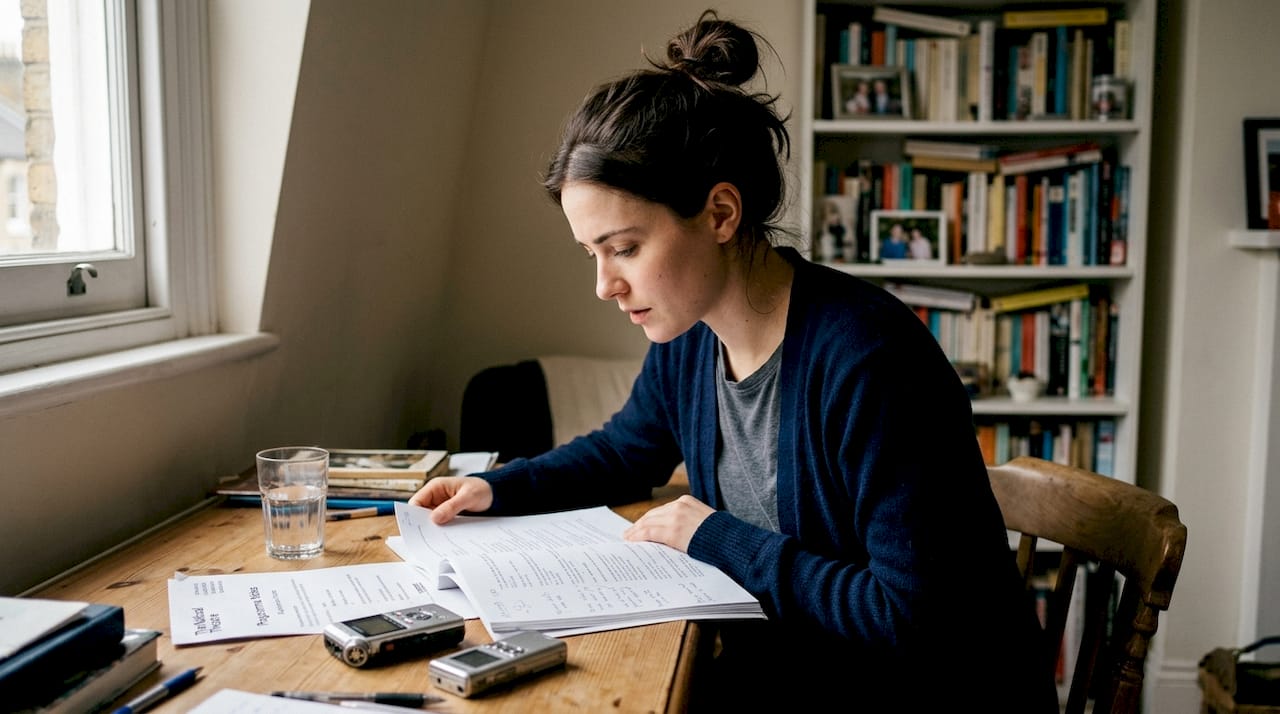
Kiernan Shipka has spoken openly about maintaining level-headedness in high-pressure environments, crediting steady roles and consistent preparation. She has also discussed ADR (Automated Dialogue Replacement), a process where actors re-record dialogue for clarity after filming. The discipline required to deliver the same line with the same emotional weight, but with greater precision, is a powerful analogy for refining your interview answers.
Actors emphasise script analysis, vocal coaching, and emotional separation as tools for delivering clear, authentic responses under pressure. Emotional separation means you can speak about a challenging situation without being consumed by it. In interview terms, this is the difference between recounting a difficult project with composure versus letting anxiety colour your entire answer.
Natalie Portman’s approach is equally instructive. She finds genuine joy in the role she is playing and practises selective openness, sharing enough to connect without oversharing. For you, this translates to being warm and real without veering into territory that undermines your professional credibility.
Here is how these actor techniques map to your interview preparation:
| Actor technique | Interview application |
|---|---|
| Vocal coaching | Practise pacing and tone on camera |
| Script analysis | Prepare structured story-based answers |
| Emotional separation | Discuss setbacks without visible anxiety |
| Selective openness | Share relevant context, not personal detail |
Developing speech clarity skills and persuasive speaking techniques will help you apply these principles consistently. The impact of oral expression on how you are perceived in professional settings is significant and often underestimated.
Pro Tip: Record yourself answering a common interview question, then watch it back with the sound off. Notice your facial expressions, posture, and energy. Then watch it again with sound only. This two-pass review reveals habits you would never catch in the moment.
Building interview confidence: Lessons from comedy and failure
Confidence grows from experience, and often from learning what to do when things do not go to plan.
Kathy Griffin has spoken candidly about the role of bombing in comedy as an essential part of growth. Bombing means completely failing to land your material in front of an audience. It is uncomfortable, public, and, according to Griffin, absolutely necessary.
“Learn from each failure. It’s the only way to get better.” — Kathy Griffin
This principle applies directly to interview preparation. Candidates who have only ever practised in low-stakes environments often freeze when something goes wrong in a real interview. Those who have experienced and recovered from small stumbles are far more resilient.
Three ways to turn minor stumbles into moments of connection:
- Acknowledge and move on. A brief “let me rephrase that” signals self-awareness, not weakness. Interviewers respect it.
- Use humour lightly. A small, self-aware comment can reset the energy in the room without derailing the conversation.
- Reframe the moment. If you lose your thread, pause, take a breath, and say “what I really want to convey is…” This shows clarity of thought under pressure.
Controlled risk-taking, such as stretching your answer to include a less obvious example, also sharpens your adaptability. It forces you to think on your feet rather than recite a memorised script. The tips for handling interview setbacks from performance contexts translate well here.
For a structured approach to building this kind of resilience, the confident speaking guide is a practical starting point.
Pro Tip: After each practice session, identify one moment where you stumbled and rehearse just that section three times. Targeted repetition builds the muscle memory to recover gracefully under real pressure.
From entertainment to employment: Translating media skills to job interviews
Now, let us turn those lessons into concrete actions for your next interview.
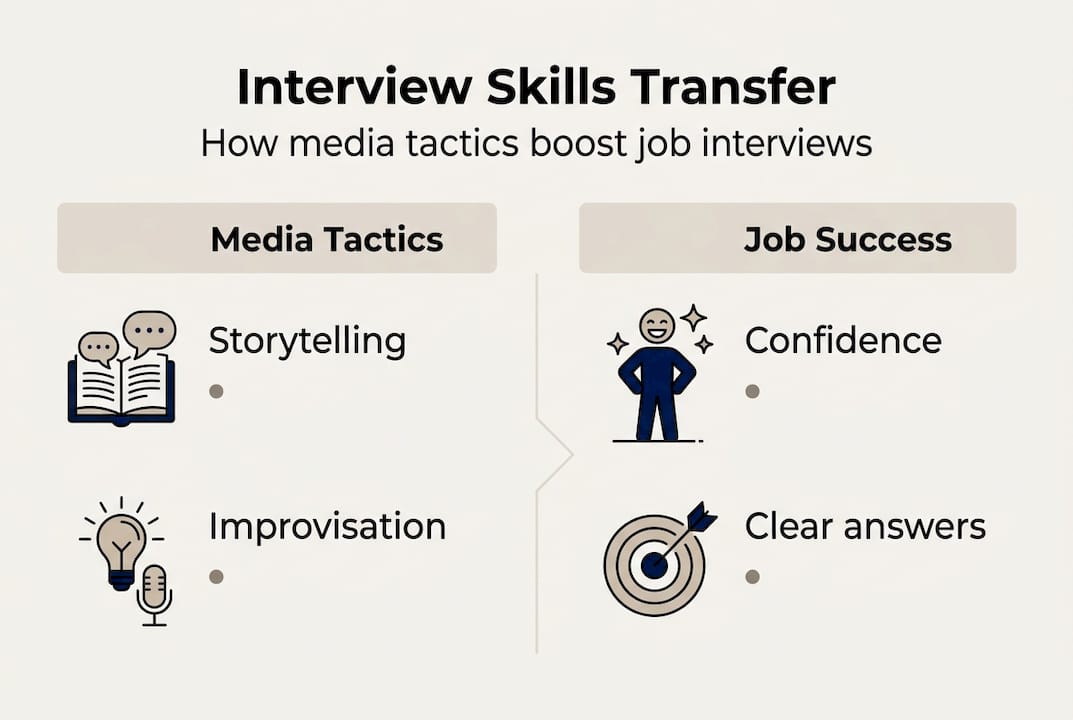
Entertainment and media training techniques have direct relevance for mid-to-senior job interviews, yet most candidates never make the connection. The skills that make a celebrity interview compelling are the same skills that make a professional candidate memorable: authentic storytelling, emotional composure, structured delivery, and genuine engagement.
While Interview Magazine focuses on entertainment rather than employment, the communication principles on display are universally applicable. Here is how to convert them into a professional framework:
- Authentic storytelling. Replace vague claims with specific, structured examples. Use a clear beginning, middle, and outcome for every answer.
- Emotional separation. Practise discussing high-pressure situations calmly. The goal is to convey that you handled it, not that it still affects you.
- Structured delivery. Signpost your answers. Say “there are two things I want to cover here” before you cover them. This gives the interviewer a mental roadmap.
- Selective openness. Share context that builds credibility. Avoid personal detail that shifts focus away from your professional value.
- Active listening. Treat each question as the start of a dialogue, not a prompt for a monologue.
Here is how celebrity interview skills map to employment interview frameworks:
| Celebrity interview skill | Employment interview equivalent |
|---|---|
| Improvised storytelling | Structured STAR-format answers |
| Reading the room | Adapting tone to the interviewer |
| Peer-level dialogue | Treating the interview as a conversation |
| Vulnerability and honesty | Sharing genuine development areas |
| Composure under scrutiny | Staying calm with difficult questions |
Building comfort on camera takes repetition. Explore effective speaking for interviews and consider how improving conversational impact can sharpen your overall delivery.
Why most professionals miss the real lessons of on-camera interviews
With the practical framework mapped out, it is worth reflecting on what truly transforms a performance.
Most interview preparation focuses on frameworks: STAR method, competency questions, rehearsed answers. These are useful, but they often produce responses that sound polished and lifeless in equal measure. The interviewer can tell when someone is reciting rather than communicating.
What Interview Magazine reveals is the value of vulnerability, improvisation, and peer-level exchange. These are qualities that most professionals actively suppress in interview settings, believing that formality equals credibility. It does not. Credibility comes from clarity and genuine presence, not from sounding like a corporate brochure.
The most impactful candidates we see are those who blend structure with spontaneity. They have prepared thoroughly, but they wear that preparation lightly. They respond to the actual question being asked, not the question they rehearsed for. They treat the interviewer as a peer, not a judge.
Our view is this: your next interview will improve the moment you stop trying to perform perfectly and start trying to connect genuinely. Explore communication tips that support this shift, and approach the conversation as an exchange between equals, not a cross-examination.
Get ready to own your next on-camera interview
Understanding these principles is one thing. Putting them into practice is where real improvement happens.
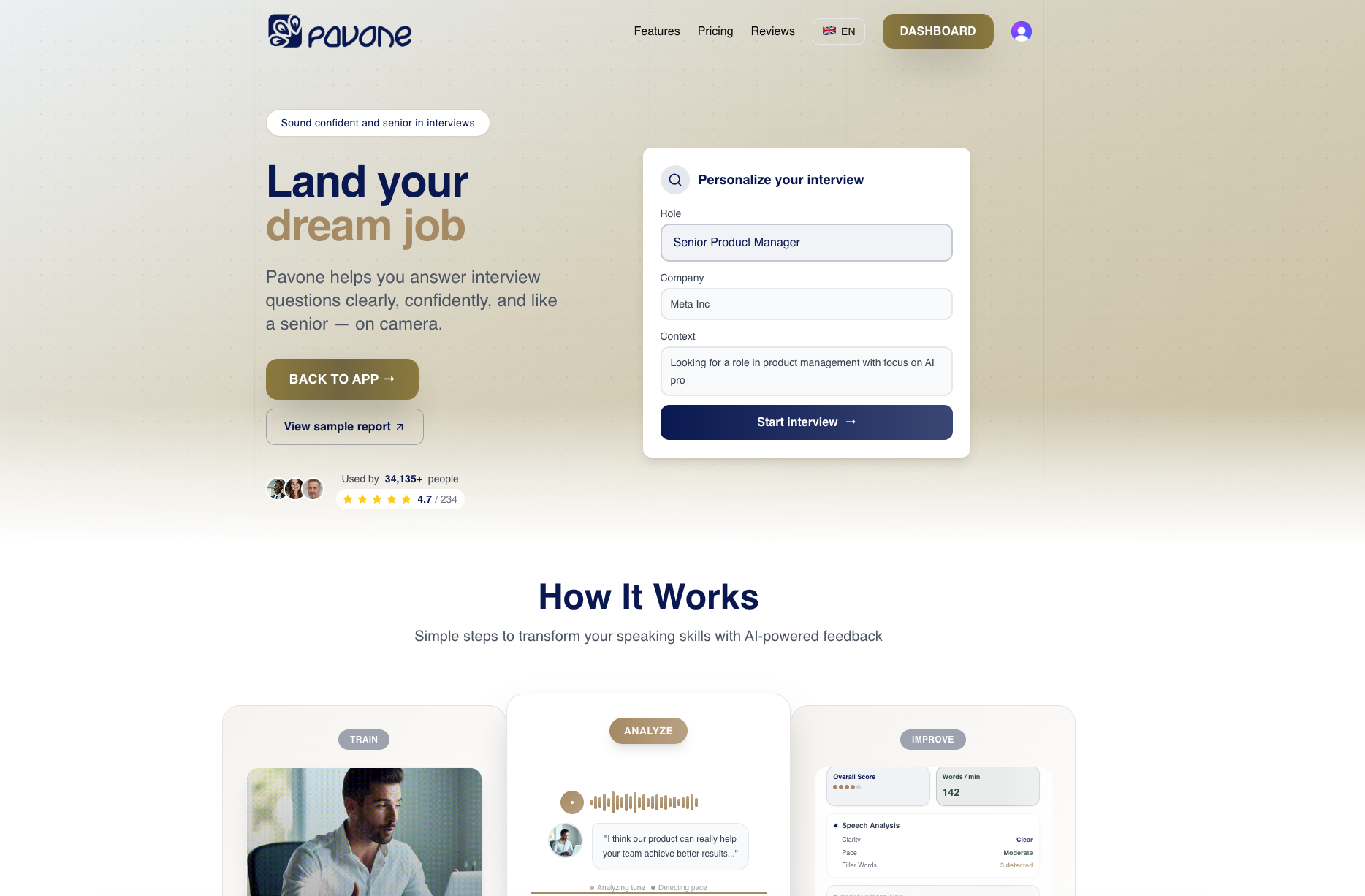
Pavone.ai gives you a private, pressure-free space to record your answers, review your delivery, and receive immediate feedback on clarity, pacing, confidence, and structure. You can build on-camera confidence through short, focused practice sessions that fit around your schedule. Use the interview question generator to practise the questions most relevant to your role, and develop confidence for video responses with feedback that tells you exactly how you come across, not just what you said.
Frequently asked questions
What can professionals learn from Interview Magazine’s celebrity interviews?
Professionals can observe authentic communication, adaptive response techniques, and confidence strategies that apply directly to video interviews and high-pressure conversations.
How do actors stay calm and clear under intense interview scrutiny?
Actors use techniques like vocal coaching, careful script analysis, emotional separation, and embracing mistakes to deliver calm, clear answers under pressure, as Kiernan Shipka has described in her own experience.
How do I apply media interview skills to my next job interview?
Adopt authentic conversation, maintain emotional equilibrium, and structure answers for clarity by practising on camera and reviewing your performance after each attempt.
Is failing publicly during an interview always negative?
No. As Kathy Griffin advocates, embracing small mistakes and recovering gracefully builds resilience and often makes interactions feel more genuine and trustworthy.
Recommended
Ready to practice?
Start improving your speaking skills with AI-powered feedback and analysis.
Try Pavone Free